REVIEW · MOOREA
Moorea: Hauru Lagoon 3-hour Guided Kayak Tour with Snack
Book on GetYourGuide →Operated by MOOREA BLUE PADDLE · Bookable on GetYourGuide
Turtles glide under your feet. In Moorea, this 3-hour Hauru Lagoon guided kayak turns wildlife spotting into something you can actually track, thanks to a clear-bottom kayak and a slow, guided pace. I love the way you can watch sea turtles and coral gardens right from above, and you also get a proper snorkeling window between motus.
One thing to consider: this tour is active and not for everyone. It’s listed as not suitable for non-swimmers, people with back problems, mobility impairments, heart conditions, pregnancy, and it also has a weight limit of 209 lbs / 95 kg.
Guides matter here, and the names that come up are Luca and Omelia (also seen as Lukas). They guide your route, keep you safe, and add Polynesian culture stories as you go—so the lagoon feels like more than just pretty water.
In This Review
- Key things to know before you go
- Kayak Hauru Lagoon in a clear-bottom boat (the part you’ll remember)
- Where to meet at Tiahura Public Beach (and how not to stress)
- First 30–60 minutes: briefing, gear, and the calm paddle out
- Watching turtles and rays from above the reef
- The snorkeling stop in the coral garden between motus
- If you’re lucky: extra sightings (stingrays, blacktip sharks)
- The culture element: legends, flora, and fauna
- Snack time: fresh fruit juice or seasonal fruit on the water
- Optional motu sandbank break with a mountain view
- Price and value: does $94 make sense here?
- What to bring (and what to avoid)
- Who this tour fits best (and who should skip it)
- What the experience feels like day-of
- Should you book the Moorea Hauru Lagoon kayak tour?
- FAQ
- How long is the Moorea Hauru Lagoon guided kayak tour?
- Where do I meet for the tour?
- Is the guide bilingual?
- What wildlife can you see during the tour?
- Is snorkeling included?
- What snorkeling gear do I need to bring?
- What snack or drink is included?
- Is jewelry allowed?
- Is the tour suitable for young children?
- What is the cancellation policy?
Key things to know before you go
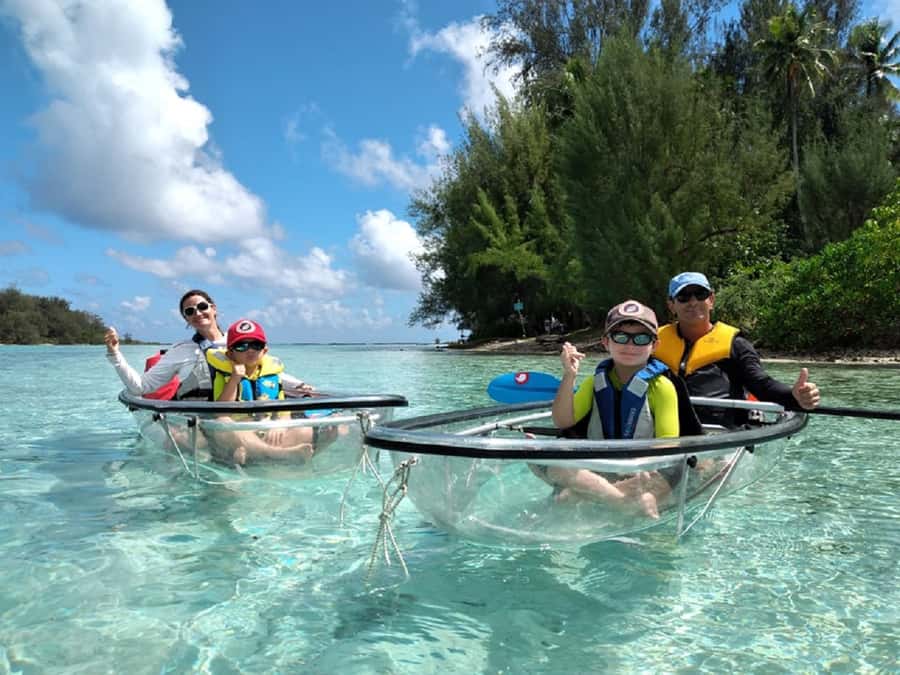
- Glass-bottom turtle viewing: You watch sea turtles from the kayak without scrambling or chasing.
- Coral garden snorkeling between motus: Snorkel where the action is, with a fish identification card to help you learn.
- A calm, marine-friendly format: The focus is on observation, not touching or harassing wildlife.
- Nature highlights beyond turtles: You might see leopard rays/spotted eagle rays, and in lucky moments stingrays or blacktip sharks.
- A simple snack reset: Fresh fruit juice or seasonal fruit helps you recharge for the last stretch.
Kayak Hauru Lagoon in a clear-bottom boat (the part you’ll remember)
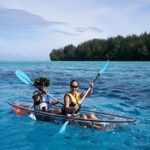
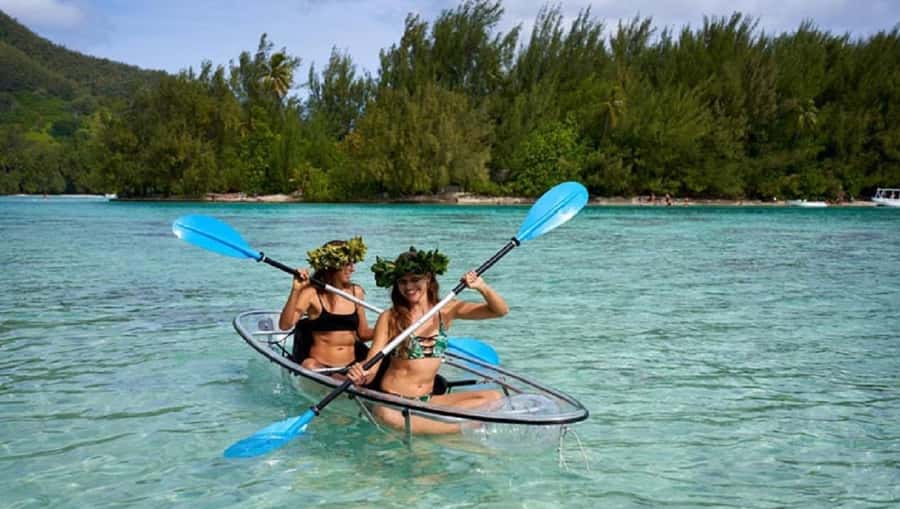
Moorea’s Hauru Lagoon is the kind of place where you feel like you’re floating inside a science textbook—turquoise water, coral, and marine life at eye level. What makes this tour special is the clear-bottom kayak. Instead of guessing what’s swimming underneath, you can see it while you glide.
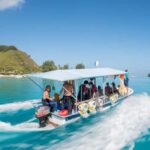
You’re out in a 2-seat kayak with a paddle and life jacket, and you follow a bilingual guide. The tour is built for steady sightseeing, so you’re not sprinting for the next photo. That matters, because a relaxed pace makes wildlife watching easier and keeps everyone focused on what’s right there.
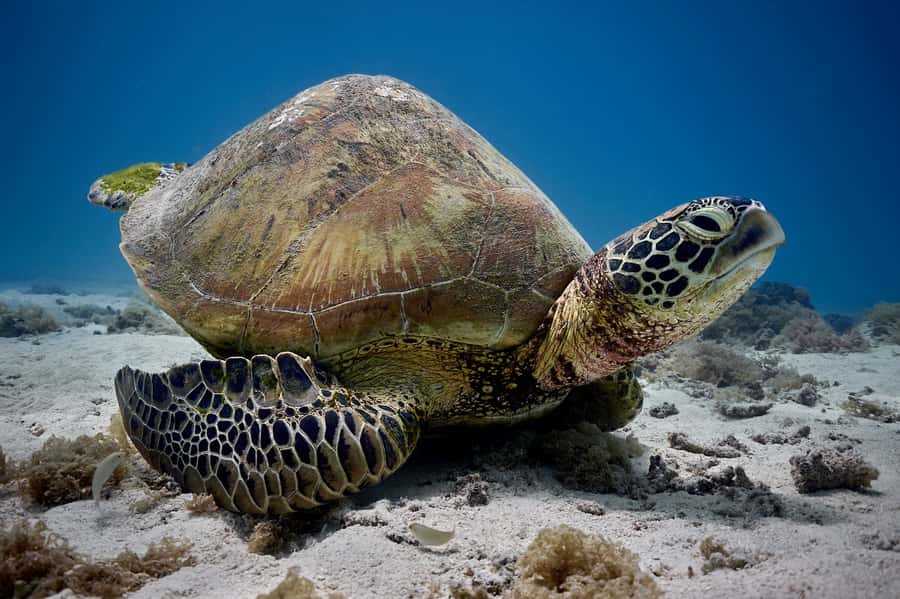
And yes, the stars are real: sea turtles, leopard rays (often described alongside turtles), lots of colorful fish, and coral. You also may spot spotted eagle rays. Some people mention stingrays and blacktip sharks, but treat that as luck—what’s consistent is the abundance of reef life.
You can also read our reviews of more tours and experiences in Moorea.

Where to meet at Tiahura Public Beach (and how not to stress)
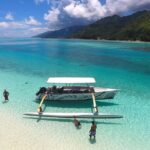
Meet at Tiahura Public Beach, next to the Hibiscus Hotel. You park, cross the park, then head for the stairs that lead down to the beach—meet your guide at those stairs. The instruction is to arrive 15 minutes early, which is smart. You’ll need a little time for the briefing and equipment setup so you don’t feel rushed.
This start point is practical if you’re staying around the Tiahura area, and it keeps the outing straightforward: you show up, get geared up, and you’re on the water in a short time. You’ll also want to plan for sun and wind, since lagoon tours can change mood fast with weather.
First 30–60 minutes: briefing, gear, and the calm paddle out
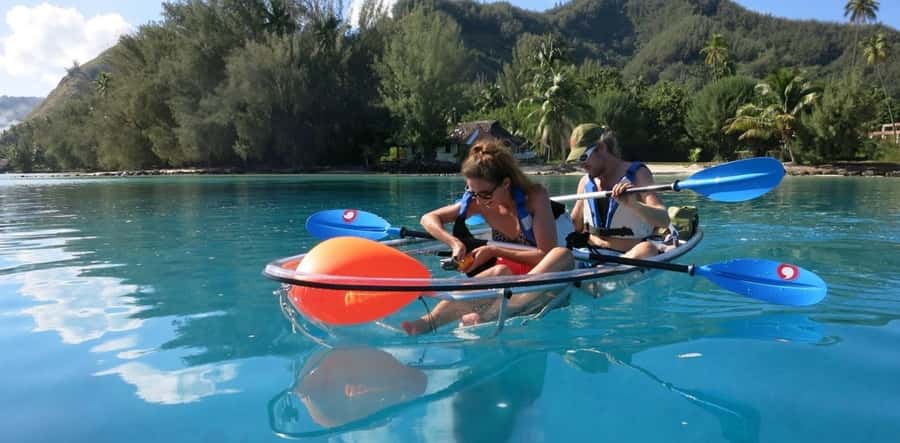
Once you meet, you get a brief orientation and collect equipment. Expect a bilingual guide (French and English) to explain how the kayak works, how to paddle efficiently, and how to observe wildlife from the kayak safely.
Then you set off across the lagoon. The guidance is the key here: your guide keeps an eye on where you are, helps you position for the best viewing angles, and points out what to look for under the clear panels. This is also where you’ll hear about Moorea’s legends and Polynesian culture—small stories that connect the natural scenery to local meaning.
If you’re hoping for a thrill ride, temper expectations. The tour is designed for watching: turtles passing under the kayak, rays gliding through the water, and fish flickering between coral formations. It feels slow, but it’s the kind of slow you’ll appreciate once you start spotting details.
Watching turtles and rays from above the reef
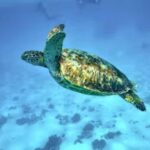
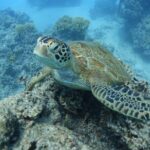
This is the “why I’d book it” section: sea turtles. With the clear-bottom kayak, you’re not just scanning water; you’re watching movement beneath you. Turtles may pass under your feet, and sometimes they surface nearby to breathe.
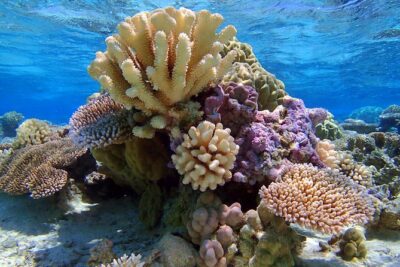
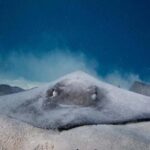
You also have strong odds of seeing rays and a lot of reef fish. Leopard rays and spotted eagle rays are both called out as possible sightings. Coral gardens show up as a living patchwork under the surface, and the colors aren’t just cosmetic—you’re seeing the reef structure that supports all that marine life.
A small but important takeaway for you: calm observation is the whole point. The format encourages you to look and learn rather than reach out or chase. That protects the animals and also gives you a better chance of seeing them again—quiet behavior keeps the lagoon stable.
The snorkeling stop in the coral garden between motus
After your kayak time, you move into snorkeling. You’ll snorkel in the middle of a coral garden between motus (small islands). This is a big part of the experience because it’s where the lagoon shifts from “look down” to “look around.”
Snorkeling gear needs to come from you. The tour information says you’ll need to bring a mask, snorkel, and water shoes for snorkeling. Even if you feel comfortable in the water, don’t wing it—having the right fit and comfortable footwear makes a difference in a reef environment.
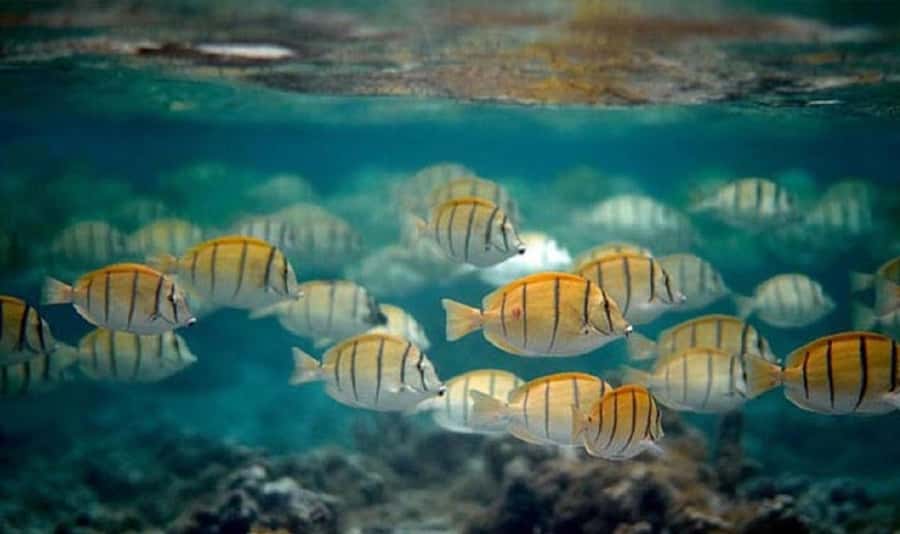
Once you’re in, you’ll see colorful tropical fish. There’s also a fish identification card, which helps you connect what you’re seeing with simple names. It’s one of those small extras that turns a pretty swim into a learning moment without turning it into a classroom.
If you’re nervous about snorkeling, focus on one thing: stay calm and let your guide direct your route. The tour is built for guided observation, and that’s usually what makes snorkeling enjoyable instead of chaotic.




If you’re lucky: extra sightings (stingrays, blacktip sharks)
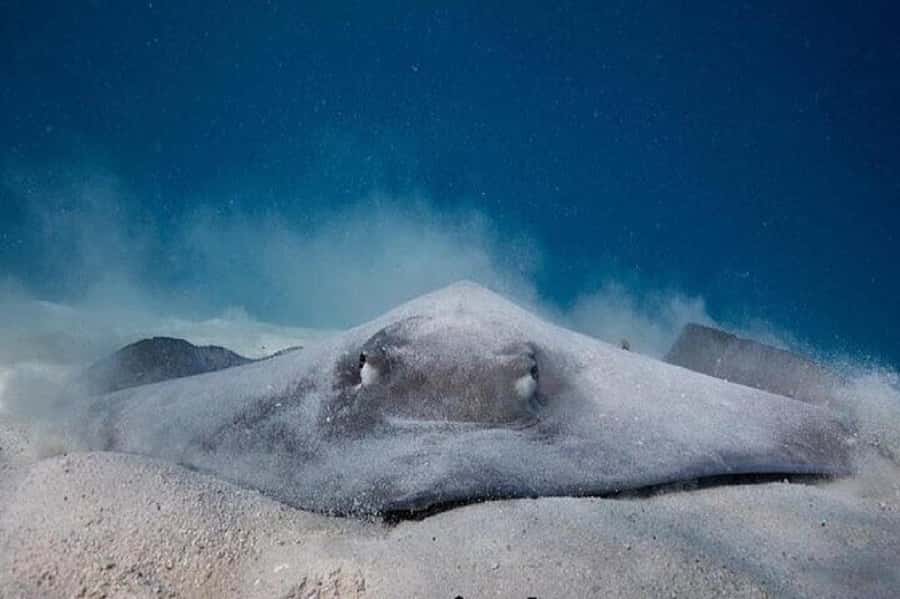
Some people mention stingrays and blacktip sharks as possible sightings. I’d treat that as bonus luck, not a guarantee. The real promise is a tour where sea turtles, rays, reef fish, and coral are the main themes—plus snorkeling over a coral garden.
Even so, the “maybe” is part of the appeal. When the water is clear and the timing lines up, the lagoon can reveal more than you expected. The clear-bottom kayak already gives you a strong start, and snorkeling adds a second chance to spot something bigger gliding through the reef.
The culture element: legends, flora, and fauna
Moorea isn’t just a reef. The guide storytelling is part of what makes the tour feel cohesive. As you paddle and snorkel, you’ll hear stories about Polynesian culture and legends of Moorea, plus information about local flora and fauna.
This matters because it helps you interpret what you’re seeing. Coral isn’t just “pretty.” Fish aren’t just “colorful.” When you understand how locals think about nature and place, your photos and memories stick longer.
And it’s not a lecture. The stories happen while you’re moving through the lagoon, so it feels like part of the experience instead of something tacked on at the end.
Snack time: fresh fruit juice or seasonal fruit on the water
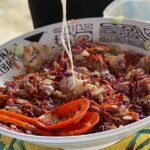
At some point, you’ll be served fresh fruit juice or seasonal fruit to recharge for the end of the morning. It’s not a big meal, and you shouldn’t expect that—but it’s a smart energy reset after paddling and snorkeling.
One more practical benefit: it keeps the tour from feeling like you’re burning calories without a break. After sun and water, fruit and juice are exactly what you want.
Optional motu sandbank break with a mountain view
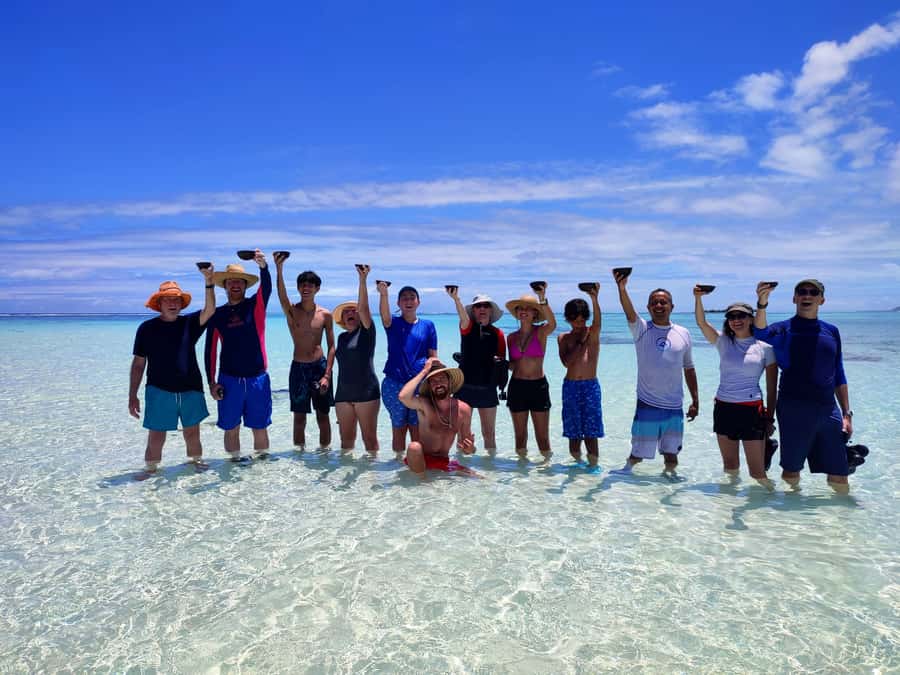
If time and weather permit after snorkeling, you may take a break on a motu sandbank facing the mountains of Moorea. This is the kind of simple payoff that balances the active parts of the tour.
It also gives your body a breather. If you’re prone to getting cold in the water or you’re tired after snorkeling, having sand time is genuinely helpful. Just remember it’s conditional—so plan to enjoy the main lagoon experience first.
Price and value: does $94 make sense here?
At $94 per person, this isn’t the cheapest thing you’ll do on Moorea—but it also isn’t trying to be. The value comes from what’s included and what you’re buying with your time.
You’re getting:
- A guided 3-hour experience in a kayak setup designed for wildlife viewing
- A bilingual guide (French and English)
- The kayaking basics: 2-seat kayak, paddle, life jacket
- Fruit juice or seasonal fruit
- Snorkeling support during the tour, plus learning aids like a fish identification card
The big value driver is the clear-bottom format. That isn’t just a “nice to have.” It changes the way you see turtles and coral because you’re not guessing. Add the guided observation and the coral garden snorkeling, and the price starts to feel fair for a short, high-impact outing.
Where it might feel less worth it: if you already have your own snorkeling setup and you’re confident finding reef areas on your own. But for most people, the guide’s route and the glass-bottom viewing make this a smoother, safer way to get those wildlife moments.
What to bring (and what to avoid)
You’ll want to show up prepared, especially for snorkeling.
Bring:
- Sunglasses and a hat
- A towel
- Biodegradable sunscreen (important in marine areas)
- T-shirt (for sun help)
- Water shoes (especially for snorkeling)
- Cash
- A reusable water bottle
- A waterproof bag
- Snorkeling gear: mask and snorkel (plus water shoes)
Not allowed:
- Jewelry
Practical tip: plan your waterproof storage early. Water + sun + stepping on uneven surfaces can mean you’ll be glad you didn’t toss your phone in the wrong pocket.
Who this tour fits best (and who should skip it)
This is a strong match for people who:
- Want to see marine life without the stress of independent navigation
- Like calm, guided nature experiences
- Enjoy snorkeling but don’t want to manage everything alone
- Are traveling with kids who can row (more on that below)
It’s not suitable for:
- Children under 5
- Non-swimmers
- Pregnant women
- People with back problems
- People with mobility impairments
- People with heart problems
- People over 65
- People with pre-existing medical conditions
- People over 209 lbs / 95 kg
Children aged 8 to 10 can be booked only if they can row. That’s a real detail worth noting. In a kayak, being able to row helps everyone keep the tour safe and smooth.
What the experience feels like day-of
Expect a morning that blends three modes: paddle, look-down wildlife watching, then snorkeling with colorful fish. The guide helps you slow down and notice. That’s why the tour gets such strong marks—people end up feeling like they didn’t just pass through the lagoon, they understood what they were seeing.
Also, the experience can include a brief rainfall or weather change. When it happens, it can feel magical and still be part of the fun—as long as the operator continues only when conditions are safe.
If you’re the type who loves “small wins” (turtles passing under glass, a ray gliding into view, fish you can name from a card), you’ll probably love this.
Should you book the Moorea Hauru Lagoon kayak tour?
I’d book it if your priority is guided marine viewing in Moorea with a clear-bottom kayak and an included snorkeling window over a coral garden. The format is built for seeing turtles and rays without turning the day into a frantic wildlife chase.
You might skip it if you want an easy beach-only outing, if snorkeling gear prep is a hassle for you, or if you fall into any of the safety-limited categories listed by the operator (non-swimmers, heart problems, mobility limits, and so on).
If you want a 3-hour experience that’s genuinely hands-on with the lagoon—and you like learning while you watch—this one is a very solid choice.
FAQ
How long is the Moorea Hauru Lagoon guided kayak tour?
The tour lasts 3 hours.
Where do I meet for the tour?
Meet at Tiahura Public Beach, next to the Hibiscus Hotel. Park, cross the park, then go down the stairs to the beach and meet your guide there.
Is the guide bilingual?
Yes. The live guide offers French and English.
What wildlife can you see during the tour?
You can observe sea turtles, leopard rays and/or spotted eagle rays, colorful fish, and coral. Depending on conditions, you might also see stingrays and blacktip sharks.
Is snorkeling included?
Yes. You’ll snorkel during the tour in a coral garden between the motus.
What snorkeling gear do I need to bring?
You need to bring your mask, snorkel, and water shoes for snorkeling.
What snack or drink is included?
You’ll be served fresh fruit juice or seasonal fruit.
Is jewelry allowed?
No, jewelry is not allowed.
Is the tour suitable for young children?
Children under 5 aren’t suitable. Children aged 8 to 10 can only book if they are able to row.
What is the cancellation policy?
You can cancel up to 24 hours in advance for a full refund.