REVIEW · MALLORCA
Mallorca: Carthusian Monastery Valldemossa Entrance Ticket
Book on GetYourGuide →Operated by Reial Cartoixa de Valldemossa.SC · Bookable on GetYourGuide
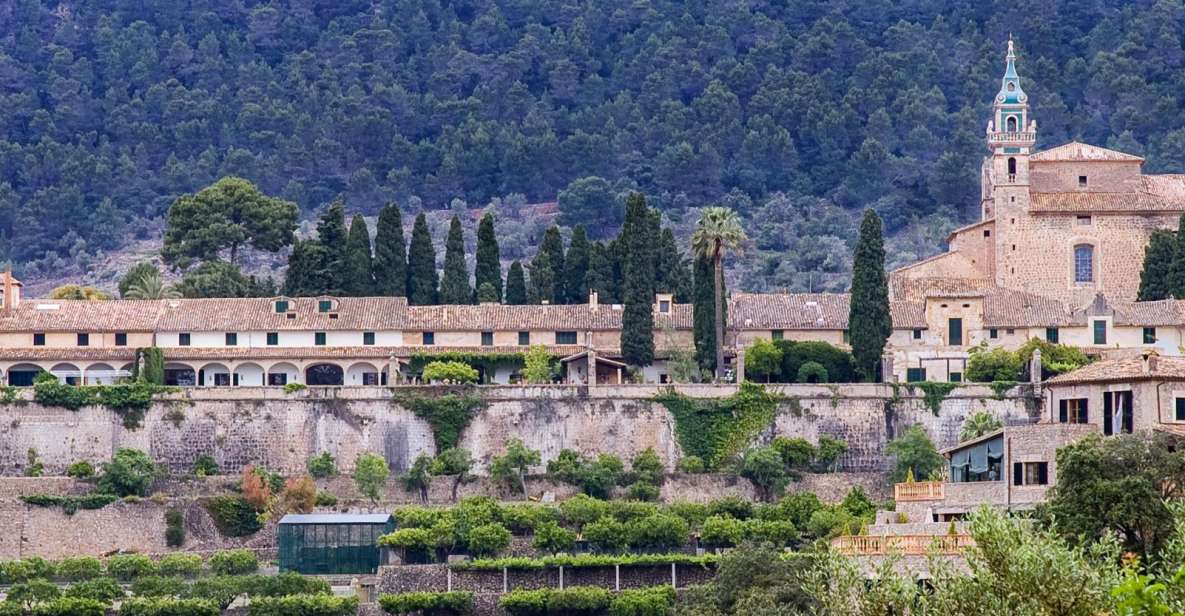
Quiet corridors, royal ghosts, and art. This Carthusian Monastery complex in Valldemossa brings together the Royal Charterhouse and the former residence of King Sancho of Majorca in a setting that feels made for slow wandering. You’ll move through a church, palace spaces, and gardens with big valley views, all tied to centuries of monastic life and local creativity.
I especially like the way the visit mixes architecture with stories: you get Bayeu’s fresco work in the church (with the Goya-family connection) and art collections inspired by this very spot. The main thing to watch is that a few standout rooms and items may require extra payment beyond the entrance ticket, so your total spend can creep up if you want every possible add-on.
In This Review
- Key moments you won’t want to miss
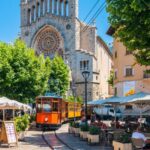
- Entering Valldemossa: your one-hour rhythm starts at the main square
- Royal Charterhouse and King Sancho’s 1309 palace
- The church with Bayeu frescoes: the Goya-family connection
- The monk corridor: white arches, private cells, 400 years of silence
- Gardens and terraces: the Valldemossa valley view makes the climb worth it
- The old pharmacy and Cell No. 2: small spaces with big stories
- Art collections: paintings, prints, and a 16th-century printing press
- Archduke Ludwig Salvator’s collection: the Sissi cousin angle
- Piano recital and audio guide: how you should use your time inside
- Price and value: what $14 buys you, and what can cost extra
- Who this fits best (and who should rethink)
- Should you book the Valldemossa Monastery entrance ticket?
- FAQ
- How long is the Valldemossa monastery visit?
- Where do I go to start the visit?
- What does the entrance ticket include?
- What languages is the audio guide available in?
- What should I bring with me?
- Is there free cancellation?
Key moments you won’t want to miss
- Royal Charterhouse origins (1309) and King Sancho’s residence inside the complex
- A 15-minute piano recital happening during your visit
- The long white-arched corridor and cells used by monks for 400 years
- Bayeu frescoes and Spanish/local art, including Joan Fuster
- Cell No. 2, the old pharmacy, and the Chopin-era thread
Entering Valldemossa: your one-hour rhythm starts at the main square
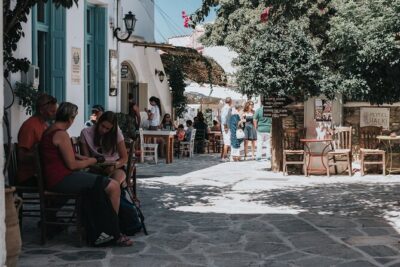
Start at the entrance right on Valldemossa’s main square, and plan to stay in the flow. This experience is timed as a 1-hour visit, and that time matters: it’s enough to see the core highlights, but not enough to treat every room like a museum stop you’ll linger in for an hour.
You’ll be given an entrance ticket plus an audio guide app. I like that combo because the monastery can feel huge once you’re inside, and headphones let you choose your pace without stopping to read every sign. Bring headphones and a charged smartphone so you don’t get stuck at the worst possible moment.
One practical note if you drive: parking in Valldemossa is for residents only. It usually means you’ll spend time hunting for a spot farther out, then walking back in. If you want a smooth start, build in a little extra margin for parking and getting to the entrance.
You can also read our reviews of more tours and experiences in Mallorca.

Royal Charterhouse and King Sancho’s 1309 palace
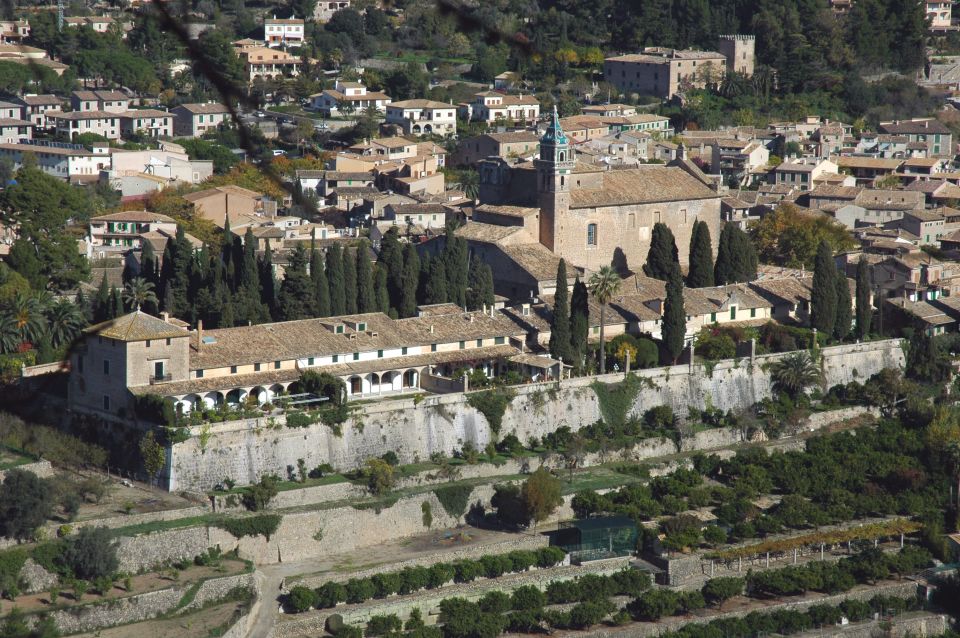
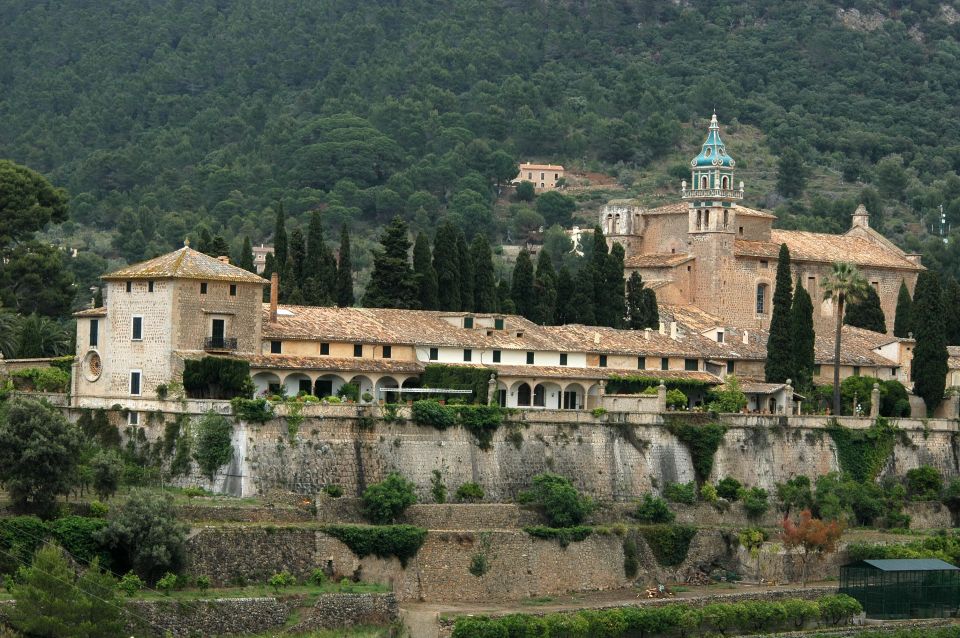
The Carthusian Monastery is monumental, but what makes it click is how it mixes power and prayer. You’ll see the former palace connected to King Sancho of Majorca, dating to 1309. That date is the kind of detail that turns the building from pretty to meaningful. It’s not just old stone. It’s the backdrop for rulers, religion, and later artists who found inspiration here.
Expect a sense of moving through layers of time: royal residence energy in the early spaces, then the calmer, stricter feel that comes with monastic design. Even if you’re not a history nut, the structure helps you understand the original purpose—this place wasn’t built for crowds. It was built for quiet, repetition, and routine.
The value here is simple: the entrance ticket gets you the core complex, so you’re not paying just to glance at a façade. You’re paying to walk inside and connect the architecture to the stories.
The church with Bayeu frescoes: the Goya-family connection
Inside, the church brings one of the clearest art hits. You’ll see frescoes by Bayeu, and the link is specific: Bayeu is Goya’s brother-in-law. That’s the kind of connection that makes a chapel feel like more than a stop on a route. It’s part of a bigger Spanish art web.
Frescoes aren’t always easy to appreciate quickly because they can be visually crowded. But the audio guide format helps you slow down at the right moments. I’d use the headphones to guide your attention rather than trying to absorb everything at full speed.
If you’re a fan of Spanish painting history, you’ll likely enjoy how the church sits in contrast with later rooms full of paintings and prints. The overall effect is that Valldemossa doesn’t just preserve art. It explains how art and faith coexisted in the same walls.
The monk corridor: white arches, private cells, 400 years of silence
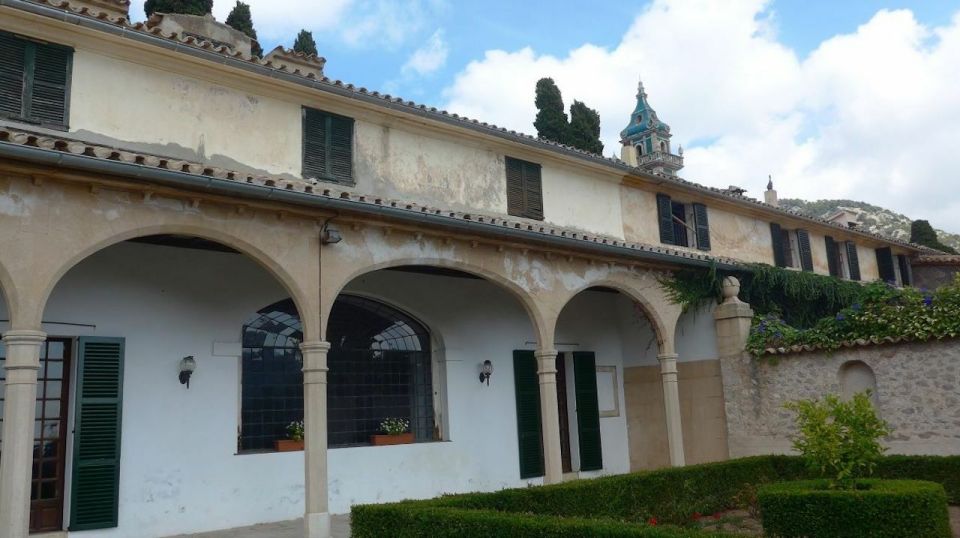
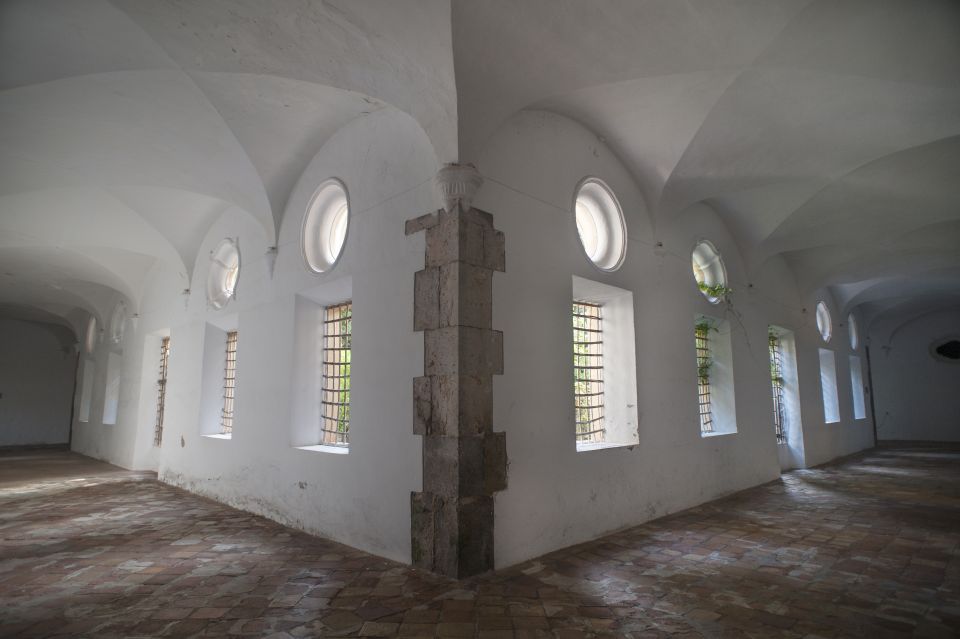
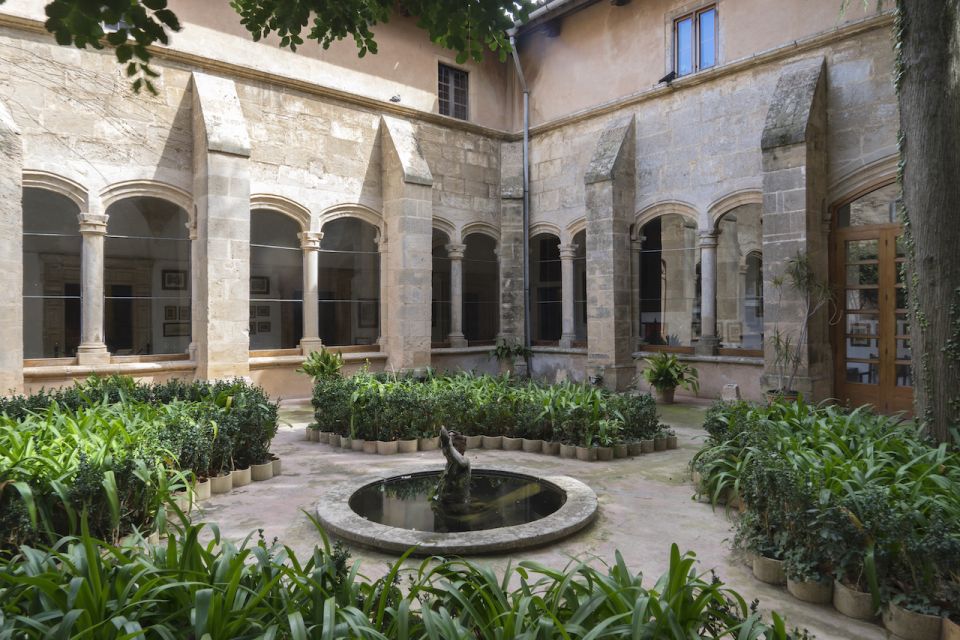
This is where the monastery becomes physical in a way that photographs don’t fully capture. You’ll notice a long corridor with white arches leading to the monks’ cells, places where monks sought peace and rest for 400 years.
What you’re really seeing isn’t just a hallway. It’s a design system for isolation. Each cell represents a life of withdrawal from daily noise, and the corridor’s repeating pattern makes that clear fast. In an age of constant distraction, it’s hard not to feel your own thoughts quiet down as you walk.
If you get sensory fatigue (stone, echo, crowds), use the audio guide to anchor you. Otherwise, the corridor can become a blur. With the guide, it stays focused.
Gardens and terraces: the Valldemossa valley view makes the climb worth it
The gardens and terraces are the monastery’s reward. You’ll get scenic outdoor space with one of the most spectacular views of the Valldemossa valley. This part matters because it breaks the heavier indoor feel. You’re not walking from one room to another; you’re shifting from stone calm to open air perspective.
I like that the views aren’t just a background. They’re tied to how artists and residents understood the place. The monastery sits where the landscape shapes the mood. You can stand, look, then re-enter the complex feeling like you understand why so many people were drawn to this specific corner of Mallorca.
If you tend to move quickly, still pause here. Even a short stop is worth it, because the view gives context to everything you just walked through indoors.




The old pharmacy and Cell No. 2: small spaces with big stories
Two stops are especially “hands-on” in feel.
First, the monastery includes an old pharmacy with ancestral utensils and medicines still there. It’s a different kind of history than royal halls or artwork. It shows the practical side of monastery life—how care, preparation, and remedies belonged to daily routines.
Second, you can visit the famous Cell No. 2. This is one of the most referenced parts of the Valldemossa story, and it creates an immediate human connection: the place wasn’t only for monks in centuries past, it later became part of the broader cultural memory of Mallorca.
One caution from real-world experience: if you’re hoping to add every extra museum room tied to the famous Chopin-era connection, plan for potential separate payments beyond the entrance ticket. The entrance gets you the main complex, but some specific add-ons can cost extra. If your budget is tight, decide ahead of time which extra rooms are truly worth your money.
Art collections: paintings, prints, and a 16th-century printing press
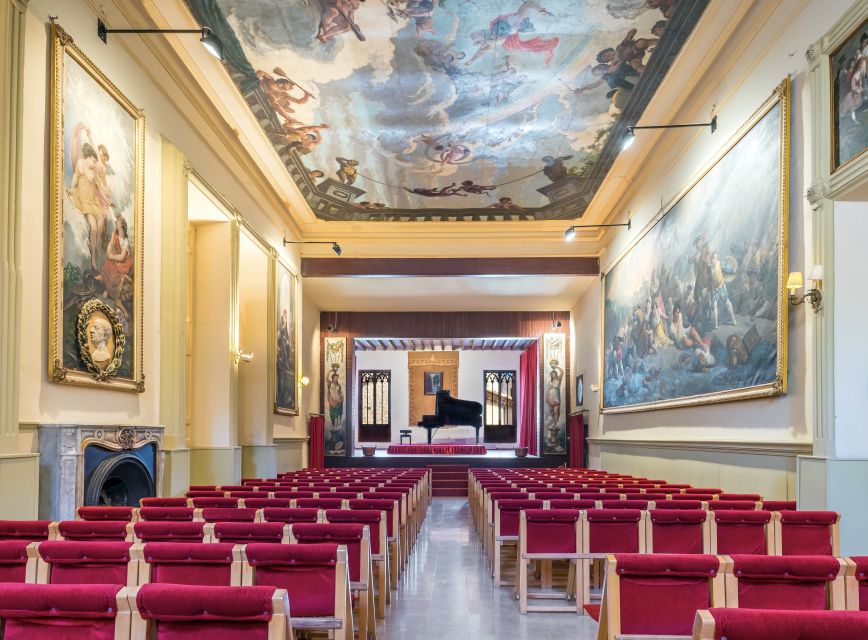
After the monastic spaces, the art sections feel like a shift in lighting and intention. You’ll see collections of artworks and artifacts with inspiration drawn from local and famous artists. The list includes Joan Fuster, plus other Spanish and local painters.
The standout production detail is the 16th-century printing press and woodcut collection. That’s not just background trivia. It’s how you understand that art here isn’t only about paintings on walls—it’s also about how images were made, reproduced, and shared.
Woodcuts and print tools tend to feel technical, and technical objects can become boring fast. But in a place like this, they help connect the monastery to culture and communication. You’re seeing a workflow of ideas, not just finished artworks.
If you’re the type who likes to “get the theme” rather than memorize artists, focus on how the collections demonstrate influence: the location attracts creators, then the monastery preserves what they left behind.
Archduke Ludwig Salvator’s collection: the Sissi cousin angle
You’ll also find a collection connected to Archduke Ludwig Salvator of Austria, described as Empress Sissi’s cousin. The story includes how he came to Mallorca on a steamship and ended up falling for this part of the island.
This is a smart stop for two reasons. First, it adds a different historical thread beyond local Majorcan life. Second, it explains how Valldemossa stayed culturally relevant long after its earliest monastic purpose.
The key is to treat this as a lens rather than a checkbox. When you see these items after the corridor of cells and the church frescoes, you start noticing the pattern: Valldemossa keeps becoming a meeting point for people who are looking for something—quiet, inspiration, or both.
Piano recital and audio guide: how you should use your time inside
During your visit, you’ll hear a 15-minute piano recital. That’s a lovely match for this building. The monastery’s acoustics and mood can make live music feel more intimate than it would in a modern hall.
It also helps your timing. A one-hour experience can feel like a sprint unless something anchors it. The recital gives you that anchor, and you can plan your wandering around it.
The audio guide app is included, and it’s available in multiple languages: Catalan, English, French, German, and Spanish. The app name is Cartoixa de Valldemossa. I strongly recommend you download it before you arrive, because while there is free WiFi in Valldemossa, you don’t want to depend on it at the exact moment you need it.
Practical move: once you start, keep your phone in airplane mode after download, and just use the audio offline if your app allows it. Less power drain, less stress.
Price and value: what $14 buys you, and what can cost extra
The ticket price is around $14 per person, and for a one-hour guided-by-audio experience that includes the entrance and a piano recital, it’s good value if you want the main monastery experience.
Here’s the balanced part: the complex is big, and some specific rooms connected to famous stories may require separate payment. One example to keep in mind is the Chopin-related room connection and a museum component, which some people find confusing because it feels like it should be part of the main ticket.
So I’d treat the entrance ticket as covering the heart of the monastery, then decide on add-ons based on what truly matters to you. If you’re mainly there for the architecture, gardens, corridor, church frescoes, and art collections, the entry cost does the job.
Who this fits best (and who should rethink)
This is ideal for you if you like:
- Old buildings you can actually walk through, not just look at
- Art and craft details, including prints and the 16th-century printing press
- Places where music can feel like part of the building, not a random scheduled event
- A one-hour plan that doesn’t require a half-day commitment
It may be less ideal if:
- You hate optional add-ons and want everything included in one clean fee
- You need lots of time in each room. This visit is designed to be efficient.
If you’re in Palma and want something close (the monastery is about 20 minutes from Palma), it’s also a strong choice for a half-day pace without feeling rushed all day long.
Should you book the Valldemossa Monastery entrance ticket?
Yes, book it if you want the core Carthusian experience: King Sancho’s 1309 palace spaces, the church fresco connection to Bayeu and Goya’s family, the monks’ corridor with white arches and centuries of quiet, plus gardens with major valley views. Add the 15-minute piano recital and the convenience of a multilingual audio guide, and you’ve got a solid hour-long cultural hit.
Hold off or plan your budget carefully if you know you’ll want every extra museum room tied to the Chopin-era story. The entrance is a strong foundation, but a few add-ons can increase the total.
If you like your sightseeing with structure—start at the main square, follow the complex, listen to music, then exit with clear memories—this ticket is an easy yes.
FAQ
How long is the Valldemossa monastery visit?
The experience is listed as 1 hour. Starting times depend on availability.
Where do I go to start the visit?
You should come directly to the entrance on the main square of Valldemossa.
What does the entrance ticket include?
It includes the entrance ticket, a downloadable audio guide app, and piano recitals during your visit.
What languages is the audio guide available in?
The audio guide app is available in Catalan, English, French, German, and Spanish.
What should I bring with me?
Bring headphones and a charged smartphone.
Is there free cancellation?
Yes. You can cancel up to 24 hours in advance for a full refund.