REVIEW · MADEIRA
Level 1 – Canyoning For All – Beginner | Funchal
Book on Viator →Operated by Go Canyoning Madeira · Bookable on Viator
Waterfalls, ropes, and you in Madeira. This beginner canyoning outing turns a short day into a hands-on mix of safety-first guiding and splashy fun, with seven waterfall descents plus a pool you can jump into over and over.
What I like most is how guides such as Dan and Edgar run the training at a pace that actually helps you feel confident before you commit to the ropes. I also really value that the essentials are all handled for you: wetsuit, helmet, harness, boots, and neoprene socks, plus professional photos and video to take home.
One thing to plan for: the short return walk back after the canyon can feel like a climb, and it is not for the weary.
In This Review
- Quick hits: what makes this canyoning stand out
- Madeira canyoning basics: beginner-friendly, but still real
- Getting there: CR7 Museum start, pickup, and timing that works
- What’s included (and why it’s a big deal): gear, PPE, and photos
- Safety briefing and guiding: how beginners get comfortable fast
- Entering the canyon: seven waterfall descents by rappel and pulley
- Toboggan slide and the jump-in pool: where the fun peaks
- The hike back: short, but it can feel like a climb
- Price and value: what $78.64 really buys you
- Who should book this canyoning trip
- Should you book this canyoning tour?
- FAQ
- How long is the canyoning experience?
- Where do you meet, and is pickup offered?
- What time does the tour start?
- What’s included in the price?
- What should I bring for myself?
- How big are the groups?
Quick hits: what makes this canyoning stand out
- CR7 Museum pickup in Funchal makes it easy to start without fuss
- Maximum 8 travelers keeps the experience hands-on and not crowded
- Seven waterfalls with rappel and pulley technique gives you real canyon time
- Toboggan slide + jump-in pool adds variety beyond just rope work
- Gear and PPE included means you show up and go
- Photos and video included so you can relive the good moments fast
Madeira canyoning basics: beginner-friendly, but still real
This is canyoning in Madeira at a true beginner level, which matters more than it sounds. Canyoning can look intimidating on social media—ropes, heights, wet rock—and the biggest difference between a good beginner trip and a scary one is how the guides teach technique and control the pace.
Here, the format is built for first-timers: you get outfitted, you receive a safety and technical briefing, and then you move step by step into the water. Even if you have never worn a harness before, the activity is designed so you learn what you need right when you need it, instead of hoping it clicks on the fly.
The core promise is simple: you descend seven waterfalls, using rappel and pulley methods, then you finish with a natural toboggan slide and a jump into a crystal-clear pool. You’re not just watching nature. You’re actively doing the moves—under supervision—while Madeira’s greenery frames the whole time.
You can also read our reviews of more tours and experiences in Madeira.


Getting there: CR7 Museum start, pickup, and timing that works
The meeting point is at the CR7 Museum in Funchal (Praça CR7, Av. Sá Carneiro 27, São Martinho). The good news is you do not have to worry about finding a remote trailhead on your own. Pickup is offered, and your guide team will meet you at or near the museum area.
The start time is 9:30 am, and the activity runs about 3 hours in total. That time window is useful if you want adventure in Madeira without losing your whole day. After the canyon, you’ll walk back for about 10 minutes, then you’re taken back to the meeting point.
It also helps that the group is capped at 8 travelers. Smaller groups tend to mean fewer bottlenecks at each waterfall and more attention per person during the rope stages and water entries.
What’s included (and why it’s a big deal): gear, PPE, and photos
You do not need to bring your canyoning gear. The package includes what matters for comfort and safety: wetsuit, helmet, harness, boots, and neoprene socks. For a beginner, this is huge value, because the hardest part is not just the waterfalls—it’s showing up dressed correctly for cold water, slippery rock, and repeated splashes.
Wearing the right protection changes the whole vibe. A wetsuit keeps you comfortable enough to focus on technique. A helmet matters because canyoning is hands-on, and falling or bumping into wet rock can happen faster than you expect. Neoprene socks and proper boots improve grip, and grip makes you feel steadier when you’re maneuvering on slick surfaces.
Then there’s the part people are happy about later: professional photos and videos are included. In canyoning, your hands are busy, and you often cannot stop for photos. Having the team capture moments means you leave with proof of the fun instead of just soaked memories.
One small note: snacks aren’t included, so if you snack between morning plans, plan to pick something up before you arrive.
Safety briefing and guiding: how beginners get comfortable fast
The experience is certified-guided, and the guides build your confidence the way you want it done: slow, clear, and practical. In the feedback, the pattern is consistent—guides go through the safety steps, explain what happens at each stage, and keep everyone moving only when they’re ready.
Names came up like Dan and Edgar, and the themes were the same. They do not rush. They show you what the next move will feel like. They confirm you’re comfortable before the group commits to each descent or jump.
That matters on waterfalls. The psychological hurdle often comes before the physical one. If you know what to do—how to position your body, what to expect with the rope, and how the pulley/rappel system works—you spend less energy on fear and more on enjoying the moment.
Also, the guides actively encourage you. That sounds fluffy, but it’s practical: encouragement keeps people from hesitating at exactly the wrong time. It also helps you stay focused during water entries, where balance is different than on dry ground.
Entering the canyon: seven waterfall descents by rappel and pulley
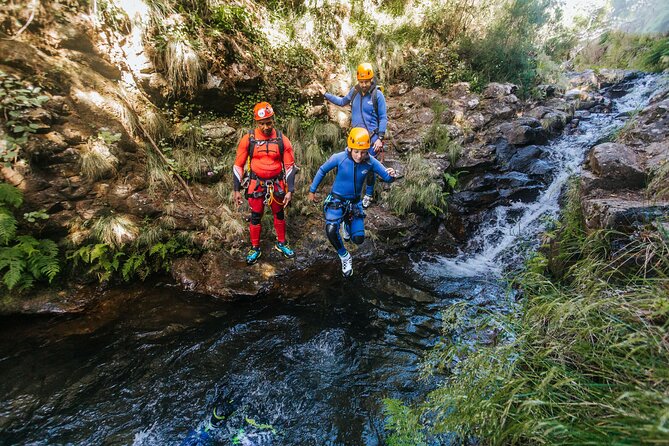
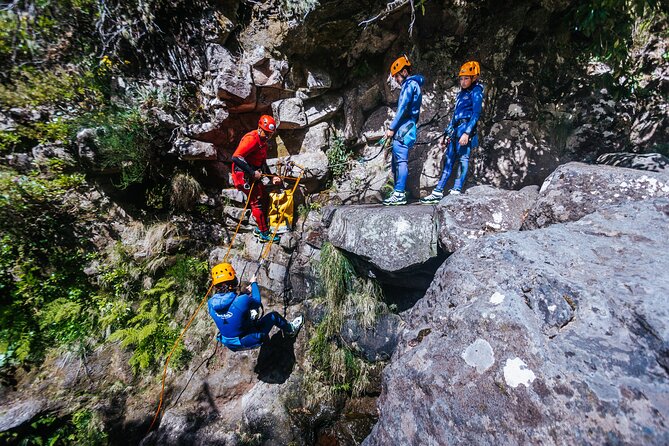
Once you start, the structure is straightforward. You’re equipped, briefed, and then you move into the action. Expect a sequence of descents as you travel down the canyon—seven stunning waterfalls in total—using rappel and pulley techniques.
Even if you’re new, you’ll likely feel a pattern:
- A quick setup
- A short explanation tied to that specific waterfall
- Time to understand hand and body positions
- Then the descent itself, with the team supervising your control and pace
The rappel and pulley combination is a smart way to teach. It lets beginners experience different motions without it becoming a pure technical course. The goal here is not to train you into a canyon professional. It’s to help you safely experience canyoning, learn enough technique to stay confident, and finish with the kind of bragging rights you can actually back up.
The waterfalls are the headline, but the canyon walls and the water’s motion add realism. You’re not only looking at a view; you’re moving within it.



Toboggan slide and the jump-in pool: where the fun peaks
After the waterfall stages, you get the kind of moments that make canyoning feel like a playground. There’s a natural toboggan slide, which is exactly what it sounds like: a smooth ride down a natural slope formed by the water and the rock. If you’re nervous about ropes, this section can feel like a relief because it’s more playful and less technical.
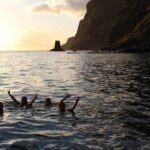
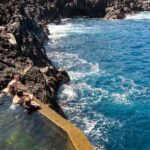
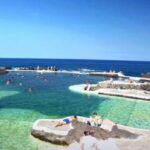
Then you reach the best kind of payoff: a crystal-clear pool where you can jump and repeat the action as many times as you want. This is not a one-and-done stop. It’s a give-yourself-a-grin section where you can build momentum, jump again, and play with your own comfort level.
If you’re the type who wants your activity to be fun in addition to scenic, this is where you’ll feel it. It’s also a good equalizer. Even if someone in the group struggles a bit with the rope stages, the pool time tends to bring smiles back for everyone.
The one real consideration: you need to be okay with water, slipping, and the feeling of dropping. You don’t need fearlessness. You do need willingness.
The hike back: short, but it can feel like a climb
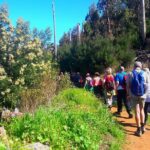
After the pool and slide, you’ll do a short walk back of about 10 minutes to the starting area. That sounds easy, and for some people it is. But one common caution shows up in the feedback: the hike back up can feel tough if you’re not used to hills or exertion.
So if you’re older, recovering from an injury, or simply not great with uphill effort, don’t ignore it. The canyoning itself can be taught for beginners, but your legs still have to handle the return.
The good strategy is to treat that walk like part of the experience. Take your time on the uneven ground. Stay hydrated if you can before the tour. And wear footwear that makes sense for slipping terrain, even though the boots provided help.
Price and value: what $78.64 really buys you
At about $78.64 per person for roughly 3 hours, this is not a bargain activity in the cheap-seat sense. It is priced more like an adventure service—guided, equipment-included, and photo-backed.
Here’s why the value works:
- All core gear is included, so you’re not paying extra for rentals or special clothing
- Certified guides handle the safety setup and technical instruction
- You get a full beginner canyoning circuit, not just a quick sample
- Photos and videos included reduce the cost of trying to capture your own proof
If you compare it to other outdoor activities in Madeira that require bringing your own gear or paying for separate rentals, the package becomes easier to justify. You’re mostly paying for expertise, safety, and the built-in “content” of the experience—the waterfalls, the slides, the pool time, and the documented memories.
What you should budget for beyond the tour itself is simple: snacks (not included) and any personal items you want for after (water, a quick meal, a change of clothes).
Who should book this canyoning trip
This trip fits best if you want:
- a beginner introduction to canyoning in Madeira
- guided rope and pulley experiences without needing prior skill
- an activity that mixes technique with pure fun, especially at the toboggan and jump pool
- a group setup that stays small (up to 8) and guided closely
It’s also a strong choice for families and mixed-age groups, as long as everyone is comfortable with wet rock and the general idea of jumping in. The guides create an encouraging atmosphere, which helps first-timers relax into the day.
If you’re someone who hates being wet, panics at heights, or struggles with slippery footing, this may not be your best fit. The pool jumping and canyon-water entries make the activity inherently physical and wet.
Should you book this canyoning tour?
Yes—if your idea of a great Madeira day is active, water-based fun with real guidance. This is the kind of beginner canyoning experience where the safety briefing and patient teaching make the difference, and the mix of seven waterfalls, a natural toboggan slide, and repeat jump time gives you plenty to do in just a few hours.
I’d think twice if you’re worried about the return walk and uphill feeling, since the short climb back is the one part that can catch people off guard. If that’s you, talk to the provider when you book and be honest about your mobility needs.
FAQ
How long is the canyoning experience?
The experience runs for about 3 hours (approx.).
Where do you meet, and is pickup offered?
You meet at the CR7 Museum in Funchal. Pickup is offered from there.
What time does the tour start?
The start time is 9:30 am.
What’s included in the price?
Gear is included: wetsuit, helmet, harness, boots, and neoprene socks. Professional photos and videos are also included.
What should I bring for myself?
Snacks are not included. You may also want to plan for your own food if you need something before or after.
How big are the groups?
The maximum group size is 8 travelers. Confirmation is received at the time of booking, and most travelers can participate.