REVIEW · CRETE
Knossos & Archaeological Museum Shared Guided Tour from Chania
Book on Viator →Operated by SeaByBus Explore Crete · Bookable on Viator
Knossos in one solid morning is a smart plan. This small-group tour blends Knossos myths, a guided pass through the palace, and the standout Heraklion museum into one efficient day. I love that it starts with direct pickup and uses the bus ride to explain Cretan customs. One thing to consider: the tour price covers guiding and transport, but Knossos and the museum entrances cost extra.
What I like most is the pacing. You get a focused guided palace route at Knossos (about 1 hour 30 minutes there), then a guided museum visit (about 1 hour), and finally a light Heraklion walk (about 2 hours) so you’re not stuck in a timeline sprint. I also appreciate the group size of up to 15, which makes questions easy without feeling rushed.
A possible drawback is simple logistics. The drive from Chania city center to Knossos is about 2 hours with no breakfast or bathroom stops, so plan your timing before you leave and bring a little patience for the morning stretch.
In This Review
- Key things to know before you go
- A 10-hour Knossos and Heraklion day that starts with pickup
- The value question: what you pay (and what costs extra)
- Small-group travel: why 15 people changes the whole day
- On the bus: Cretan customs, plus real comfort
- Stop 1: Knossos Archaeological Site and palace myths
- How the visit actually feels
- The entrance fee is worth knowing
- Stop 2: Heraklion Archaeological Museum in about an hour
- Why 1 hour works
- Stop 3: Heraklion city walk and sights between stops
- How to make the city time count
- Who this tour suits best (and who might want a different plan)
- Practical tips so your day runs smoothly
- Is it worth booking? My honest take
- FAQ
- How long is the Knossos & Archaeological Museum shared guided tour from Chania?
- What time does the tour start?
- Is hotel pickup included?
- Is the Knossos entrance fee included in the tour price?
- Is the Heraklion Archaeological Museum ticket included?
- What’s included in the tour?
- Does the tour operate year-round?
Key things to know before you go
- Pickup-first convenience from your Chania area lodging, plus a minibus drop strategy for the Venetian harbor/old town
- Max group of 15 for clearer explanations and a calmer experience at busy ruins
- English-focused guiding at Knossos palace, with a local tour leader on the bus who speaks English and German
- Bus extras that matter: air-conditioning, WiFi, and USB charging ports
- Knossos myths get explained as you walk, instead of seeing the palace like a checklist
- Extra comfort touches you can count on, like cold water and snacks mentioned by past guests
A 10-hour Knossos and Heraklion day that starts with pickup
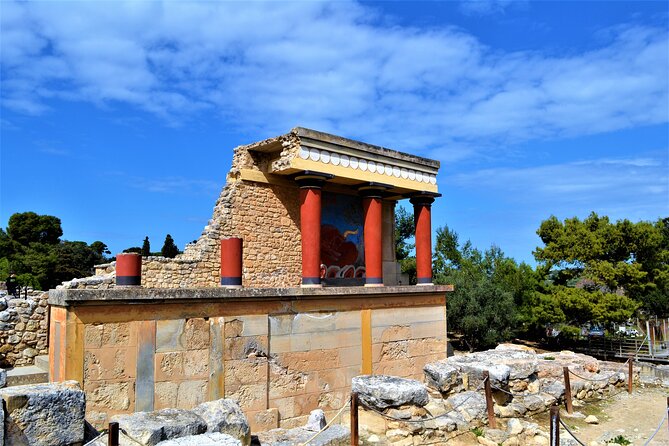
This is the kind of tour that works well when you want a lot of Cretan highlights without spending your whole day planning bus connections. You start at 8:00 am and travel by air-conditioned vehicle with onboard WiFi and USB charging ports. The tour also includes an audiovisual presentation about Cretan customs during the ride, which helps you get context before you hit the ruins.
The timing is practical for day-trippers. From the Chania city center area, you’re looking at about 2 hours driving toward Knossos, and the schedule is set up so you arrive ready to move. That means you won’t have long gaps for wandering on the drive, but it also means you’re not burning daylight getting there.
If you’re staying in the Venetian harbor or the old city, pickup may be from the closest bus stop accessible by a minibus. That’s normal on Crete (streets can be tight), but it’s worth checking your meeting point description so you’re not hunting at 7:50 am.
You can also read our reviews of more tours and experiences in Crete.

The value question: what you pay (and what costs extra)
The advertised price is $108.13 per person, and it covers the practical parts: transport, guiding, and the overall structure of the day. You’re also paying for a small group experience, and that usually makes a difference when the site is crowded.
Two big costs are not included:
- Knossos Archaeological Site entrance: €20 per person
- Heraklion Archaeological Museum entrance: €20 per person
So, you should expect to budget roughly €40 total in admission fees on top of the tour price (depending on your situation). The upside is that your guiding is already built in: you’re not just buying a ticket and being left alone with ruins. You’re paying for someone to connect the myths, architecture, and objects into something you can actually remember.
Small-group travel: why 15 people changes the whole day
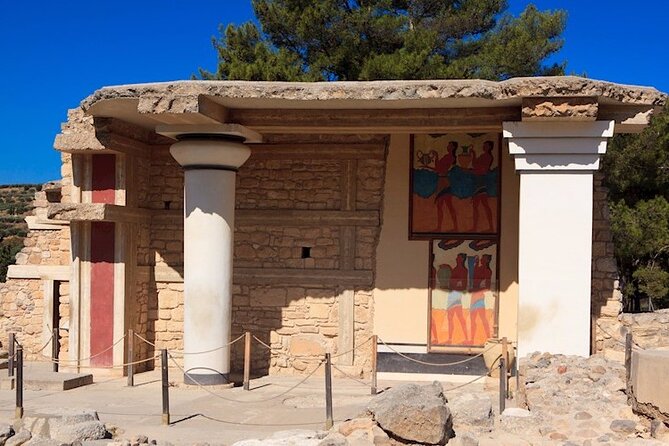
At Knossos and inside the museum, crowds can make even well-known attractions feel like a race. Keeping the group to a maximum of 15 helps you get through without feeling swallowed by the mass of tour buses. You also have more room for questions, which is where the guided format pays off.
A helpful detail is the mix of guidance roles. There’s a local tour leader on board (speaks English and German) and then you get a guided Knossos palace walkthrough in English. That separation can be a good thing: you get the big-picture context on the bus, then you focus on the palace route with an on-site guide.
And because you’re in a small group, the day feels more like an organized chat with a plan. Even solo travelers tend to feel included because you’re not stuck watching everyone else from the back.
On the bus: Cretan customs, plus real comfort
The bus portion isn’t just a transfer. You’ll have an audiovisual presentation about Cretan customs during the ride. That’s the kind of thing that makes the myths and daily-life details at Knossos and Heraklion feel less random.
On the comfort side, you get:
- Air-conditioned vehicle
- WiFi on board
- USB charging ports
It’s also a longish morning, so having that comfort matters. Several past guests highlighted that the day included cold water and snacks, which is a small detail but a big help when you’re moving early and walking in heat.
If you get carsick easily, it can still help to sit near the front and keep hydrated. The route is direct enough, but it’s still a two-hour drive before the first big stop.
Stop 1: Knossos Archaeological Site and palace myths
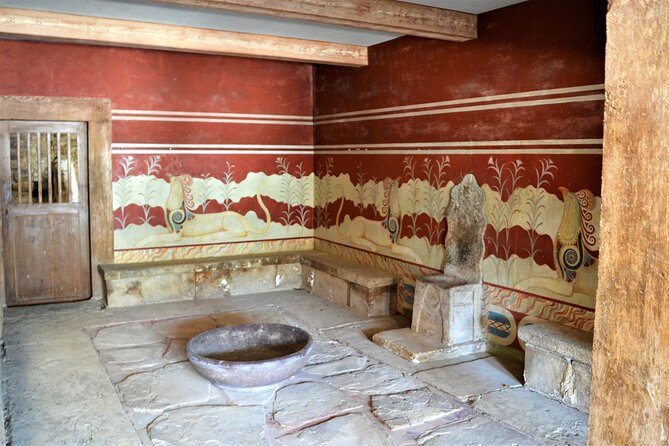
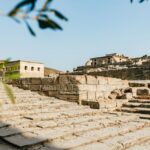
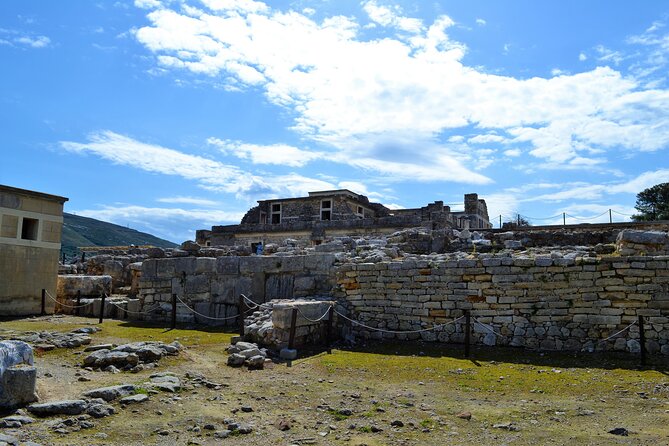
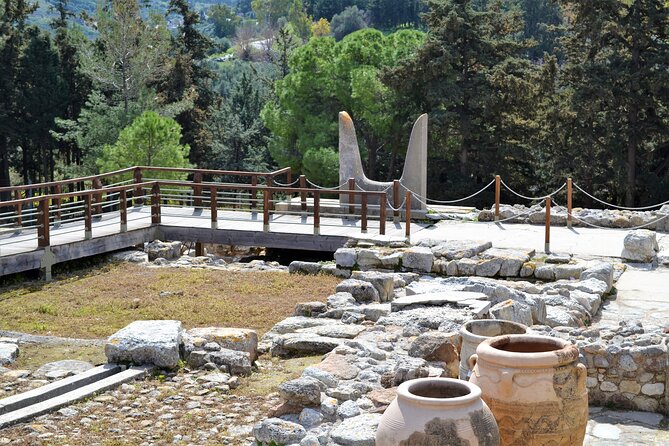
Knossos is about more than famous ruins. It’s the heart of the Minoan civilization, located roughly 5 km southeast of Heraklion, in the valley of the river Kairatos. What makes it special is the scale and the time depth. It’s often described as the largest Bronze Age archaeological site on the island, and the story stretches from an early Neolithic settlement into the long arc of Minoan life.
Here’s the key timeline that your guide can help make sense of: Knossos was inhabited for thousands of years, then was abandoned around 1375 BC after destruction that marked the end of the Minoan civilization. Later, excavation history matters too. In 1878, the first large-scale excavations were led by Minos Kalokairinos when Crete was still under Turkish occupation. The later work by Sir Arthur Evans (1900–1913 and 1922–1930) is what uncovered much of the surrounding area that people recognize today.


How the visit actually feels
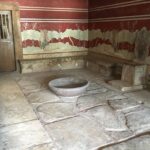
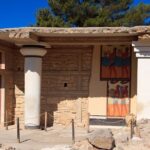
You spend about 1 hour 30 minutes at Knossos, and you get a guided route through the palace where the myths are explained. The palace is where you’ll most benefit from being with a guide. The rooms, corridors, and reconstructions can look confusing if you only have signage. With guidance, you’re more likely to connect what you’re seeing to what the stories claim.
Also, you’ll want to plan for walking on uneven ground. Wear shoes you’re happy to get dusty, and bring sun protection. The tour format doesn’t mention that it’s an easy stroll, so assume you’ll be on your feet.
The entrance fee is worth knowing
The Knossos site entrance fee is €20 per person and isn’t included. If you’re traveling with another person, it’s handy to confirm how you’ll handle payment on the day so you don’t slow the group during arrival.
Stop 2: Heraklion Archaeological Museum in about an hour
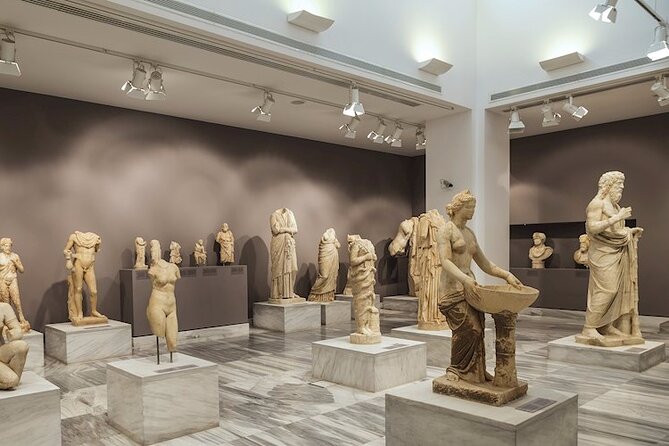
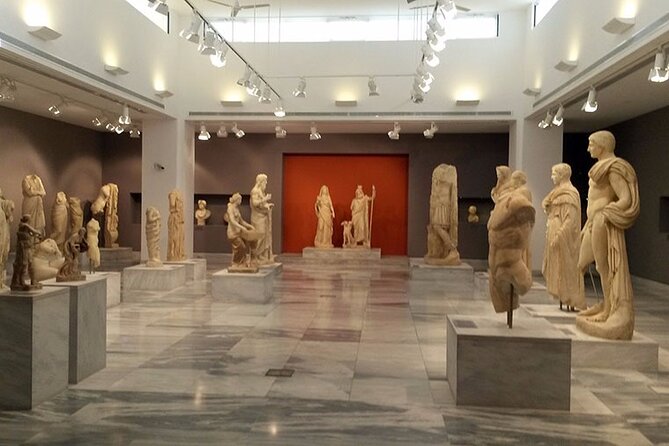
After Knossos, the day shifts from ruins to artifacts. The Archaeological Museum of Heraklion is one of Greece’s largest and most visited museums, and it’s also one of the most important in Europe. The big selling point is the chronological sweep: exhibitions cover more than 5,500 years, moving from Neolithic times through Roman periods.
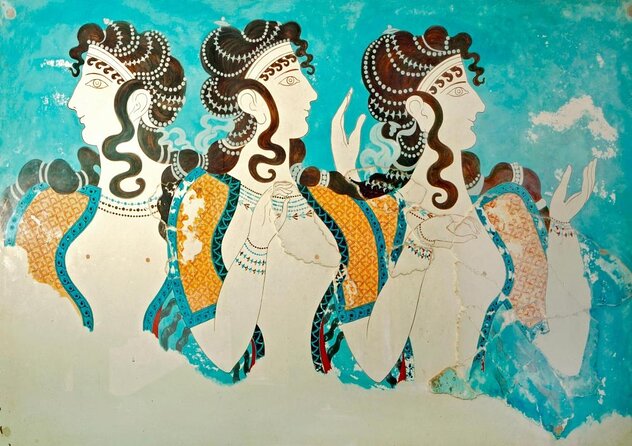
But the reason many people care most is the Minoan collection. You’ll be looking at unique examples of Minoan art—many described as true masterpieces in the tour description—so this stop is a chance to see how art and daily life connect to the palace world.
Why 1 hour works
You’ll have about 1 hour here. That’s not long enough to read every label, but it is enough time to hit the main galleries without feeling trapped. A guided format helps you spot what matters first, and you can always decide what to linger on afterward if you have energy.
The museum itself has its own story. It was built between 1937 and 1940 by Patroklos Karantinos, and it was erected on the site of a Roman Catholic monastery of Saint-Francis, destroyed by earthquake in 1856. Even the building materials and colors are said to resemble elements from certain Minoan wall paintings, which makes the setting part of the experience.
One practical note: museums can feel crowded, so headphones aren’t provided (and aren’t listed). If you prefer a quiet pace, this is still doable, but you may have to choose between full engagement with the guide and slow browsing on your own.
Stop 3: Heraklion city walk and sights between stops
The last major component is Heraklion, the capital of Crete. It’s described as the fifth largest city in Greece, and it has the kind of layered architecture that only long-settled places can manage—Greek, Roman, Venetian, Byzantine, and more.
Your time is about 2 hours, which is enough for a light walk and a few key visual checkpoints. The tour description points to several standouts, including Venetian architecture like the Venetian Fortress at the entrance to the port and the Venetian Loggia, where the town hall is located today. You’ll also get a look at Byzantine churches and monasteries, fountains from Venetian times, the Church of Saint Markus, and some neoclassical buildings.
How to make the city time count
Because the city stop is time-boxed, treat it like a “get your bearings” phase. I’d use the guide’s pointers to choose where you want to return later, rather than trying to see everything in two hours. If you like photos, Heraklion’s mixed architecture gives you quick variety—arches, facades, and church silhouettes.
Also, this is the moment where you can choose a café break if the group timing allows it. The day has a clear structure, but city time is flexible enough that you can pick something practical nearby.
Who this tour suits best (and who might want a different plan)
This day trip fits best if you want high value per hour. If it’s your first time on Crete and you’re short on time, the combination of Knossos + guided palace + major museum + city walk is a strong use of a single day.
It’s also a good option if you travel with mixed interests. The palace route focuses on myths and context, while the museum gives you the artifact side that history buffs often want. Families can work too—the tour has a small group size that tends to feel manageable.
This may not be ideal if you want deep, unstructured wandering at Knossos or you dislike early starts. The morning is efficient, but it’s not a slow-living route. If you prefer to linger in one place for hours, consider spending separate days on Knossos and on Heraklion.
Practical tips so your day runs smoothly
A few things I’d do to make the day feel easy, not hectic:
- Bring entrance-payment ready for €20 + €20. The tour doesn’t include either admission fee.
- Wear comfortable shoes you trust on uneven ground at the palace site.
- Use sun protection—you’ll be outside at Knossos and walking through parts of the city.
- Hydrate early. The tour includes cold water/snacks, but you’ll still want to drink before you get thirsty.
- Charge your phone beforehand and plan to use the USB ports if your battery is already low.
- Arrive early for pickup. You’re aiming to leave on time, especially because the driving portion is scheduled.
Is it worth booking? My honest take
If you’re deciding between a DIY plan and a guided day trip, this is the kind of itinerary that often wins on clarity. You’re paying for a guided Knossos palace route in English, a structured museum visit, and transport that starts with pickup from your Chania area base. The small group size of 15 helps keep the experience readable rather than chaotic.
The only real “but” is the added cost of admissions on the day. Still, when you add in the guiding and the time efficiency—plus comfort features like WiFi, USB charging, and air-conditioning—it can feel like a fair deal for a complete Knossos-and-Heraklion overview.
FAQ
How long is the Knossos & Archaeological Museum shared guided tour from Chania?
It runs for about 10 hours.
What time does the tour start?
The start time is 8:00 am.
Is hotel pickup included?
Yes. Pickup is offered from your island accommodation, and for the Venetian harbor and old city, pickup is from the closest bus stop accessible by a minibus.
Is the Knossos entrance fee included in the tour price?
No. Knossos Archaeological Site entrance is €20 per person and is not included.
Is the Heraklion Archaeological Museum ticket included?
No. The museum entrance is €20 per person and is not included.
What’s included in the tour?
Included features are audiovisual presentation on Cretan customs on the bus, USB charging ports, a local tour leader (English & German speaking), a guided tour in Knossos palace (English), public liability insurance, small group up to 15 people, WiFi on board, and an air-conditioned vehicle.
Does the tour operate year-round?
No. It operates every Monday in May and every Tuesday in September.
If you want, tell me your travel month and where you’re staying in Chania, and I’ll help you sanity-check the pickup plan and whether the extra entrance fees fit your budget.