REVIEW · FUERTEVENTURA
Fuerteventura: Panoramic Island Tour. Visiting all Hotspots
Book on GetYourGuide →Operated by FUERTETRAVELS · Bookable on GetYourGuide
A day that feels like driving the whole island. I love how this tour is built around must-see viewpoints and historic stops without turning into a rushed chaos-fest, and the small group keeps conversations real. You’ll also get real Canarian context from the local guide, with humor and clear explanations, whether it’s about farms, geology, or local culture.
Second, I like the mix of quick photo stops and actual time to breathe in places like Ajuy and Betancuria, so the day has rhythm, not just checkpoints. The one trade-off: it’s a long 7-hour loop with lots of getting on and off the minivan, plus walking at several stops, so you’ll want comfortable shoes and to think twice if you’re sensitive to motion or altitude.
In This Review
- Key highlights that make this tour worth your time
- Why this 7-hour loop covers so much without feeling chaotic
- Pickup to drop-off: plan your morning around the minivan schedule
- Corralejo dunes and the first miradors: setting the tone early
- Ajuy caves and limestone coast: where you slow down for free time
- Betancuria and Parque Rural de Betancuria: the historic capital vibe
- Tuineje, Tindaya, and the interior viewpoints: farming valleys meet volcano stories
- Windmills, hills, and lava areas: Calderón Hondo to Monte Muda
- Sicasumbre viewpoint and Río Palmas: a starry-sounding stop that’s still about views
- Pájara, Puerto del Rosario, and the return toward the coasts
- Molinos de Tefia, Antigua, Tarajalejo, and La Oliva: traditional towns at the end
- Lunch stop and coffee break: the food rhythm you’ll appreciate on a full day
- The local guide experience: why named guides keep popping up
- What you’ll actually walk (and what you’ll mostly view from the van)
- Price and value: why $85 makes sense for a full-island day
- Who should book this tour, and who should skip it
- Should you book the Fuerteventura Panoramic Island Tour?
- FAQ
- How long is the Fuerteventura Panoramic Island Tour?
- How many people are on the tour?
- Is pickup included?
- Do you get a lunch break?
- What languages is the guide available in?
- Where does the tour go during the day?
- What should I bring?
- What can’t I bring on the tour?
- Is the tour suitable for wheelchair users or limited mobility?
- Is the tour okay if I have motion sickness or altitude sickness?
- What if I book and need to cancel?
Key highlights that make this tour worth your time
- Max 8 travelers keeps it personal, not packed.
- Historic Betancuria plus Parque Rural de Betancuria gives you the island’s older heart.
- Ajuy adds dramatic coastal caves and limestone scenery with actual free time.
- North, South, and West in one day means big variety: dunes, miradors, lava areas, and traditional villages.
- Coffee break + lunch stop in a Canarian restaurant/bar keeps you fueled for the long day.
- Multilingual local guiding (Dutch, English, French, German) with named guides like Pepe, Pierre, and Andrew leading similar tours.
Why this 7-hour loop covers so much without feeling chaotic
Fuerteventura is big, and most visitors feel the day squeeze: beaches on one side, volcano views on the other, old towns somewhere in between. This tour tackles that problem directly with a single air-conditioned minivan and a tight route that still builds in breaks.
The small-group limit (8 participants) matters more than it sounds. Fewer people means the guide can explain what you’re seeing—like why certain places feel so stark and why goats, farming, and potatoes show up in the story of the island—without shouting over a busload of strangers.
And because it’s about “highlights” rather than deep specialization, you get a day that works for short stays. If you only have a few days on Fuerteventura, this is one of the easiest ways to get your bearings fast.
You can also read our reviews of more tours and experiences in Fuerteventura.
Pickup to drop-off: plan your morning around the minivan schedule
This is hotel pickup and drop-off, which I consider a big part of the value. You can start from multiple areas including El Cotillo, Corralejo, Lajares, Puerto del Rosario, Costa de Antigua, Castillo Caleta de Fuste, Villaverde, Parque Holandés, La Oliva, and Nuevo Horizonte.
A couple practical things you should know before you book:
- You’ll need to be reachable on your mobile phone and be ready about 5 minutes early.
- Large luggage and big bags aren’t allowed in the vehicle.
- Food isn’t allowed inside the minivan, so plan on water and snacks only if you bring what the tour allows (and you’ll still stop for lunch).
If you’re staying in South Jandia, there’s an extra option: pickup there costs an additional €120 per booking.
Corralejo dunes and the first miradors: setting the tone early
You begin with a safety briefing, then head straight toward some of the island’s most photogenic terrain.
At Dunas de Corralejo, you’re looking at wide dune scenery that instantly tells you Fuerteventura isn’t just one kind of beach. Expect photo time and scenic viewpoints along the way—perfect for a first hit of variety before you move inland.
Then the tour turns to the view points:
- Mirador del Risco de Las Peñas is all about dramatic angles and fast photo stops.
- Mirador de Guise y Ayose continues the theme, giving you those “how did they build roads here?” views while the guide explains what you’re looking at.
The upside of starting with miradors: you get the geography in your head early. The slight drawback: you’ll want your camera charged, because the stops are short by design.
Ajuy caves and limestone coast: where you slow down for free time
Ajuy is one of the moments where the tour adds breathing room. You get free time here, and it’s not hard to see why: the coast area is known for caves and limestone features, and it feels different from the sandy, dune-heavy parts of the island.
This is also a good stop for stretching your legs at your own pace. Because the tour sets aside time, you can take longer photos, wander to viewpoints at your comfort level, or just sit and watch the light change on the coast.
One thing to consider: this is still a guided day with a minivan schedule, so you don’t want to over-plan your own wandering. Use the free time to explore a bit, then head back when the group does.
Betancuria and Parque Rural de Betancuria: the historic capital vibe
Next up is Betancuria, often treated like the island’s older anchor. You get a photo stop plus a chance to walk and enjoy scenic views on the way.
What makes Betancuria work well on a tour like this is the combination of:
- built-in viewpoints, so you don’t need extra logistics
- a walk that’s short enough for most people with decent mobility
- a guide who can connect the town to the wider story of the island
From there, Parque Rural de Betancuria adds nature-and-history context. It’s another photo stop with scenic viewpoints, and it helps explain why Fuerteventura’s interior feels both harsh and settled—wind, rock, and human-scale farms all at once.
If you love photos, this is one of your best stretches of the day. If you prefer beach time, you’ll still come away feeling like you understood the island more.

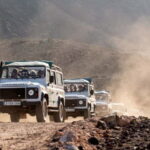


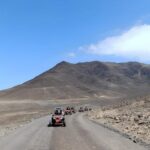
Tuineje, Tindaya, and the interior viewpoints: farming valleys meet volcano stories
After Betancuria, the tour stretches deeper into the island’s interior. Tuineje is next, with visit and sightseeing time, followed by several major lookouts.
You’ll see a mix of named natural and cultural points:
- Montana Escanfraga (sightseeing)
- Monumento a Miguel de Unamuno (sightseeing)
- Tindaya (sightseeing)
- Mirador de Vallebrón (photo stop, with sightseeing and a walk)
This is where the guided explanation becomes part of the value. The tour isn’t only showing places; it’s giving you the logic behind them—how volcanic activity shaped the terrain and how people adapted with goats, tomatoes, and cultivation. A local guide like Pepe is known for packing this kind of context into an easy pace, plus humor, so it doesn’t feel like a lecture.
Practical note: Mirador stops with walks mean you should wear shoes you can move comfortably in. It won’t be a marathon, but you’ll do more than stand still.
Windmills, hills, and lava areas: Calderón Hondo to Monte Muda
The middle-late part of the route leans into geology and classic Fuerteventura forms.
You’ll pass by and stop for:
- Molinos de Villaverde (scenic drive and photo opportunities)
- Calderon Hondo (sightseeing)
- Montaña Escanfraga (sightseeing)
- Monte Muda (scenic views on the way)
The repeating “Escanfraga” references in the stops highlight how the island’s high points show up again and again along the drive. It’s not repetitive if you pay attention: each viewpoint frames a different slice of rock, plain, and distance.
If you like “show me the real island, not just the postcard beach,” this is where you’ll start to feel you’re seeing how Fuerteventura actually functions.
Sicasumbre viewpoint and Río Palmas: a starry-sounding stop that’s still about views
One of the more memorable named stops is the Astronomical Viewpoint of Sicasumbre, Pájara, which includes a walk and scenic drive. The name sounds spacey, but during the day this stop is still about the big open horizon and wide sky—good for photos and for that sense of emptiness that volcanic islands can have.
Then Vega de Río Palmas brings in more human-scale nature and walking time. It’s sightseeing plus a walk, which gives you a little variety from only rock-and-road scenes.
From there, you’ll reach Iglesia de Nuestra Señora de la Peña as a photo stop with sightseeing. This is one of those spots where the architecture anchors the landscape, giving the drive a cultural beat.
Pájara, Puerto del Rosario, and the return toward the coasts
The route continues through Pajara, then moves toward Puerto del Rosario for visit and sightseeing. You also get La Florida as a sightseeing stop, followed by scenic drives and viewpoint-style stops like Tesejerague (Pueblo), Diego Alonso, and Juan Gopar.
This is the “read the map” section of the tour. It’s where you start seeing how the island’s towns sit against the terrain—and how quickly everything changes as you switch from interior elevations toward flatter coastal areas.
Then you hit Volcán de la Arena, Cardón, and Valle de los Granadillos. The tour keeps stacking these scenes with scenic drive and sightseeing moments, so your day feels like a connected story rather than random stops.
Molinos de Tefia, Antigua, Tarajalejo, and La Oliva: traditional towns at the end
Near the later stretch, you’ll see:
- Molino de Tefia (sightseeing)
- Antigua (sightseeing)
- Tarajalejo (sightseeing)
- Tuineje again on the scenic drive toward the coast
- La Oliva (sightseeing)
This sequence is smart for first-time visitors. By this point you’ve seen dunes, caves, miradors, and lava zones. These town stops are where you get a sense of daily life—how people live with the geology rather than treating it as decoration.
The tour ends with drop-offs back to areas like Puerto del Rosario, Nuevo Horizonte, Lajares, Castillo Caleta de Fuste, Parque Holandés, Corralejo, Costa de Antigua, Villaverde, La Oliva, and El Cotillo.
Lunch stop and coffee break: the food rhythm you’ll appreciate on a full day
The tour includes a lunch stop and a coffee break. Lunch itself is not included in the price—you purchase it at the restaurant/bar stop—but the scheduling is still valuable.
Why I like this setup:
- you don’t waste time searching for food after you’ve already been out sightseeing
- you get a Canarian place where you can refuel without derailing the route
- the coffee break gives you a mid-day reset before the later miradors and lava areas
One of the standout touches mentioned in guide-led experiences is stopping for coffee around Betancuria with the guide, which fits the historical vibe of the route.
The local guide experience: why named guides keep popping up
Guides are often hit-or-miss on island tours. Here, the tour leans into local guiding with multilingual support (Dutch, English, French, German) and a small group format that gives the guide space to explain.
In the same style of tour, guides like Pepe are known for mixing history and practical stories with humor. Other experiences led by Pierre and Andrew highlight a similar strength: they come across as friendly, supportive, and genuinely informative, including practical context about what you’re seeing—like farming and how the island got shaped over time.
Also, there’s an extra personal vibe when the guide brings a friendly dog along on some days. If you have animal allergies, this is the one you should pay attention to—this tour isn’t recommended for that situation based on the provided info.
What you’ll actually walk (and what you’ll mostly view from the van)
This tour is mostly a drive-and-stop day, but you do have a handful of walking moments. Based on the planned stops, you’ll likely walk at:
- Betancuria
- Mirador de Vallebrón
- Astronomical Viewpoint of Sicasumbre, Pájara
- Vega de Río Palmas
Other stops are photo stops or sightseeing without specified walking time, like Ajuy’s free time (where you can choose what you do within that free window).
The important part: the tour isn’t suitable for wheelchair users or people with mobility impairments, and it’s not set up for electric wheelchairs. If you’re prone to motion sickness, this can also be rough because the route covers a lot of terrain in one day.
Bring comfortable shoes and water. You’ll thank yourself.
Price and value: why $85 makes sense for a full-island day
At $85 per person for a roughly 7-hour tour, the value comes from what’s included:
- hotel pickup and drop-off
- air-conditioned minivan
- driver and multilingual local guide
- photo stops and free time at key points
- coffee break and a lunch stop
Lunch itself is not included, so budget extra for that meal. But the big financial win here is time and transport. You’re covering North, South, and West without having to drive, park, or figure out the order of viewpoints.
If you’re the kind of traveler who wants one day that checks a lot of boxes—dunes, caves, historic towns, miradors, and lava areas—this is a straightforward way to get there at a fair price.
Who should book this tour, and who should skip it
This tour is best for:
- first-time visitors who want highlights across Fuerteventura in a single day
- travelers who like history plus geology, explained in plain language
- people who can handle a long day with frequent short stops
You might skip it if:
- you use a wheelchair or have mobility limitations that make walking hard
- you get motion sickness easily
- you have altitude sickness concerns
- you have animal allergies (the tour info flags this)
Should you book the Fuerteventura Panoramic Island Tour?
If you want a small-group day that hits Betancuria, Ajuy, famous viewpoints, and the island’s volcanic scenes—without needing a rental car—then yes, this is a strong pick. The route is packed, but it’s designed with short photo stops plus meaningful breaks, and the guides you’ll meet (often with local names like Pepe, Pierre, and Andrew) are the kind who know how to make the island make sense.
If your ideal day is slow, beach-only, and zero walking, consider another plan. But if you want your time on Fuerteventura to count, this one delivers.
FAQ
How long is the Fuerteventura Panoramic Island Tour?
It runs for about 7 hours. Starting times vary, so you’ll need to check availability for the exact departure.
How many people are on the tour?
It’s a small group limited to 8 participants.
Is pickup included?
Yes, hotel pickup and drop-off are included. Pickup is available from several areas including Corralejo, Puerto del Rosario, and Caleta de Fuste/Costa Antigua.
Do you get a lunch break?
There is a lunch stop in a Canarian restaurant/bar, but lunch itself is not included—you purchase it there.
What languages is the guide available in?
The live guide offers Dutch, English, French, and German.
Where does the tour go during the day?
The route covers highlights across the island, including the North, South, and West, with stops such as Dunas de Corralejo, Ajuy, Betancuria, and multiple viewpoints and villages.
What should I bring?
Bring comfortable shoes, a camera, and water.
What can’t I bring on the tour?
Luggage or large bags aren’t allowed in the vehicle, and food isn’t allowed in the vehicle.
Is the tour suitable for wheelchair users or limited mobility?
No. It is not suitable for wheelchair users and people with mobility impairments, and electric wheelchairs are not allowed.
Is the tour okay if I have motion sickness or altitude sickness?
The tour is not suitable for people with motion sickness or altitude sickness, based on the provided information.
What if I book and need to cancel?
Free cancellation is available up to 24 hours in advance for a full refund.