REVIEW · CORFU
Corfu: History and Culture Walking Tour
Book on GetYourGuide →Operated by Corfu Walking Tours · Bookable on GetYourGuide
Corfu tells its story in stone. On this 3-hour Corfu Town walking tour, I like how the Old Fortress sets the stage, and I also like the stop at St. Spyridon Church, especially for its striking bell tower. You’ll get a clear sense of how Venetian, French, and British rule left marks on everyday life, not just monuments.
What makes it feel extra worth it is the way the guide brings the streets to life, with real personalities like Alice, Nausica, and Valia showing up in the feedback. If you want history tied to what you can actually see in front of you, this tour fits well. The main consideration: it’s not suitable for people with mobility impairments, and you will be on your feet for the full route.
In This Review
- Key Highlights You’ll Remember From This Corfu Walk
- Starting at the Old Fortress: Set Your Bearings Fast
- Old Venetian Fortress: More Than a Pretty Starting Point
- Corfu Town Stroll: Alleyways, Squares, and the City’s Living Layout
- St. Spyridon Church: A Greek Orthodox Landmark With a Big Reputation
- Town Hall Square: Where Corfu’s Elite Came Together
- Guides Make the Difference: What You Can Expect From the Human Touch
- Price and Value: What $93 Gets You in Real Terms
- Who This Tour Fits Best (and Who Should Skip It)
- After the Tour: How to Use Your New Corfu Town Map
- Should You Book This Corfu History and Culture Walking Tour?
- FAQ
- How long is the Corfu History and Culture Walking Tour?
- What does the tour cost?
- Where does the tour meet?
- What are the main stops?
- Is the Old Fortress entrance included?
- Is the guide English-speaking?
- Is food included in the tour price?
- Is hotel pickup and drop-off included?
- Is the tour suitable for mobility impairments?
Key Highlights You’ll Remember From This Corfu Walk
- Old Fortress guided visit with entrance handled and no ticket-line hassle
- St. Spyridon Church and its bell tower (the highest in the Ionian Islands)
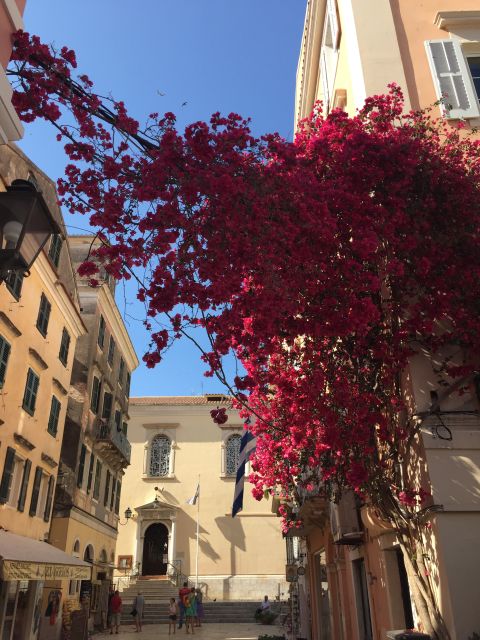
- Corfu Town alleyways, squares, and fountains that show the city’s layered past
- Town Hall Square and a look at Corfu’s old elite meeting there
- Small group size (max 8), which makes questions feel easy
Starting at the Old Fortress: Set Your Bearings Fast
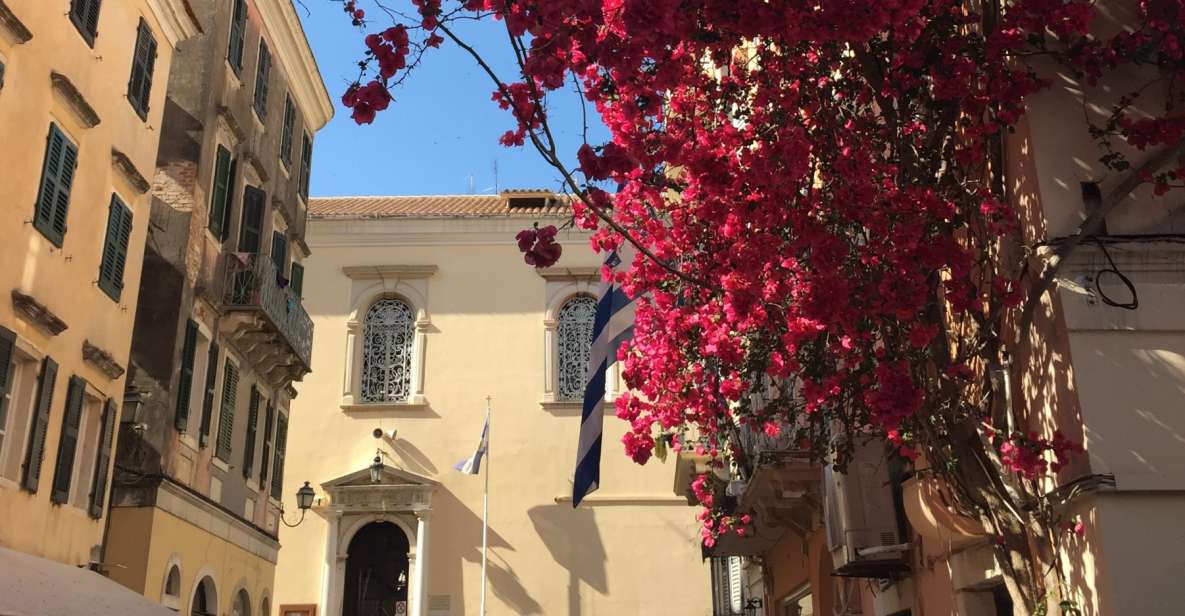
Your tour starts in the historic center, at Agoniston Politechniou, with the guide waiting by the statue of Schulenburg in front of the Old Fortress. That matters more than it sounds. If you begin at the fortress, you’re not walking around Corfu Town wondering what you’re looking at. The guide can point out features first, then send you into the streets with a sense of direction and purpose.
This is also where the “layers” idea clicks. Corfu is often described as a crossroads island, but you can feel that in the architecture. The walking route is built around visible traces from the Venetians, plus later French and British influence.
And yes, the tour is short enough to stay fun. At 3 hours, you get guided depth without burning half a day. You’ll be walking the whole time, though, so wear comfortable shoes and expect some uneven, older-street surfaces.
You can also read our reviews of more tours and experiences in Corfu.



Old Venetian Fortress: More Than a Pretty Starting Point
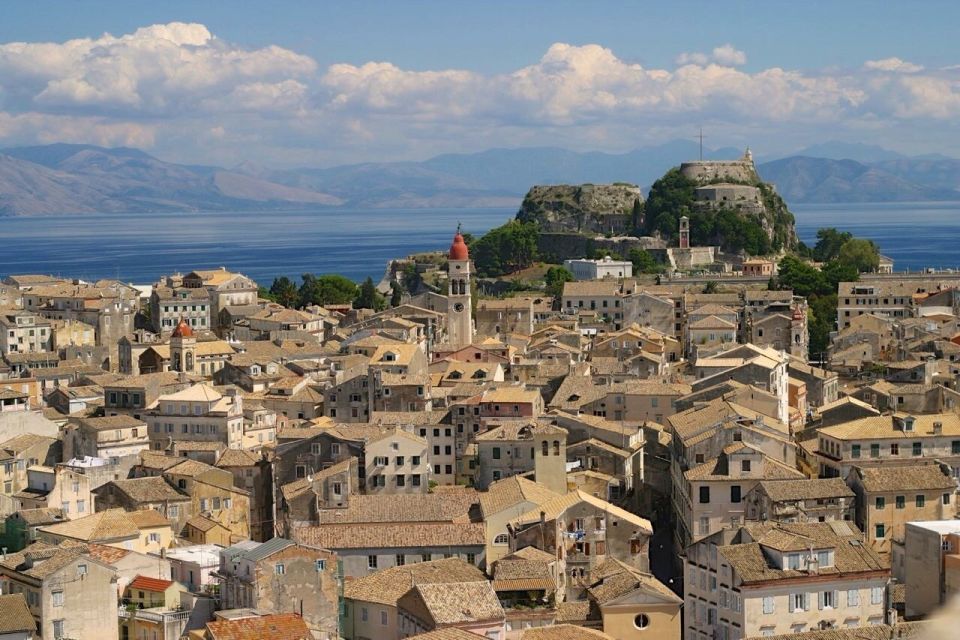
The first big stop is the Old Fortress, a structure dating back to Venetian times. You’ll have a guided visit inside, along with entrance fee included. The practical win here is that your time stays focused on the story, not the waiting.
Inside the fortress, the guide can connect “fortification” to “control.” Fortresses aren’t just defensive. They’re also a statement of power and trade thinking. In Corfu, that Venetian imprint shows up not only in military structure, but also in how the city developed around governance and status.
As you move through the fortress viewpoints, you’ll also start seeing the city as a system. The place-to-place distances feel smaller once you’ve got height and vantage points working for you. That helps later when you stroll through the town’s alleys and squares and suddenly notice how corridors of movement and public spaces fit together.
Corfu Town Stroll: Alleyways, Squares, and the City’s Living Layout
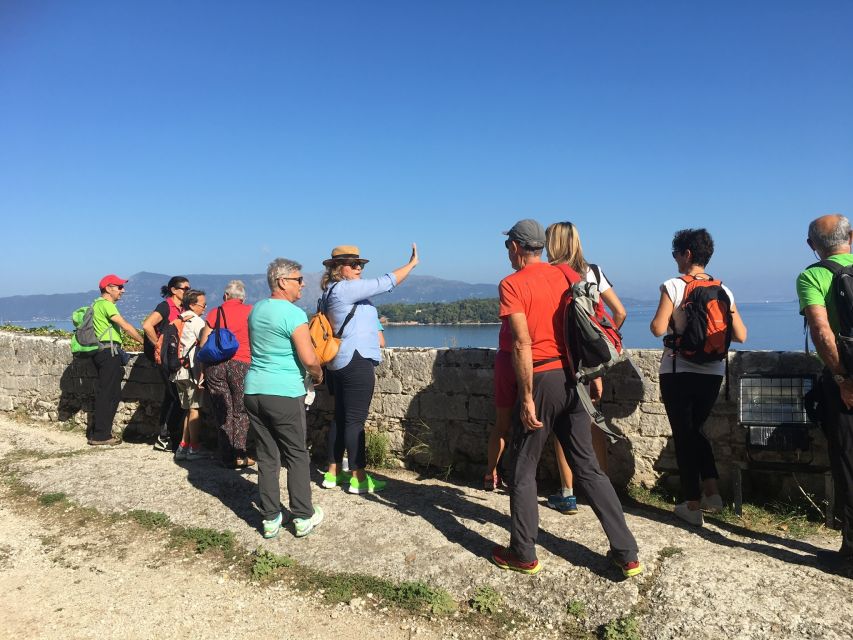
After the fortress visit, you’ll walk through the historic center: quiet, narrow alleyways on one stretch and open squares on the next. One of my favorite parts of walking tours in older European cities is that you don’t just “see” things. You experience the rhythm—turn, compress, open up, pause.
This tour uses that rhythm on purpose. The guide leads you past spots that can look empty or ordinary at first glance, then reframes what you’re seeing. When you pass deserted alleyways, it helps to have commentary on how these areas functioned. When you reach livelier squares and fountains, it’s easier to connect that energy to public life and the flow of people.
This is also where the tour’s cultural theme becomes more concrete. Corfu wasn’t ruled by one foreign power forever. Over time, different groups shaped different aspects of life. You’ll see architectural cues and hear explanations that connect those cues to how Corfiots organized communities, celebrated traditions, and adapted.
St. Spyridon Church: A Greek Orthodox Landmark With a Big Reputation
The walk continues toward St. Spyridon Church, a major highlight. You’ll admire the building’s 16th-century Greek Orthodox character, and you’ll get a close look at the bell tower—described as the highest in the Ionian Islands.
It’s a great stop for a simple reason: this is where you can compare “foreign influence” with local identity. The island’s political history is complicated, but religious architecture often reads like a stronger continuity. A church like this can carry a long memory in its stone and in the way the space is used.
If you’re the type who likes context, the guides often add personal details and connections drawn from Corfu’s prominent figures. In the feedback for this tour, I saw references to a story tied to Prince Philip’s christening connected to the church. Even if you only retain one detail, it’s useful because it turns a landmark into a moment in time.
Practical note: this part of the route is about observation and time in place. You’ll want to stay present, not rush for photos. The bell tower is what pulls your eye upward, but the surrounding architectural features help you understand how the church fits into Corfu Town.
Town Hall Square: Where Corfu’s Elite Came Together
Your tour finishes at Town Hall Square, an area that was once considered the most exclusive neighborhood in Corfu. Finishing here is smart. It’s a public space that makes sense of what you’ve heard earlier about power and governance.
You’ll admire impressive monuments and learn more about the island’s elite who used to meet there. That social angle is what keeps the tour from feeling like a checklist of buildings. It shifts the focus from how walls were built to who they protected, and what status looked like in everyday city life.
Town Hall Square also gives you a natural end-point. Once your guided route ends, you’re in a position to keep exploring on your own. You can follow the route of streets you’ve already walked, or branch into nearby areas with better confidence because you’ve already built a mental map.





Guides Make the Difference: What You Can Expect From the Human Touch
This tour runs with a licensed English-speaking guide, and the small group size (limited to 8) is a big part of why feedback is so strong. A group that small means questions don’t have to wait, and the pace can match the weather and the mood of the group.
The names that show up in the feedback—Alice, Nausica, Valia, and Ariti/Arita—are repeatedly linked to strong storytelling and a friendly, grounded style. What I like about that pattern is that it points to a guide who doesn’t just recite dates. They connect history to what you can see and what it meant for people living in Corfu Town.
You’ll also notice a subtle benefit: because the guide expects conversation, you’re more likely to walk away with specific takeaways. People describe learning how the island’s “many identities” formed over time and how each ruling power left a footprint.
One more thing: some guides are flexible with timing, especially if weather or small route slowdowns happen. The tour is only 3 hours, so you don’t want a long delay—but it helps to know your guide will try to keep the overall experience intact.
Price and Value: What $93 Gets You in Real Terms
At $93 per person for a 3-hour tour, you’re paying for guided structure, not just access to sights. The Old Fortress entrance fee is included, and you also get help skipping the ticket line. That’s a straight value boost, because fortress entry can eat time and energy right at the start.
Then there’s the intangible value: a good guide turns a pile of stone and churches into cause-and-effect. You’re paying for that interpretation, especially since the tour connects Venetian influence to later French and British impact across Corfu Town.
The small group factor helps justify the price, too. When max capacity is 8, you’re more likely to get a personal flow rather than a lecture shouted over other people. If you prefer guided walking tours with more direct interaction, the cost starts to feel fair.
Who This Tour Fits Best (and Who Should Skip It)
This experience is ideal if you want:
- A guided walk focused on architecture and cultural influence
- A short, efficient way to understand Corfu Town in one afternoon block
- A small group format that encourages questions
- A start-to-finish route from the Old Fortress to Town Hall Square
You might want to skip it if:
- You struggle with walking for about 3 hours
- You need mobility-friendly routes (the tour is not suitable for mobility impairments)
- You’re looking for a food-focused experience. Food isn’t included, so your meal planning will be on you.
After the Tour: How to Use Your New Corfu Town Map
Once you’re done at Town Hall Square, don’t treat that as the end of the day. You’ve just learned how to read the city. That means you can wander with a purpose.
A helpful strategy: go back to one place you liked most—either around St. Spyridon Church or along the squares you passed—and spend your extra time looking for details the guide pointed out. You’ll spot things faster now, like the type of architectural decisions that signal different periods of influence.
Also, if your guide is the chatty, generous kind, you may get recommendations for what to do next. In the feedback, guides were noted for pointing people toward local spots and even museums after the tour. Those suggestions aren’t guaranteed, but it’s worth asking politely while you’re still together.
Should You Book This Corfu History and Culture Walking Tour?
I’d book it if your goal is clarity and context. In about 3 hours, you get a guided look at the Old Fortress, a major Orthodox landmark at St. Spyridon Church with its tower highlight, and a finish at Town Hall Square that explains how status shaped city life.
Skip it if you need mobility-friendly logistics or if you’re counting on food to be part of the tour. This one is about streets, buildings, and culture—so bring good walking shoes and plan for your own meals.
If you go, I’d recommend you come ready to ask questions. The guides in this tour are repeatedly praised for being engaging and genuinely connected to Corfu Town, and that’s where the value really shows.
FAQ
How long is the Corfu History and Culture Walking Tour?
The tour lasts 3 hours.
What does the tour cost?
The price is $93 per person.
Where does the tour meet?
The guide waits by the statue of Schulenburg in front of the Old Fortress. The starting location is Agoniston Politechniou.
What are the main stops?
You’ll visit the Old Venetian Fortress, walk through Corfu Town’s historic center, see St. Spyridon Church, and finish at Town Hall Square.
Is the Old Fortress entrance included?
Yes. Old Fortress entrance fee is included, and you can skip the ticket line.
Is the guide English-speaking?
Yes. The guide is licensed and speaks English.
Is food included in the tour price?
No. Food is not included.
Is hotel pickup and drop-off included?
No. Hotel pickup and drop-off are not included.
Is the tour suitable for mobility impairments?
No. It is not suitable for people with mobility impairments.