REVIEW · CORFU
Cooking Classes and olive oil tasting.The real taste of Greece!
Book on Viator →Operated by Corfu Outdoor & Leisure Activities · Bookable on Viator
A market morning with real food payoffs.
In this Corfu experience, I love the Corfu Central Market shopping that turns ingredients into stories, and I love the wood-fired oven cooking that feels old-school, not staged. You’ll also add an olive oil tasting and a look at a family olive press before you sit down to a full lunch.
One thing to consider: the villa is about 20 km away, and while transfers are included upon arrangement, the transport from the shopping area to the villa may cost extra if you don’t set it up ahead of time.
In This Review
- Key Highlights I’d Plan Around
- Corfu Central Market Shopping: The Lesson Starts Before the Apron
- Old Corfu Town and the Jewish Quarter Stops: Short Walks, Useful Context
- The 20 km Drive to the Villa: Where the Pace Changes
- Welcome Bruschetta and Wood-Fired Cooking: Greek Grandma Skills, Hands-On
- Dietary needs note
- The Olive Grove and 200-Year-Old Olive Press: Taste the Place, Not Just the Food
- Lunch Flow: A Full Corfiot Meal Built From Your Shopping
- Price and Logistics: Is $120.68 a Good Value for Six Hours?
- Who Should Book This Cooking Class in Corfu
- FAQ
- FAQ
- How long is the cooking class and olive oil tasting experience?
- What time does the tour start?
- Where do we meet?
- Is this experience private?
- What language is the tour offered in?
- Does the experience include lunch?
- Do you stop at Corfu’s market?
- Is there an olive oil tasting and a visit to an olive press?
- Is transportation included?
- What happens if weather is bad?
- Should you book it?
Key Highlights I’d Plan Around
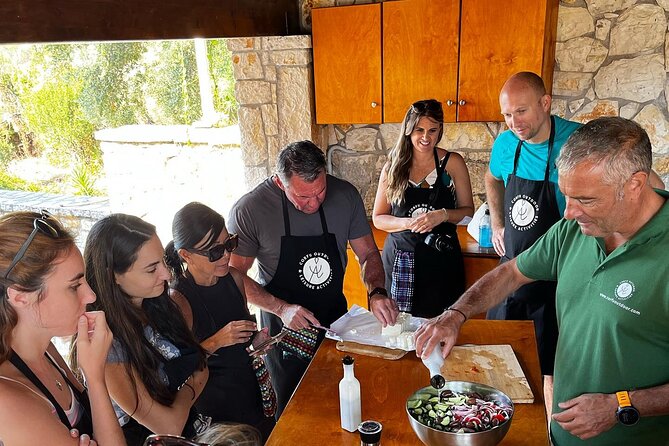
- Corfu Central Market shopping with guidance for picking island produce (and bargaining like a local)
- Hands-on cooking in a private home with a wood-fired oven
- A family-style lunch built from what you buy, plus Corfiot specialties
- An olive grove walk and a 200-year-old olive press ruins visit
- Olive oil tasting that helps you taste Greece in real time
- Private group feel, with menus described as flexible for dietary needs in some cases
Corfu Central Market Shopping: The Lesson Starts Before the Apron
Your day starts in Corfu’s historic core area around 9:00 am at Konstantinoupolis (Kon/nou Zavitsianou 11). You’ll begin with a walk that sets you up for what comes next: the market isn’t just “where food is sold,” it’s where locals decide what’s worth cooking today.
Then you hit the Corfu fruit-and-fish market (an open market with lively stalls). You’ll buy fresh produce that’s described as harvested from the fields a few hours earlier. That matters because the flavors aren’t sleepy or flat; they taste like they’re still moving. I like that you’re not just snapping photos—you’re learning how people choose vegetables, herbs, fruit, and fish, and how vendors talk about quality.
And yes, the feta part is a big deal. You’ll taste what the tour calls the real version of feta cheese, and you’ll also pick up items during shopping that are included in the experience. One practical tip: come hungry and don’t overpack your bag for the morning—market shopping can turn into carry-something-you’ll-cook-later.
You should also expect plenty of sensory input: the smell of herbs, ripe fruit, fresh fish, and vegetables in the air. That’s the point. By the time you get to the kitchen, your brain already associates ingredients with how they should smell and taste when cooked.
You can also read our reviews of more tours and experiences in Corfu.
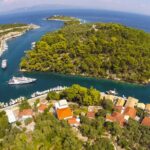
Old Corfu Town and the Jewish Quarter Stops: Short Walks, Useful Context
After the market area, the experience includes a mini city tour through the historical center and the Jewish quarter. You pass by key landmarks like the New Fortress entrance and the Jewish Synagogue area.
This section is easy to skip mentally if you’re the type who wants food only—but I think it’s worth it because it gives you a framework for why Corfu’s food culture feels layered. Corfu isn’t a one-note island. Its kitchen developed through centuries of trade, migration, and local creativity, and those influences show up in how people talk about ingredients and what they consider worth celebrating.
The tour’s city-time stays practical. It’s not a long lecture—you’ll get just enough background to make the day feel connected, not like random stops stitched together.
The 20 km Drive to the Villa: Where the Pace Changes
Once shopping is done, you’ll head to the villa (about 20 km away) to cook. If you don’t have a car, the experience says transfer can be provided at extra cost, while transfer is included upon arrangement. So here’s my advice: confirm how you’ll get from the market area to the villa before the day of. That saves stress and helps you enjoy the ride.
The drive is part of the “switch gears” moment. You go from the busy market and alleys into a hillside setting where the rest of the day feels slower. Multiple participants describe pastoral views and a country setting, which is exactly what you want if your goal is more than a quick cooking lesson.
If you do have your own rental car, you may still find it helpful to ask for clear directions. GPS helps, but you don’t want to arrive late and miss the first welcome moment.
Welcome Bruschetta and Wood-Fired Cooking: Greek Grandma Skills, Hands-On
When you arrive, you’ll be welcomed with bruschetta on freshly baked handmade bread. It’s a small start, but it matters. You’re setting up the flavor experience right away: olive oil, tomatoes, garlic—simple ingredients treated with care.
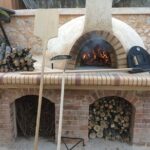
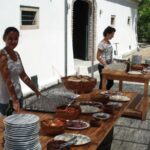
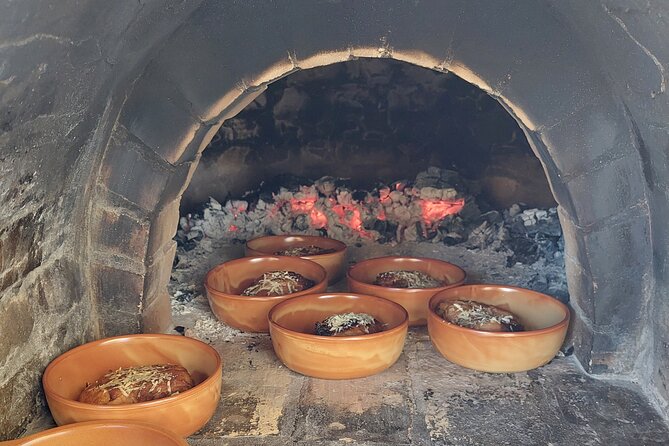
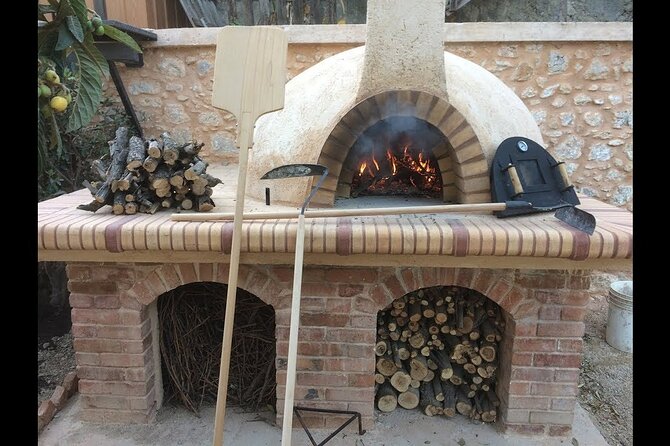
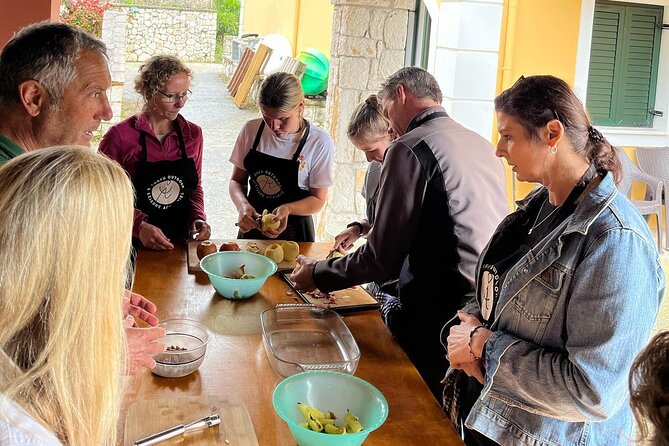
Then comes the hands-on portion. The cooking block is in a private home kitchen area with a wood-fired oven, which is the star of the show. This is not “oven cooking as a concept.” Participants talk about the ancient method of wood-fire cooking, slow and steady, and that shows up in the dishes.
You’ll help prepare items like:
- Tzatziki (Greek yogurt dip with garlic, thin-sliced cucumber, and olive oil)
- Greek salad (tomatoes, cucumber, peppers, onion, feta, olives, oregano, finished with virgin olive oil and wine vinegar)
- Homemade cheese pie with phyllo, feta, and herbs
- Briam (the Corfiot baked vegetable dish similar to ratatouille)
- Greek potatoes baked or served with olive oil and rosemary, plus potatoes boiled in aromatic herb broth in the menu description
- The main course described as pork slowly cooked in the wood-fire oven
The staff role matters here. In the reviews, the host is often named George (sometimes spelled Georgios or Yorgos). Cooking support has been led by people described as Lola and Sylvia in different groups, and participants highlight step-by-step guidance.
That’s what I like best: you’re not just watching someone else cook. You participate. Even if you only do part of the prep, you’ll understand how Greeks build flavor: olive oil, herbs, slow cooking, and basic ingredients handled with confidence.
Dietary needs note
The data doesn’t promise every allergy detail, but one review explicitly notes the menu was adjusted for dietary requirements, including a vegan alternative to the pork knuckle. If you have dietary needs, message the operator before booking so they can map your plan to the menu.


The Olive Grove and 200-Year-Old Olive Press: Taste the Place, Not Just the Food
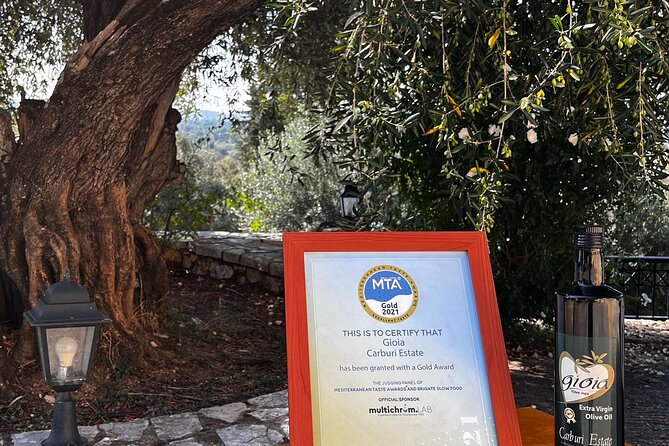
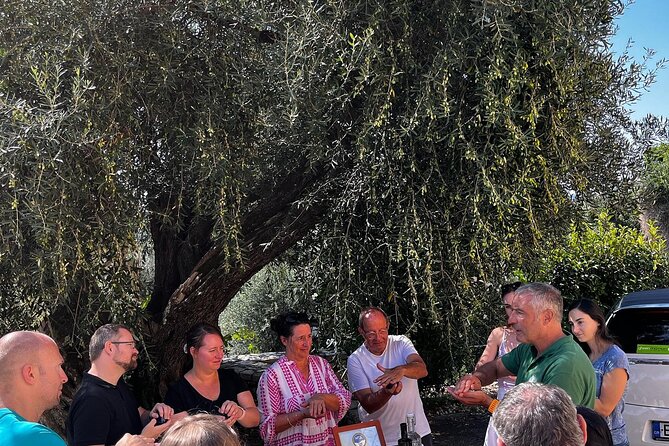
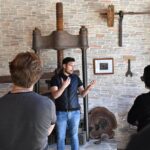
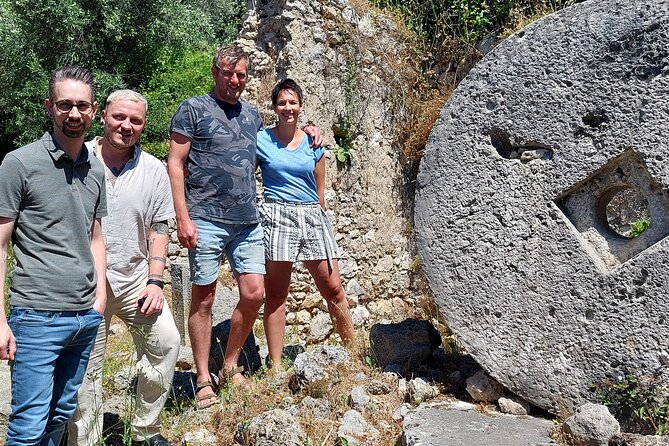
Before lunch, you’ll walk in the ruins of a family olive press that’s described as about 200 years old, located in an olive grove on the property. This is where the tour stops being only about cooking technique and turns into what I’d call edible geography.
You’ll learn about olive trees, harvesting, and what the tasting part is actually testing for. Then you’ll do an olive oil tasting.
Here’s why I think this section boosts the whole day. Once you understand how olives are harvested and pressed, olive oil stops being just a condiment. You start tasting it like an ingredient with texture and personality, which then makes the rest of the meal feel sharper. Even basic dishes like Greek salad and bruschetta get a more precise flavor focus.
If you love food photography, you’ll get plenty of scenic moments too, but the real value is learning the difference between eating olive oil and tasting it.
Lunch Flow: A Full Corfiot Meal Built From Your Shopping
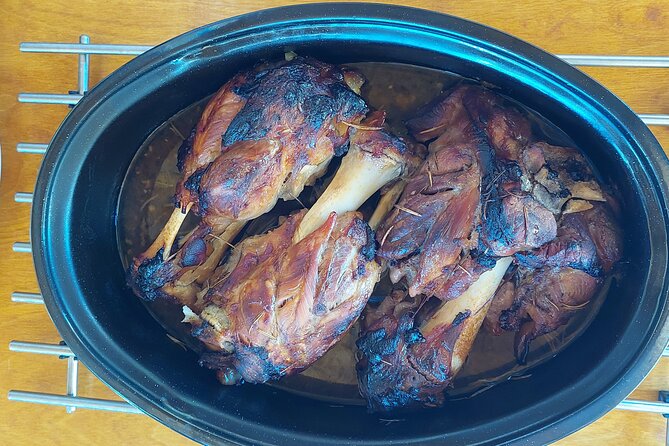
Lunch is served as a proper feast, not a token sampler. The menu described includes a mix of starters, mains, dessert, and drinks, with a rhythm that matches the day’s logic: market ingredients first, then wood-fire cooking, then olive oil tasting, then dessert.
Here’s the menu style you can expect from the information provided:
- Bruschetta with tomatoes, olive oil, and garlic
- Corfiot gingerbeer as a refreshing start
- Homemade cheese pie (phyllo pastry, feta, olive oil, herbs)
- Greek salad with feta, olives, oregano, olive oil, and wine vinegar
- Tzatziki with yogurt, garlic, cucumber, and olive oil
- Pork knuckle / pork slowly cooked in the wood-fire oven, marinated in local beer, mustard, honey, and herbs
- Potatoes in aromatic herb broth and finished with olive oil, lemon juice, and parsley (the menu also references baked potatoes with olive oil and rosemary)
- Homemade baklava in a Corfiot version with kumquat syrup and walnuts
- Drinks such as Corfiot bottled wine, beer, water, and soft drinks
A small detail I appreciate: you’re not just eating a random Greek set menu. The description ties dishes to Corfu specifically—like the kumquat syrup baklava and the Corfiot gingerbeer. It feels more like local cooking than “Greek cooking, generic.”
Also, since fruit, vegetables, and dairy products purchased during shopping are included, the lunch feels earned. It’s not just a meal; it’s your shopping list turned into lunch.
Price and Logistics: Is $120.68 a Good Value for Six Hours?
The price is $120.68 per person for about 6 hours, and the experience is a private tour/activity for your group. That matters for value. In many cooking experiences, you pay mainly for the meal and the kitchen access. Here, you’re also paying for the market experience (guide time plus local shopping support) and the olive oil/olive press portion.
What makes it feel like a fair deal:
- You get a full guided market shopping time plus mini city tour context
- Lunch is substantial and includes multiple courses
- Key ingredients are bought during shopping and included
- Olive oil tasting and a walk through an old olive press ruins site are part of the program
- Transfers are described as included upon arrangement, with extra transport possible from the shopping area if needed
What could make it less simple:
- The villa is 20 km away, so you should expect some coordination if you’re not in a rental car already
- Transportation from the shopping area to the villa is noted as not included by default, though it can be provided at extra cost
My rule of thumb: this is best value when you want the whole day package. If you only care about eating, you might find cheaper food experiences—but you’d lose the market-to-table link that makes this one feel authentic.
Who Should Book This Cooking Class in Corfu
This is a strong fit if you:
- Love markets and want to learn what to buy and why
- Enjoy hands-on cooking more than watching
- Want an authentic-feeling day that combines food with Corfu culture and olive oil
- Like the idea of a private setting in a family-style home environment
- Travel solo and want to feel comfortable with friendly hosts and clear guidance (multiple solo experiences are described as welcoming)
It might be less ideal if you:
- Hate walking around town or handling a morning market pace
- Don’t want to arrange transport details for a 20 km ride to the villa
- Are expecting a purely indoor, low-effort activity (the program includes strolling through the historical center and the olive grove)
If you’re deciding last minute, I’d base the choice on one question: do you want your Corfu meal to come from a morning of buying ingredients and learning how Greeks taste and cook? If yes, this one lands.
FAQ
FAQ
How long is the cooking class and olive oil tasting experience?
It lasts about 6 hours.
What time does the tour start?
The start time is 9:00 am.
Where do we meet?
The meeting point is Konstantinoupolis (Kon/nou Zavitsianou 11, Kerkira 491 31, Greece).
Is this experience private?
Yes. Only your group participates.
What language is the tour offered in?
It’s offered in English.
Does the experience include lunch?
Yes. Lunch is included, and the menu includes items such as tzatziki, Greek salad, briam, baked or boiled potatoes, wood-fired pork, dessert (baklava), and drinks like wine or beer, water, and soft drinks.
Do you stop at Corfu’s market?
Yes. The experience includes a stop at Corfu Central Market to buy fresh fruit and fish for the cooking.
Is there an olive oil tasting and a visit to an olive press?
Yes. You’ll walk in an olive grove to see the ruins of a 200-year-old family olive press and enjoy an olive oil tasting.
Is transportation included?
Transfer is included upon arrangement. Transportation from the shopping area to the villa is not included by default, but it can be provided at extra cost.
What happens if weather is bad?
The experience requires good weather. If canceled due to poor weather, you’ll be offered a different date or a full refund.
Should you book it?
If you want a full Corfu food day—market first, then wood-fired cooking, then olive grove olive press tasting—this is the kind of experience that makes your trip taste like the island. Just make sure you confirm how you’ll get from the market area to the villa.