REVIEW · LEEWARD ISLANDS
Bora Bora: Discovering the Tahitian black pearl !
Book on GetYourGuide →Operated by BORA BORA PEARL FARM - DIVE FOR IT · Bookable on GetYourGuide
Black pearls start with patient farming. This Bora Bora experience takes you to motu Taufari’i, where you learn the Tahitian black pearl story, then get hands-on with pearl farming in a very approachable way. You’re not just looking at pearls; you’re watching how the process works, from oyster baskets to the finished Tahitian black pearl. Black pearl excitement meets pearl farming facts.
Two things I really like: the way the guide explains the pearl’s origin (with names like Manu and Nono showing up in standout experiences), and the moment you choose an oyster and later discover what you’ve selected. The lagoon boat ride also keeps things fun and light, with a real island feel. One thing to consider is timing: pickup can run late in some cases, so if your schedule is tight, give yourself a cushion.
You’ll also want to think about fitness and comfort. This isn’t a tour for everyone, especially if you have mobility limits or are sensitive to water and underwater activities.
In This Review
- Key things that make this Bora Bora pearl experience worth your time
- From Tahitian black pearl theory to hands-on pearl choice
- Getting to motu Taufari’i: the boat ride is part of the show
- The underwater oyster hunt: coral garden, baskets, then your selection
- The pearl-farm bar break: fruits, drinks, and the reveal moment
- What you take home: your pearl plus a keepsake with Bora Bora white sand
- Price and value: what $235 buys you in Bora Bora time
- Who should book this (and who should skip it)
- Practical notes that help you enjoy the experience smoothly
- Should you book Bora Bora Pearl Farm – Dive For It?
- FAQ
- How long is the Bora Bora black pearl experience?
- Where is pickup in Bora Bora?
- What do I do during the tour?
- Is snorkeling equipment included?
- What refreshments are provided?
- What happens to the pearl you choose?
- What languages are the guides?
- What should I bring, and what’s not allowed?
- Who might not be able to join this experience?
Key things that make this Bora Bora pearl experience worth your time
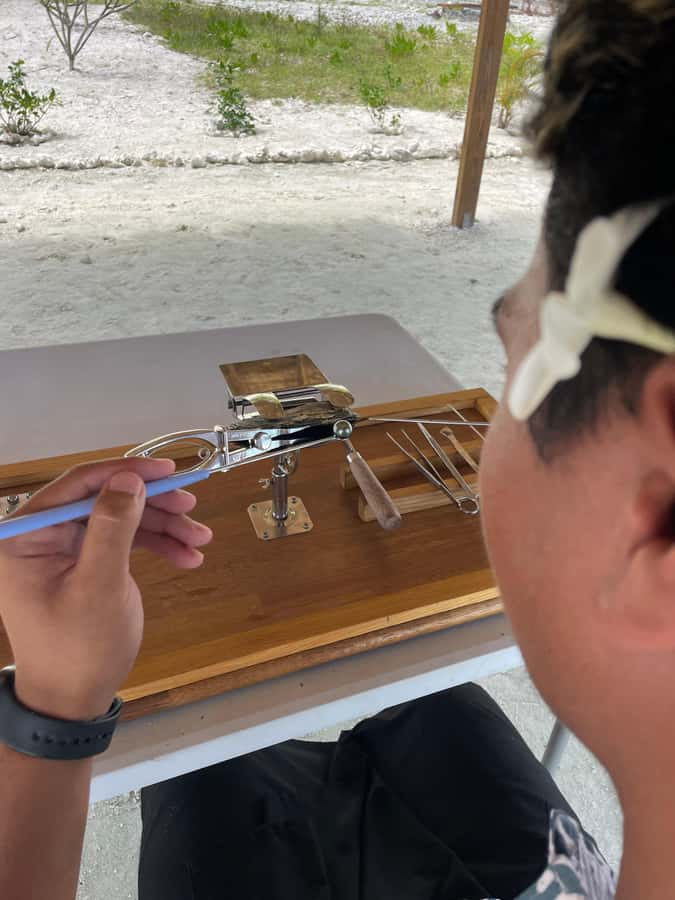
- A real pearl-farm workflow, not just jewelry talk: history, oyster baskets, and how the process leads to a finished Tahitian black pearl.
- Underwater oyster selection in Bora Bora’s lagoon: you visit coral and look at oysters suspended in baskets, then choose your own.
- Guides with strong energy: standout tours include guides named Manu and Nono, praised for humor and teamwork.
- Refreshments on the motu: fresh fruits plus drinks like water, soda, or beer at the Bora Bora Pearl Farm Bar.
- You take your pearl home in a keepsake: a clear bottle with white sand, or a small pouch with Bora Bora white sand.
From Tahitian black pearl theory to hands-on pearl choice
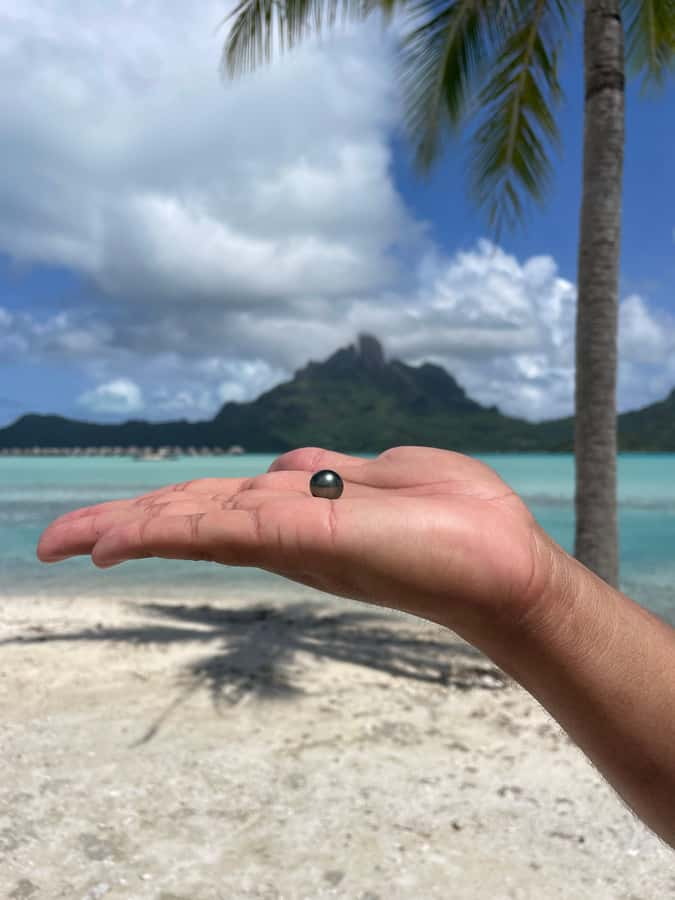
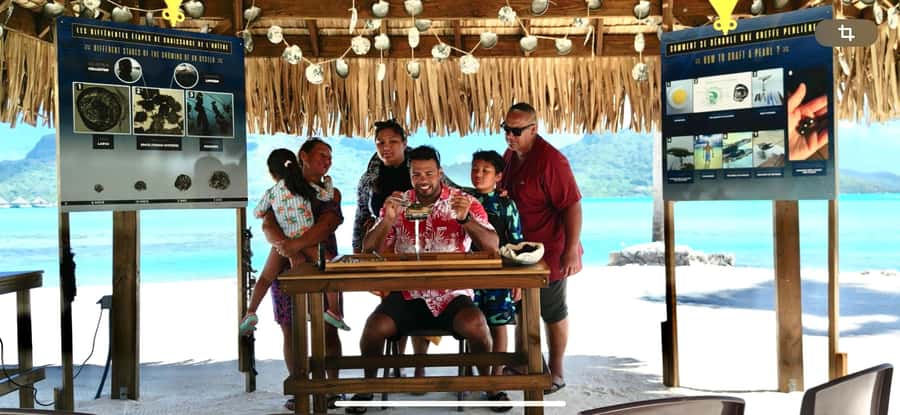
If you’ve ever wondered why Tahitian black pearls can look silver, smoky gray, or nearly black, this tour gives you the practical answer. You start with a guide-led explanation of how the Tahitian black pearl is farmed and why the result varies. It’s taught right there on the motu, under a fare pote’e, so the lesson feels connected to the setting instead of like a lecture.
The biggest win is that you get to take part in the process. You don’t just hear about oyster baskets and pearl growth—you go see the setup, then select an oyster basket yourself. That turns the pearl from a souvenir into a story you understand, and you’ll notice how much work sits behind something that looks effortless.
There’s also a clear island rhythm to it. The tour moves from learning to “look and choose,” then to refreshments and the reveal, and finally to photos before you head back.
Getting to motu Taufari’i: the boat ride is part of the show
This experience doesn’t start in a workshop. It starts with pickup at one of six Bora Bora locations, either at the hotel pontoon or at Vaitape’s quay. From there, you transfer by water taxi, and the ride is long enough to feel like a real lagoon crossing (not a quick shuttle).
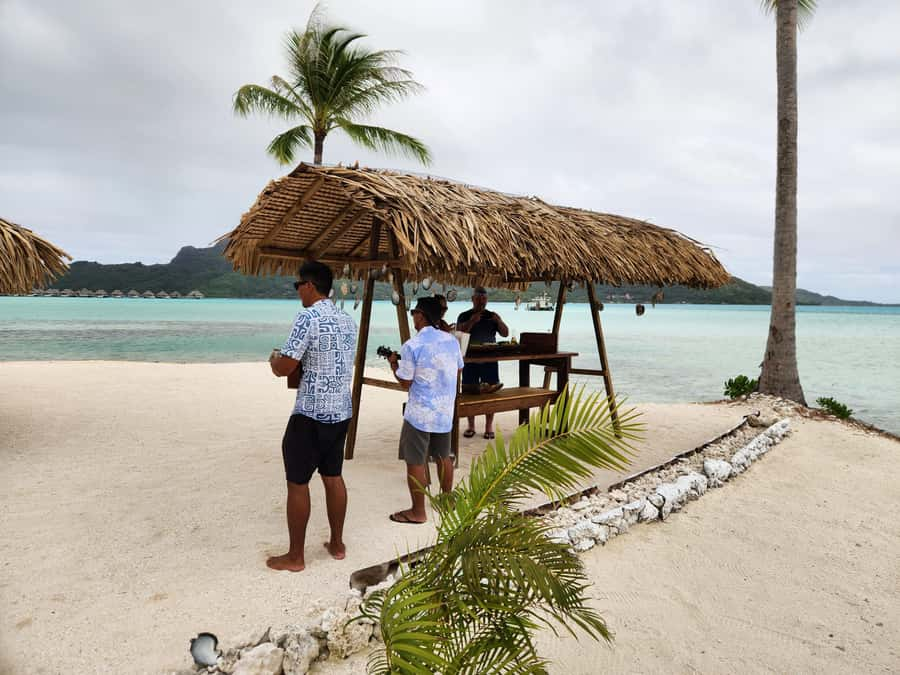
Once you arrive at motu Taufari’i, you’re greeted by white sand and the blue lagoon. That matters because it sets expectations: this is an outdoor, water-based activity. If you’re the type who enjoys island scenery and doesn’t want everything contained inside a building, you’ll feel right at home from minute one.
Timing-wise, the full experience runs about 2 hours. The day flows with multiple short water taxi legs and guided segments. If you’re hoping to fit this between reservations, I’d keep your next plan flexible, since pickup timing can sometimes shift.
The underwater oyster hunt: coral garden, baskets, then your selection
After arriving, you head into the water for an underwater visit centered on the coral garden and the oyster baskets. The setup is simple: coral area first, then oysters suspended in their baskets. You can inspect the oysters and choose the one that becomes your “your pearl” connection later.
The tour keeps this approachable. Don’t worry about equipment logistics—snorkeling equipment is included, and towels are provided. You’re guided through what you need, and the guides handle the pace so you can focus on the moment rather than on figuring things out.
What you should know is that there’s an actual element of water activity here. Even if you don’t consider yourself an expert swimmer, the tour’s structure assumes you can handle the lagoon environment comfortably and follow instructions. If you’re sensitive to water or motion, it’s worth considering.
Also, the pearl you end up with isn’t random in the sense of “surprise and hope.” You select your oyster basket in advance, so when the reveal happens later, it feels connected to your choice.
The pearl-farm bar break: fruits, drinks, and the reveal moment
Once the underwater portion is done, you get a breather at the Bora Bora Pearl Farm Bar. You’ll find fresh fruits and drinks like water, soda, or beer. This is more than a snack stop. It helps you cool down, reset, and enjoy the setting before the most emotional part of the experience.
Then comes the fun part: discovering your Tahitian black pearl. The guide explains and shows the process so you can connect what you selected to how the pearl becomes a finished treasure. You also get music and good vibes, with songs and ukulele adding that relaxed island energy.
This part is especially valuable if you’re buying pearls as a gift. You’ll have a clear explanation for what you’re holding—why it looks the way it does and what it took to produce it.
At the end, you’ll get photos with the team featuring your pearl. Those photos are also practical: they give you a memory you can refer to later when you’re showing the pearl to family or friends.
What you take home: your pearl plus a keepsake with Bora Bora white sand
The tour doesn’t end with a product you might not understand. You take your own Tahitian black pearl home. You’ll bring it back in a small clear bottle with white sand, or in a pouch with Bora Bora white sand—either way, it’s designed to feel like a real keepsake from the lagoon.
This is one of the reasons the experience feels good value. A lot of “black pearl” activities are basically shopping trips with a short story. Here, the pearl is the result of your chosen oyster basket, which turns the souvenir into a personal outcome.
Price and value: what $235 buys you in Bora Bora time
At $235 per person for a 2-hour outing, it’s not the cheapest activity on Bora Bora. But it also isn’t just a ride with a photo stop. You’re paying for:
- Boat transfers by water taxi
- A guided pearl-farming explanation
- Snorkeling equipment and towel use
- Fresh fruits plus drinks (water, soda, or beer)
- The Tahitian black pearl you bring home
That math matters because the pearl itself would cost a lot if purchased separately. Plus, you’re not only learning about the process—you’re selecting an oyster and then getting a pearl from that selection. For many people, that personal element is what makes the price feel justified.
There’s also a safety-and-comfort angle: equipment is included, and the tour is built around guide-led steps rather than you figuring everything out on your own in the lagoon.
Who should book this (and who should skip it)
This tour is a strong fit if you:
- Want a Bora Bora experience that connects nature to something handmade and time-consuming
- Like hands-on activities where you can participate, not just watch
- Enjoy guided explanations with energetic hosts (guides such as Manu and Nono show up in top-rated experiences)
You should think twice if you fall into the “not suitable” categories listed for this activity. It’s not recommended for people with mobility impairments, wheelchair users, people with epilepsy, or anyone over 75. Since the experience involves water time and underwater activity, it’s smart to choose something else if you’re unsure about physical comfort.
A practical packing note: bring swimwear and beachwear, and bring a camera if you want to capture the moment. Drones aren’t allowed, and the activity has restrictions like no fishing and no feeding animals.
Practical notes that help you enjoy the experience smoothly
Pickup matters here. You’ll be picked up at your hotel pontoon (six hotel options) or at Vaitape’s quay, and you should show up at the correct spot. The tour instructions also say to wait about 30 minutes before your scheduled time.
Language is covered. Guides work in French and English, so you won’t feel left out if you speak either.
Also, don’t overpack on rules. The activity clearly states what’s not allowed, including drones and certain behaviors like fishing and feeding animals. The “why” is simple: it keeps the pearl farm environment controlled and protects the ecosystem.
Should you book Bora Bora Pearl Farm – Dive For It?
Book it if you want a Bora Bora black pearl experience with real meaning. You’ll come away understanding Tahitian black pearl farming, and you’ll take home a Tahitian black pearl that connects to the oyster basket you selected. The tour’s mix of education, water time, refreshments, and music keeps it from feeling like a dry sales pitch.
Skip it if you’re looking for a purely relaxing lagoon cruise or if you’re in a category listed as not suitable for the activity. And if your schedule is tight, plan for a little buffer around pickup timing so you don’t feel rushed.
If you like “small story, big payoff” travel, this fits. A pearl is a lovely souvenir, but the real value here is the process you learn and the choice you make along the way.
FAQ
How long is the Bora Bora black pearl experience?
The experience lasts about 2 hours. Check available starting times to match it to your day.
Where is pickup in Bora Bora?
Pickup is offered at six locations, either from your hotel pontoon or from Vaitape’s quay. If pickup is at your hotel pontoon, you go to the lobby pontoon; if pickup is at Vaitape’s quay, you meet at the TAXI signage.
What do I do during the tour?
You’ll start with a guided explanation of Tahitian black pearls and pearl farming, then go underwater to visit a coral garden and explore oyster baskets. You choose your own oyster, and later you discover your Tahitian black pearl. The tour ends with photos and then returns you to your pickup area or Vaitape quay.
Is snorkeling equipment included?
Yes. The tour includes snorkeling equipment and a towel, plus you’ll have drinks and fresh fruits during the break.
What refreshments are provided?
You’ll receive fresh fruits and drinks such as water, soda, or beer.
What happens to the pearl you choose?
You take your Tahitian black pearl home in a small clear bottle with white sand, or in a small pouch with Bora Bora white sand.
What languages are the guides?
The tour offers live guidance in French and English.
What should I bring, and what’s not allowed?
Bring swimwear, a camera, and beachwear. Drones are not allowed, and you also can’t fish, feed animals, use mobility scooters or electric wheelchairs, and there are restrictions like no making fire and no nudity.
Who might not be able to join this experience?
The activity is listed as not suitable for people with mobility impairments, wheelchair users, people with epilepsy, and people over 75.