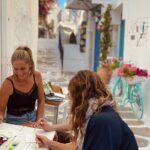
Fresh pasta starts with one good bench.
In Paros, you’ll learn handmade pasta from scratch while sipping an Italian aperitivo (a spritz plus snacks) on the Cycladic terrace of Daniele Ristorante Italiano in Parikia. I like that the class feels practical and personal, with chef-instructors such as Daniele, Claudio, or Cristina who actually explain what they’re doing and why.
You’ll also like the small-group vibe, where it’s easy to ask questions and slow down as you shape. My favorite part is the chance to turn it into a meal by staying to eat the pasta afterward, often as an optional add-on—some people even say it’s the best ending. The main drawback to plan for: the core class time is short, so if you expect an all-inclusive full lunch with no extra choices, you’ll want to confirm what’s included when you book.
In This Review
- Key highlights from this Paros pasta class
- A 90-Minute Pasta Lesson with Spritz Views in Parikia
- Where the class starts: Daniele Ristorante Italiano on Paros
- The opening rhythm: spritz, snacks, and getting your hands dirty
- Handmade pasta from scratch: what you really learn
- Shaping practice: tagliatelle, ravioli, rigatoni, and bowties
- Italian technique meets Italian aperitivo culture
- Small group size: why it helps more than you think
- The optional best ending: eat what you made
- Price and value: is $42.24 worth it?
- Tips to get the most out of your pasta class
- Who this Paros class suits best
- Should you book this pasta class in Paros?
- FAQ
- How long is the pasta making class in Paros?
- How much does it cost per person?
- Where does the class take place?
- What’s included with the class?
- Is the class taught in English?
- What’s the maximum group size?
- Is there assigned seating or do I need a reservation confirmation?
- Is it near public transportation?
- Can I bring a service animal?
- Can I cancel for a refund?
Key highlights from this Paros pasta class
- Hands-on pasta from scratch with guidance you can repeat at home
- Italian aperitivo included: spritz plus snacks during the lesson
- Chefs who teach (Daniele, Claudio, Cristina) with lots of patience and real explanations
- You can make multiple shapes like tagliatelle, ravioli, rigatoni, and bowties (depending on the class)
- Optional dining afterward gives you a “make it, then taste it” finish
A 90-Minute Pasta Lesson with Spritz Views in Parikia
Paros has a way of turning simple evenings into stories. This experience gives you that same feeling, but with a very edible plot twist: you’re not just watching pasta being made. You’re making it, right there on the terrace at Daniele Ristorante Italiano in Parikia.
At about 1 hour 30 minutes, the format is light enough to fit into a normal day, but focused enough that you come away with something concrete: dough you understand, technique you can recreate, and a few shaping moves you’ll be proud to show at home.
And yes—there’s the aperitivo. A spritz and snacks show up as you get started, so your hands are learning while your evening mood is already set. It’s a fun way to pair Italian food culture with a very “do this, then do that” cooking lesson.
You can also read our reviews of more tours and experiences in Paros.

Where the class starts: Daniele Ristorante Italiano on Paros
Your meeting point is straightforward: Daniele Ristorante Italiano, Lochagoi Georgioi Gravari 5, Paros 844 00, Greece. The activity ends back at the same spot, so you’re not hustling across town.
One practical perk: the venue is near public transportation, so you’re not stuck with a taxi bill just to reach the class. A mobile ticket keeps things simple—show up when you’re supposed to, with your confirmation already in hand.
Also, this is capped at a maximum of 25 people. Even with a full group, that’s still small for a group cooking event. In the better versions of this class, it can feel even more personal, with enough time to ask questions while the chef is working.
The opening rhythm: spritz, snacks, and getting your hands dirty
Expect to begin with a welcome setup at the restaurant. The aperitivo part isn’t an afterthought; it’s built into the experience. You’ll have a spritz plus snacks while you get instructions.
That matters more than it sounds. When you’re learning dough and timing, you want your focus. Starting with something familiar and comfortable helps you relax so you can actually listen—especially if you’ve never handled pasta dough before.
You’ll likely get an overview of the process and then jump into the work. The tone from the chef-instructors is consistently described as friendly and teaching-oriented, not stiff or intimidating. That’s a big deal for a first-timer. Pasta dough rewards patience, and you’ll want a teacher who won’t rush you.
Handmade pasta from scratch: what you really learn
The class is designed around making pasta from scratch, not just shaping pre-made dough. That’s where the value is. If you only learn shapes, you can end up with pretty plates and nothing you can reproduce. If you learn the basic dough logic, you can adapt later when you’re cooking at home.
From the experience, you can expect to learn the fundamentals that affect your final pasta:
- Flour choice matters (different flours behave differently)
- Hydration is key (how much liquid you use changes the dough feel)
- Egg choices affect texture (you may hear comparisons like using whole egg vs egg yolk only)
This kind of detail is what turns a “cooking class” into a skill. You’re not just following a recipe. You’re learning what to look for with your hands and eyes—dough that feels right, not just dough that looks right on paper.
Shaping practice: tagliatelle, ravioli, rigatoni, and bowties
Depending on the session, you may work with several pasta shapes. People have specifically mentioned tagliatelle, ravioli, rigatoni, and bowties.
Here’s why that’s useful: each shape teaches you something different.
- Long shapes teach rolling and cutting consistency.
- Ravioli teaches portion control and sealing.
- Short shapes like rigatoni are about shaping and texture.
- Bowties bring a playful fold-and-form step that’s great if you want instant visual payoff.
If you’re the type who likes to go home with a “final product” you recognize, multiple shapes are a plus. If you prefer one long, deep dive into one type, you’ll want to be aware the class is about 90 minutes, so there’s a balance between hands-on time and moving through the lesson.



Italian technique meets Italian aperitivo culture
This part is genuinely part of the experience. You’re not in a classroom where the drinks feel random. You’re in an Italian food setting where aperitivo is the start of the evening—small plates, conversation, and a spritz while you learn.
People also mention the atmosphere: music in the background, snacks coming alongside the lesson, and a relaxed terrace vibe. That’s a nice contrast to some cooking classes that feel overly formal. Here, it’s more like learning from someone who cooks every day.
If you’re a couple, this kind of pace is great. If you’re traveling with kids, it can work well too, because it’s a hands-on activity with a short attention span. One family pairing mentioned kids learning to make pasta from scratch and enjoying it, which tells you the format can be approachable.
Small group size: why it helps more than you think
The limit of 25 people sounds like a marketing detail, but it changes what the class feels like. With more space and less crowding, chefs can correct what your hands are doing without turning it into a lecture.
People also mention having time for questions and taking their time learning. In a few cases, the class can even feel nearly private—one person described being in class alone, which lets you really focus on technique instead of rushing through steps.
That’s the sweet spot: learning without pressure.
The optional best ending: eat what you made
This is the big fork in the road.
During the class, you’ll focus on making the pasta. Afterward, you often have the option to stay and eat. Some people strongly recommend paying the extra to dine, describing it as the perfect finish and some of the best pasta they ate while in Greece.
Why this matters: if you eat immediately, you get feedback while things are fresh in your memory. You can connect what you did with the taste and texture. And since the restaurant is already a proper dining space, you’re not leaving with just a craft project—you’re leaving with a meal.
One practical note: at least one person mentioned an extra charge (40€) to actually dine and eat the pasta you made. So don’t assume a free dinner is automatic. If eating is the reason you booked, plan to stay and confirm the cost when you reserve.
Also, the restaurant may not be open to the public until dinner time in general, which is another reason staying after class can feel like you get a special window at the venue rather than an afterthought.
Price and value: is $42.24 worth it?
At $42.24 per person for about 1 hour 30 minutes, you’re paying for three things:
- Instruction and hands-on coaching (real technique, not just a demo)
- A true food experience (spritz and snacks included)
- A chance to create something you can later turn into dinner
Compared to many “activity-only” classes, the inclusion of an aperitivo snack setup makes the experience feel like an evening starter, not just cooking work. And because the group is small and the chefs are actively teaching, you’re not paying for a crowded show.
Is it a bargain? That depends on what you want. If you only want a quick tasting of a cooking demo, the optional meal cost might feel like extra. If you want to learn how to make pasta and then taste the results, the value can feel excellent—especially if you’re excited by the idea of recreating this at home.
Tips to get the most out of your pasta class
A few practical moves will help you leave happy:
- Go in hungry for learning, not just for eating. The class focuses on technique. If you also want the meal, plan to stay.
- Ask about dough feel, not just timing. Hydration and flour differences come down to how dough feels while you work.
- Take your questions seriously. With a small group, you can get specific help on what your dough is doing.
- Consider going with a partner or a friend who likes food. The tone is social and fun, and you’ll enjoy the aperitivo while learning.
- If you’re cooking at home later, keep notes. Even a few reminders like flour type or hydration cues will make it easier to repeat.
And if you’re a perfectionist: be realistic about the time. The class can cover multiple steps and sometimes multiple shapes, but it isn’t an all-day production. The goal is skill plus fun, not a whole day in the kitchen.
Who this Paros class suits best
This pasta-making experience fits best if you’re:
- A food lover who wants a skill, not just a photo
- Traveling as a couple (including honeymoon-style trips)
- A family looking for a hands-on activity that doesn’t feel too technical
- Someone who likes small-group teaching and asking questions
It may be less ideal if you’re expecting the entire “meal” to be included with no choices, or if you want to guarantee a long, fully structured shaping session for one pasta type only.
Should you book this pasta class in Paros?
If you want a fun, Italian-food experience on Paros that mixes technique with a spritz-and-snacks welcome, I think it’s a strong pick. The combination of handmade pasta from scratch, patient chef instruction from people like Daniele, Claudio, or Cristina, and the option to turn it into an actual meal makes it feel like more than a single activity.
Just go in knowing the timing and that dining afterward may be an add-on. If you handle that expectation, you’re very likely to walk away with real confidence—and pasta cravings that last longer than your flight.
FAQ
How long is the pasta making class in Paros?
The experience lasts about 1 hour 30 minutes.
How much does it cost per person?
The price is $42.24 per person.
Where does the class take place?
It starts at Daniele Ristorante Italiano, Lochagoi Georgioi Gravari 5, Paros 844 00, Greece, and ends back at the meeting point.
What’s included with the class?
You’ll learn to make handmade pasta from scratch and enjoy an Italian aperitivo that includes a spritz and snacks.
Is the class taught in English?
Yes, the experience is offered in English.
What’s the maximum group size?
The class has a maximum of 25 travelers.
Is there assigned seating or do I need a reservation confirmation?
You receive confirmation at the time of booking, and you’ll use a mobile ticket.
Is it near public transportation?
Yes, it’s listed as near public transportation.
Can I bring a service animal?
Service animals are allowed.
Can I cancel for a refund?
Yes, you can cancel up to 24 hours in advance for a full refund.