REVIEW · OKINAWA
Okinawa Churaumi or Tropical, Kouri American Village BusTour
Book on GetYourGuide →Operated by Cerulean Blue Okinawa · Bookable on GetYourGuide
Okinawa in one long, well-paced day. What makes this tour feel efficient is the smart audio guide on your phone, which explains what you’re seeing as the bus moves between spots.
I love the flexibility of picking your main stop: the Churaumi Aquarium option for marine life, or the Tropical Dream Center for orchids. I also like that the route includes famous coastal views like Kouri Bridge, plus iconic photo stops such as Manza Cape and American Village.
The main trade-off is time. This is a “see a lot” day, not a “stay and wander” day, and there’s no live full-time guide during the ride—so you’ll rely on the GPS audio for context.
In This Review
- Key highlights worth knowing
- Choosing Your Main Stop: Churaumi Aquarium or Tropical Dream Center
- Price and value: what you get for about $45
- Getting picked up on Okinawa time: where the bus starts
- The smart audio guide setup (and how to make it work)
- Ocean Expo Park: the longest stop and your built-in lunch break
- Kouri Island and Kouri Bridge: the photo stop that feels worth it
- Okashigoten for Beniimo tarts and Okinawan snack logic
- Manza Cape (Cape Manzamo): the famous rock and the 100 JPY fee
- American Village and Sunset Beach: the end-game for people who want a payoff
- Comfort, timing, and group reality on a 10.5-hour loop
- Who this tour is best for (and who should pass)
- Should you book the Okinawa Churaumi or Tropical Kouri American Village Bus Tour?
- FAQ
- How long is the Okinawa Churaumi or Tropical Kouri American Village bus tour?
- Where can I be picked up and dropped off?
- Is lunch included?
- Is the Churaumi Aquarium or Tropical Dream Center ticket included?
- Do I need to pay anything at Manza Cape?
- Is there an English-speaking guide on the bus?
Key highlights worth knowing
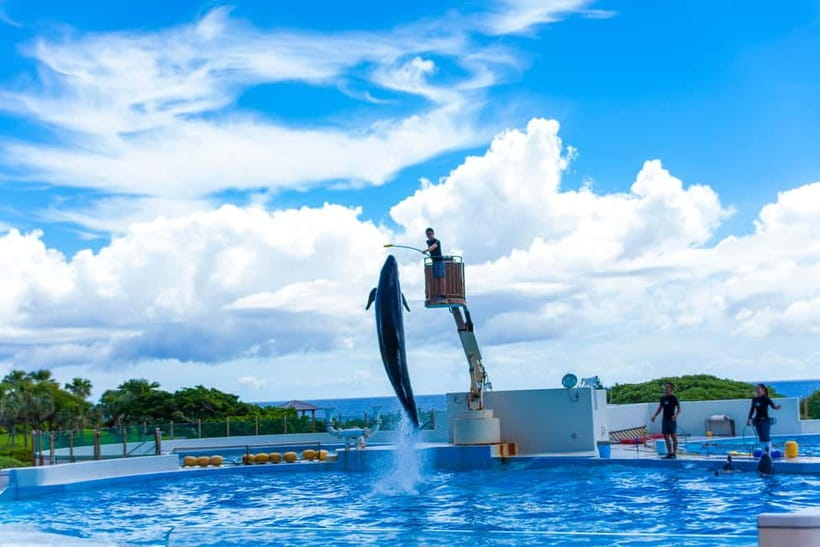
- Two ticket options: Churaumi Aquarium or Tropical Dream Center (you can’t get both entrances included).
- GPS-based audio with multiple languages; bring earphones and keep your phone working.
- North Okinawa sampling: aquarium/orchids, Kouri Island, Okashigoten, Manza Cape, American Village.
- Kouri Bridge sea views on a route that would be a hassle by bus + transfers.
- Manza Cape has a small 100 JPY site fee collected on arrival (cash).
- Good end-of-day payoff at American Village and Sunset Beach if you want a later stop.
Choosing Your Main Stop: Churaumi Aquarium or Tropical Dream Center
This tour is built around one big decision: which indoor/outdoor anchor stop you want most.
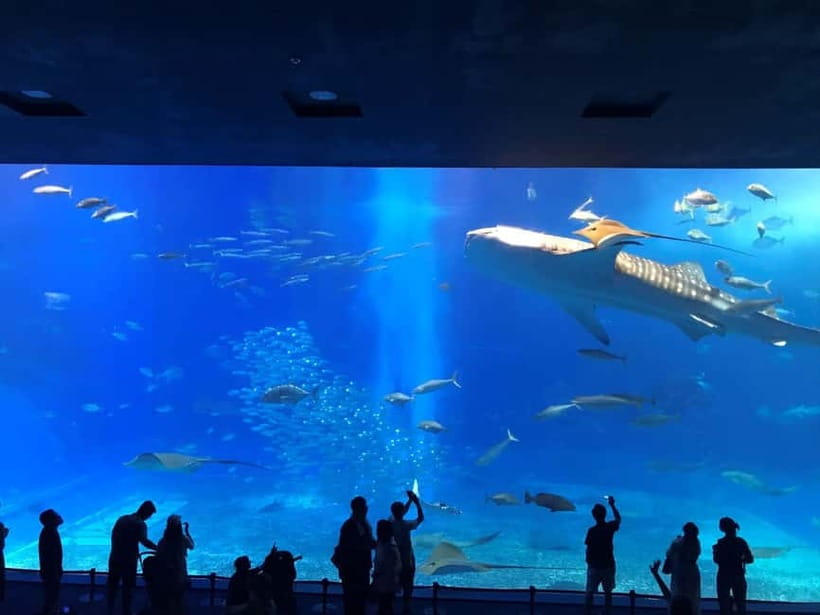
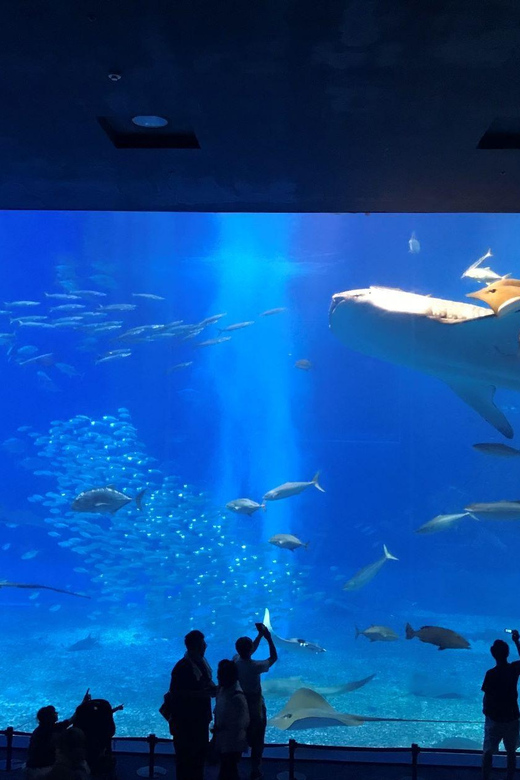
Option 1: Churaumi Aquarium is the classic Okinawa pick. You’ll get time to walk through multiple floors of huge tanks and focus on deep-sea creatures, coral, sharks, and tropical fish. If you’re coming mainly for marine life, this is the option that fits.
Option 2: Tropical Dream Center is a different vibe. You trade the aquarium’s animal energy for a floral experience in greenhouses with orchids. If you like photos, calm walking, and seeing plants up close, this option makes the day feel lighter.
One important detail: you won’t have the entrance fees for both included. So if you’re trying to do everything, this plan is better at giving you one standout experience rather than trying to cram two paid attractions.
You can also read our reviews of more tours and experiences in Okinawa.

Price and value: what you get for about $45
At roughly $45 per person for about 10.5 hours, the value comes from what’s bundled.
You’re paying for:
- transportation on a comfortable coach-style bus
- insurance and taxes
- smart audio guidance on your smartphone (GPS-based)
- admission included to either Churaumi Aquarium or Tropical Dream Center, depending on your chosen option
What you’re not paying for:
- lunch
- the 100 JPY ecological site fee at Manza Cape
- any extra snacks/meals you buy at stops
For a single day, this is the kind of price that makes sense when you want a structured “greatest hits” circuit—especially if you don’t want to deal with rental cars or multiple transfers. The day can feel long, but it’s long by design: you’re covering north Okinawa efficiently.
Getting picked up on Okinawa time: where the bus starts
You can board at one of three drop-in pickup points, all in the Naha/Chatan area:
- In front of the Okinawa Prefectural Assembly (Naha)
- Next to DFS T Galleria Omoromachi / by the Aoyama Tailor area (Naha)
- Chatan Tourist Information Center (Chatan)
The departure timing depends on which pickup point you choose. The reference start times start at the bus leaving the first pickup spot, and the whole schedule follows from there. The tour coordinator is set up so you can switch hotels between Naha and Chatan without stress, too—luggage can be stored in the bus trunk.
Also, bus identification is pretty specific. Look for a bus with Cerulean Blue on it, and a C.D sign on the windshield. If it’s the rare alternate design with a big Iyas logo, the company will contact you the day before.
This may sound fussy, but it saves time on a busy morning. Okinawa days start fast once the sun’s up.
The smart audio guide setup (and how to make it work)
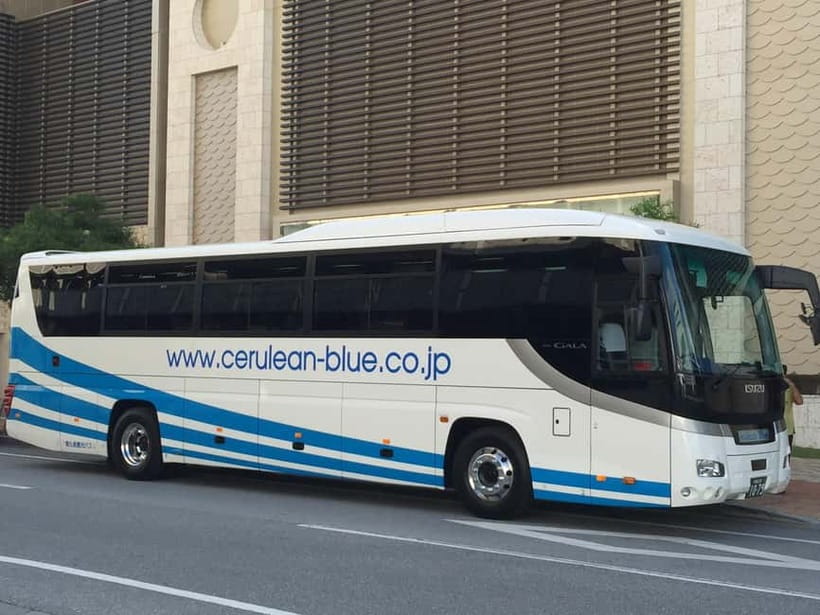
This is a big part of the experience. The tour doesn’t operate like a classic bus-guide commentary. Instead, you get GPS-based audio on your phone, in multiple languages.
Included audio languages:
- Japanese, English
- Korean
- French
- Spanish
- Chinese (Traditional and Simplified variations, plus Cantonese)
The practical thing to know: GPS is required, and there’s a warning that if the audio service doesn’t work, there’s no refund. So you’ll want to prepare your phone like it’s part of your itinerary.
My quick advice:
- bring earphones
- keep your phone charged (a power bank helps)
- have your mobile connection ready if your audio playback depends on it (one rider specifically noted it worked with a phone connection)
Onboard, there’s a bus attendant. The attendant might not speak every language, but the company office can assist in English, Japanese, Korean, and Chinese if something goes wrong.
Some people also mention a staff member named Go for being especially kind and helpful with timing. Even with audio running the show, good on-the-ground help makes the whole schedule easier.
Ocean Expo Park: the longest stop and your built-in lunch break
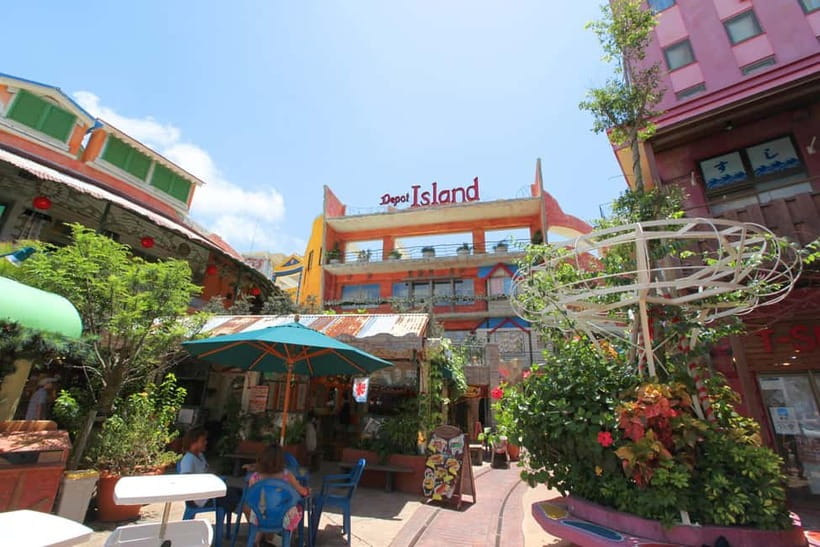
Your day kicks off at Ocean Expo Park, with about 150 minutes there. This is where you’ll do your main attraction depending on your option.
If you chose Churaumi Aquarium, this is your big block of time to explore at your pace. You’ll also have the time you need for lunch since the tour doesn’t include a meal.
If you chose the Tropical Dream Center, you still get a long window to walk the greenhouses and enjoy free time for photos.
A small logistics heads-up: one rider noted that sometimes the bus can be parked a bit far from the aquarium entrance. That’s not necessarily constant, but it’s a reminder to wear comfortable shoes and be ready for a short walk after boarding and before you start.
Kouri Island and Kouri Bridge: the photo stop that feels worth it
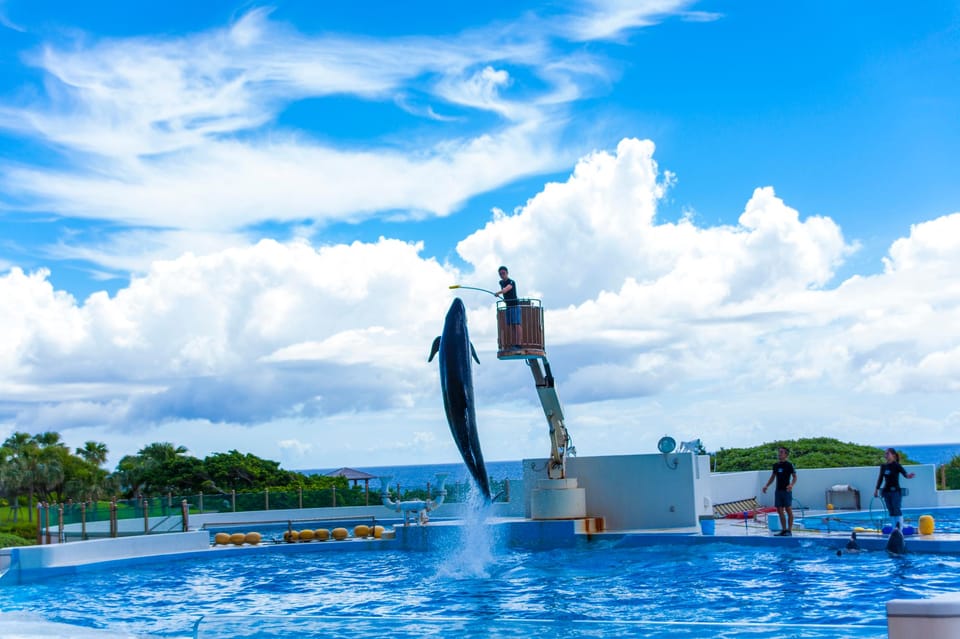
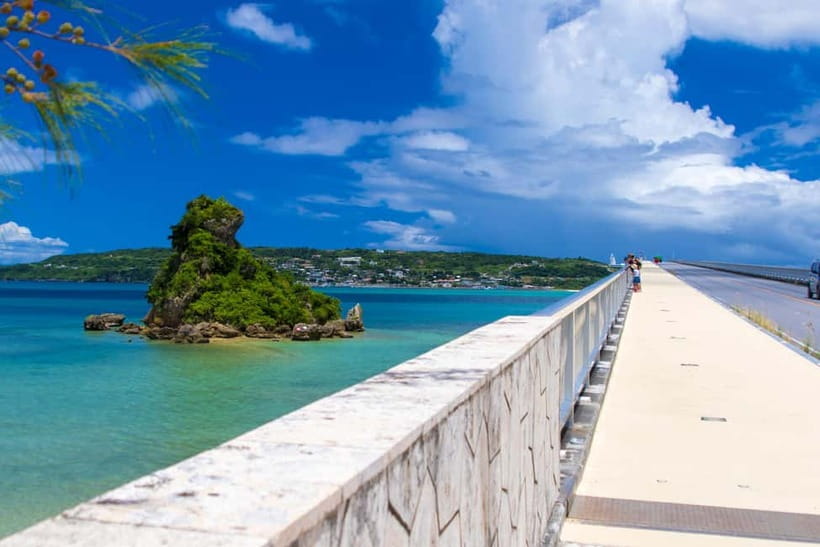
After Ocean Expo Park, the route takes you toward Kouri Beach for about 20 minutes, then over the Kouri Bridge for some serious sea-view time.
The bridge is about 2 km long, and the tour route is designed so you get ocean views during the crossing. This is one of those “you can’t fake it” moments—bright water, clear angles, and the kind of scenery that makes the long day feel like it’s paying off.
Expect this stop to be tight. It’s not the place for a long hike or a long meal. It’s better as a quick reset: stretch your legs, grab photos, and move on.
There’s also a tropical fruit market stop in the same general stretch. It’s a good chance to snack without planning a full meal.
Okashigoten for Beniimo tarts and Okinawan snack logic
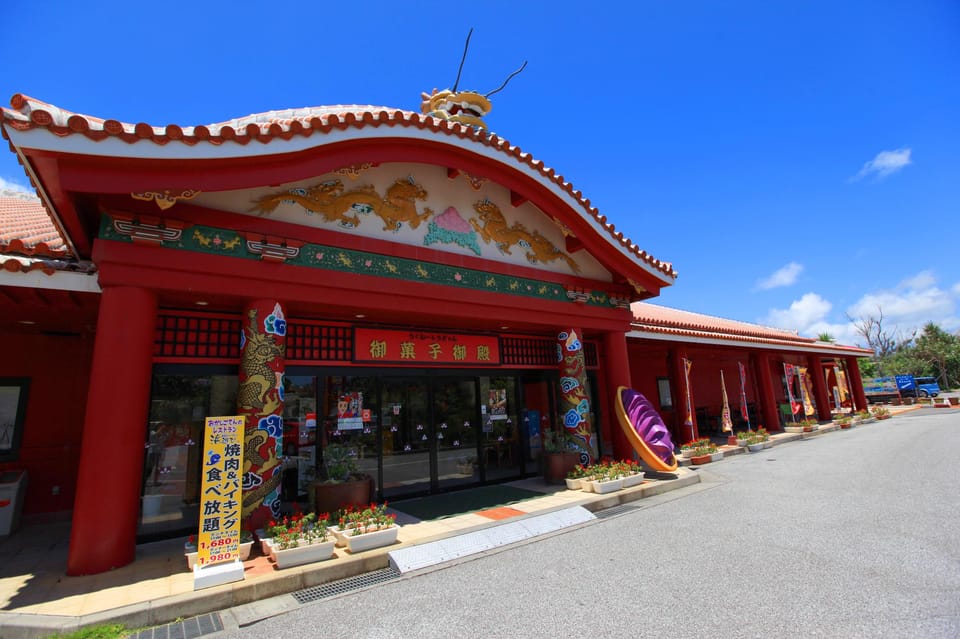
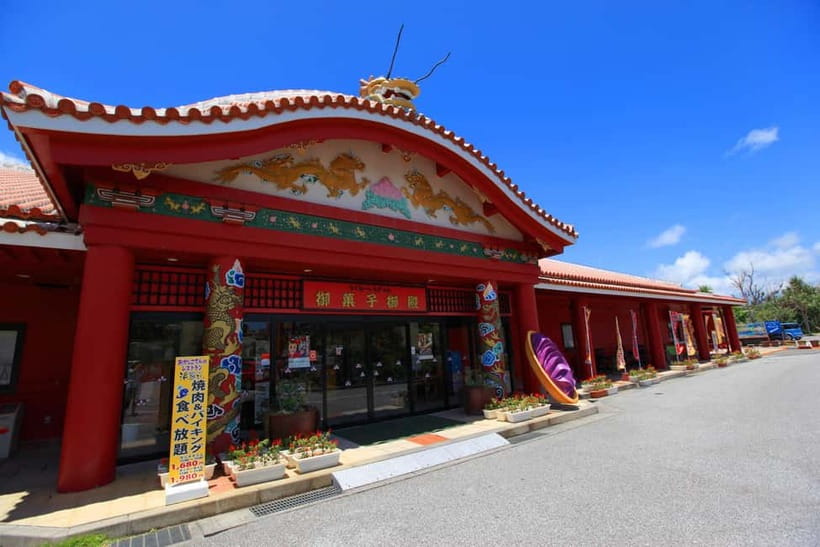
Next comes Okashigoten for about 20 minutes, a short, purposeful stop known for Beniimo Tarts. If you like grabbing souvenirs that are actually edible, this is the kind of place that makes sense on a bus tour.
The timing here is crucial: it’s short enough that you’ll likely buy something and keep moving. The upside is you don’t lose half a day to shopping, and you still go to the next scenic stop feeling ready instead of rushed.
This is also an easy stop for group-friendly browsing. If you’re buying for family or colleagues, a snack shop is far more practical than hunting for hard-to-pack souvenirs later.
Manza Cape (Cape Manzamo): the famous rock and the 100 JPY fee
Then you’ll head to Cape Manzamo for about 20 minutes. It’s known for an iconic cliff area and rock formations that are often described in relation to an elephant shape.
Two things matter here:
1) You’ll get a photo stop, not a long wander.
2) There’s an on-site environmental protection fee of 100 JPY, collected in cash.
This small fee is easy to miss if you come expecting everything to be “included.” But it’s also the kind of practical cost that keeps a site protected. Just budget a few bills so you’re not scrambling at the counter.
Also, some time at this stop can include Okinawan donuts. It’s not a full meal plan, but it’s a handy option if you’ve been walking and you want something sweet before the American Village portion of the day.
American Village and Sunset Beach: the end-game for people who want a payoff
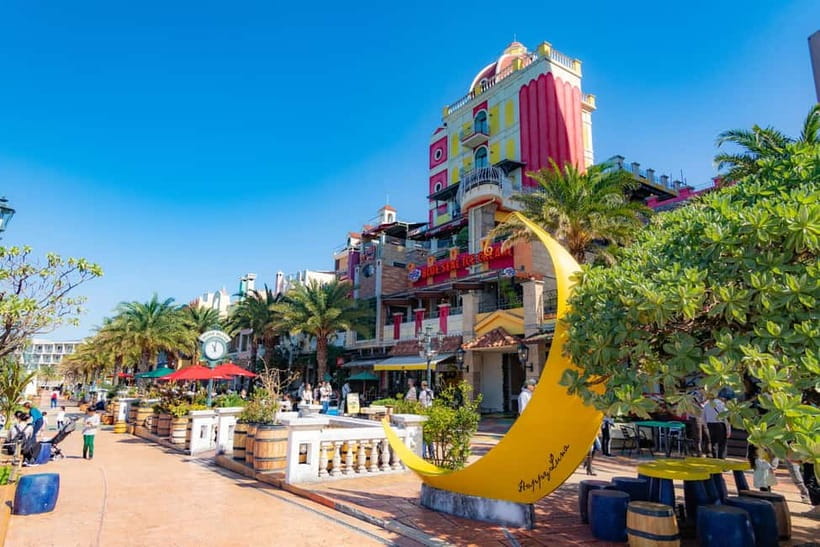
Your final major segment is American Village for about 50 minutes. This is a lively shopping and casual food area with fashion shops and restaurants that tend to cater to international tastes—think burgers and hot dogs.
The tour also includes Sunset Beach as part of this stretch. If the timing works out for you, it’s one of the more satisfying ways to close the day: you get sea air, casual atmosphere, and a chance to see the coastline before heading back.
You may choose to end the tour here instead of returning to one of the original pickup points. If you’re staying nearby, it can save you time. If you’re not, the bus still finishes at the drop-off points.
Comfort, timing, and group reality on a 10.5-hour loop
A day like this is a trade. You get breadth, not depth. You’ll likely be on the move for much of the day, with short windows at major sights.
That said, multiple riders highlight that the bus itself is comfortable with air conditioning and decent leg room. One rider also mentioned WiFi and phone chargers upon request—nice extras when your phone is already doing the GPS audio job.
One other practical point: the route schedule can shift due to traffic, and the tour’s finished time can vary. If you’re flying right after, give yourself at least two hours buffer beyond the tour’s end time. That’s not overkill in Okinawa traffic.
Who this tour is best for (and who should pass)
This tour is a strong fit if:
- you want an efficient overview of Okinawa in one day
- you don’t want rental-car stress
- you enjoy scenic coastal stops like Kouri Bridge and Manza Cape
- you’re okay with shorter visit times at big attractions
It’s less ideal if:
- you want to linger for hours at the aquarium, beach, or shopping areas
- you need a live English-speaking explanation at every stop (the ride uses audio)
- you’re sensitive to long walking between bus parking and entrances (it can vary)
If you only have a short window on the island—say you’re doing just two nights—this kind of loop is often the best way to get oriented fast.
Should you book the Okinawa Churaumi or Tropical Kouri American Village Bus Tour?
I’d book this tour if you want structure. It’s hard to beat a day that packages big-name Okinawa sights plus coastal scenery into one ticket, with the main entrance included for either the aquarium or the orchids.
Skip it (or choose your option carefully) if you’re the type who hates being on a clock. This isn’t a slow travel day, and the audio-guided format means you’ll do more reading/listening yourself instead of following a live guide.
My final practical recommendation: decide your priority first—marine life (Churaumi) or orchids and flowers (Tropical Dream Center). Then pack your day like a pro: comfortable shoes, sunscreen, water, and earphones ready for the GPS audio.
FAQ
How long is the Okinawa Churaumi or Tropical Kouri American Village bus tour?
The duration is listed as 630 minutes (about 10.5 hours).
Where can I be picked up and dropped off?
Pickup and drop-off are available at three locations: in front of the Okinawa Prefectural Assembly (Naha), next to DFS T Galleria Omoromachi (Naha area), and Chatan Tourist Information Center. The exact bus departure times depend on which pickup point you choose.
Is lunch included?
No. Lunch is not included, but you’ll have time to eat during the long Ocean Expo Park stop.
Is the Churaumi Aquarium or Tropical Dream Center ticket included?
Yes, but only for the option you choose. If you pick the Churaumi Aquarium option, the Churaumi entrance fee is included. If you pick the Tropical Dream Center option, that entrance fee is included. There’s no option that includes both entrances.
Do I need to pay anything at Manza Cape?
Yes. A 100 JPY ecological/environmental protection fee is collected on site in cash.
Is there an English-speaking guide on the bus?
There isn’t a live bus guide in the usual sense. The tour uses smart audio guidance on your smartphone in multiple languages, based on GPS. A bus attendant is also provided.