REVIEW · MENORCA
Menorca Astronomical Observation with Telescopes, Night Sky
Book on Viator →Operated by Polaris Menorca · Bookable on Viator
Menorca’s dark sky feels like a time machine. This guided night session is built around Menorca’s protected Starlight sky, where the Milky Way and lots of deep-sky objects are visible even in a Europe-with-light-pollution reality. At La Vall, you get a short setup talk, then a guided sweep of constellations and planets, using lasers, binoculars, and telescopes, with the stories behind the sky folded in.
Two things I really like: the laser-pointer sky walk that helps you find what you’re seeing, and the chance to look through state-of-the-art telescopes rather than only learning from afar. One thing to factor in is that this experience runs on good weather, so cloud cover can limit what you’ll be able to observe.
In This Review
- Key takeaways before you go
- Menorca’s Protected Night Sky and What That Means for Your Eyes
- Arriving at La Vall: A Practical Base for a 2-Hour Night
- The Starlight Guide Intro: How to Understand What You’ll See
- Stop at La Vall: Observation in Layers, Not Just One Big View
- The Guided Laser-Pointer Sky Tour: Getting Oriented Fast
- What You’ll See Through Binoculars and Telescopes
- Why the Constellation Mythology Actually Helps
- Small Group Size and a Realistic 2-Hour Pace
- Price and Value: What $35.57 Gets You (and Why It’s Not Just a “Cheap Telescope”)
- Who This Fits Best (and Who Might Want Something Different)
- Weather, Comfort, and Your Best Preparation
- Should You Book This Menorca Telescope Session?
- FAQ
- How long is the Menorca astronomical observation with telescopes?
- Where does the tour start and end?
- Is transport included?
- What’s included in the experience?
- Are bathrooms available?
- What is the group size?
- Is a mobile ticket used?
- Does the activity depend on weather?
- How soon will I get confirmation after booking?
- Are service animals allowed?
- FAQ
- What can I expect to observe during the session?
- Is it suitable for most travelers?
Key takeaways before you go
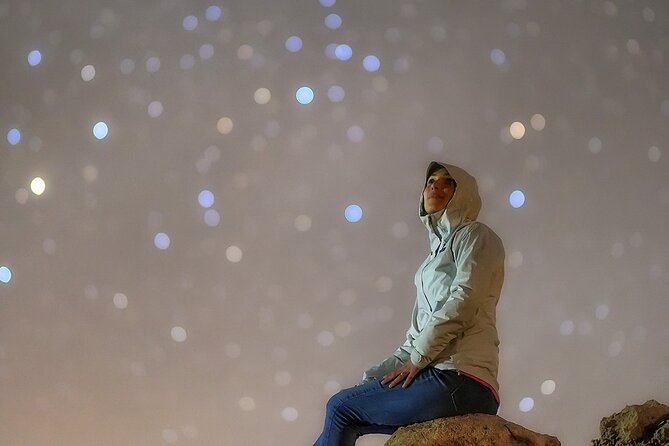
- Starlight territory focus: you’ll learn what it means for Menorca to protect its night sky as a biosphere reserve and Starlight destination
- Laser-pointer guided tour: the guide helps you track constellations and celestial objects in real time
- Multiple viewing tools: binoculars plus telescopes mean you’ll see targets at different levels of detail
- Mythology + science together: constellations come with stories, not just coordinates
- Small group feel: capped at 15 travelers for a more personal night-sky experience
- Comfort at La Vall: the headquarters includes WC, tables, chairs, and a terrace so you’re not freezing in the dark with nowhere to sit
Menorca’s Protected Night Sky and What That Means for Your Eyes
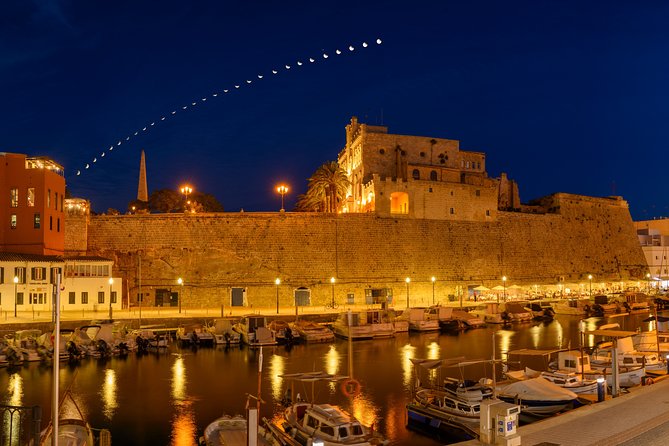
Menorca is one of the rare places in Europe where the night sky can still feel wide open. In this session, the host frames it as more than a pretty view: the island’s commitment as a biosphere reserve connects directly to protecting the night environment. That matters because visibility isn’t just about having a clear sky—it’s also about having low enough light pollution for fainter stars and deep-sky targets to show up.
You’ll hear about what “Starlight” means as a designation, reserve, and destination. Then you’ll connect that concept to what you’re actually going to look for: the Milky Way, stars, planets, constellations, and other objects you may not normally associate with an ordinary backyard night. If you love astronomy, you’ll appreciate the practical explanations. If you’re new to stargazing, you’ll still get a strong sense of what’s going on and how to follow the guide.
You can also read our reviews of more tours and experiences in Menorca.


Arriving at La Vall: A Practical Base for a 2-Hour Night
This activity starts and ends at the same place: Aparcament de la Vall, in Ciutadella de Menorca. Transport isn’t included, so plan to handle getting there on your own. The good news is that the meeting base includes real amenities, not just a patch of grass—there’s a WC, seating with tables and chairs, and a terrace where you can wait before the observing starts.
I like this setup because it reduces the usual night-tour chaos. You can settle in, use the bathroom early, and keep your focus on the sky when it’s time. For a short experience of about two hours, that comfort matters more than you’d think.
The Starlight Guide Intro: How to Understand What You’ll See
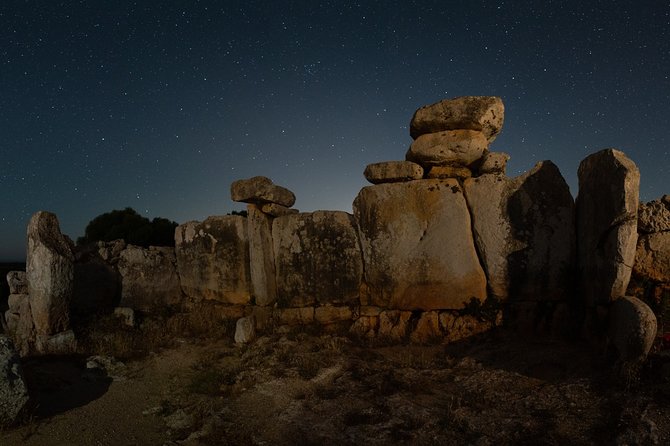
Right at the start, you’ll get a theoretical introduction before the telescopes come out. The talk is designed to be more than general astronomy trivia—it connects Menorca’s night-sky quality to what you’ll see in the sky that night. You’re also taught the ideas behind the Starlight commitment, so the experience feels grounded in place rather than a generic “look up” event.
Then the guide shifts from explanation to action. You’ll get guidance for finding and following celestial objects during the session, using tools that make a huge difference for first-timers: laser pointers, astronomical binoculars, and telescopes. In past experiences with this team, names like Edu and Javier have been praised for professional, friendly, and funny delivery, plus explanations that stay easy to follow even when the skies aren’t cooperating.
Stop at La Vall: Observation in Layers, Not Just One Big View
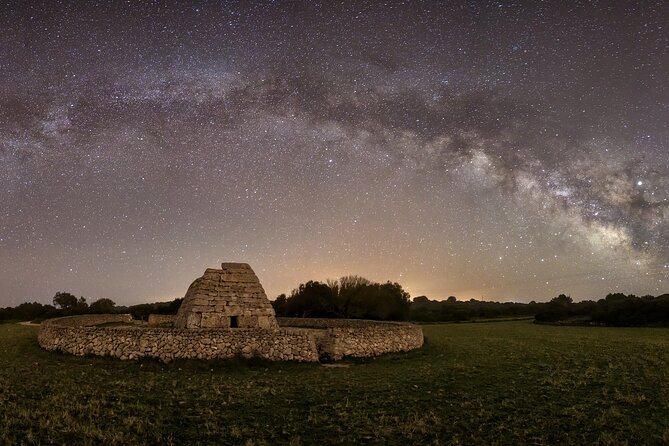
The core of the experience happens at the headquarters in a private outdoor space at La Vall. The format is basically astronomical from start to finish, with the guide steering you through the sky while you observe. The highlight is hands-on viewing: you’re not just watching the guide point somewhere and hoping you can find it again.
Here’s the layered approach that helps most people get real results in only two hours:
- Laser-pointer moments help you identify targets and track them quickly
- Binocular viewing gives you a wider field and a more “alive” sense of stars and star patterns
- Telescope viewing zooms in for fainter, more detailed objects
That progression is smart. If you start with telescopes without orientation, you can end up seeing blurry lights with no context. With the guide’s orientation first, the telescope view becomes more meaningful, not just bigger.
The Guided Laser-Pointer Sky Tour: Getting Oriented Fast
This is the part you’ll probably remember most clearly, because it does the hardest job: helping you understand where to look. The guide uses laser pointers to show main targets across the night sky. You’ll learn constellations and how they connect to stories from the mythology of the Menorca sky, so the patterns you see aren’t random.
I like that this tour-style approach avoids one common stargazing problem: people spend the first 20 minutes hunting. Here, the pacing is set so you start with familiar landmarks, then move to more specific targets as the night session goes on. Even if you don’t know any constellations today, you’ll likely leave with a mental map.
Also, keep expectations realistic. The sky can change quickly depending on conditions, and a short guided session won’t turn you into an astronomer overnight. But you will learn how to track objects and what to look for, so the experience becomes reusable knowledge rather than a one-off.

What You’ll See Through Binoculars and Telescopes
The session is built around both bright and faint targets. You’ll look at planets and standout stars, but you’ll also have chances for deeper objects like nebulae and galaxies, along with the Milky Way. Menorca’s dark-sky conditions are the reason this kind of “beyond the basics” viewing is possible here.
Telescopes typically deliver the most dramatic change from what you can see with the naked eye. Instead of only star points, you may notice structure—depends on the target and the observing conditions. Binoculars, meanwhile, help you see the “bigger picture”: star fields, patterns, and targets that feel more extensive than a single pinpoint.
The guide’s job is key here. With the laser-pointer tour, you’re less likely to miss the object while trying to adjust your angle. With a small group size (maximum 15 travelers), you also tend to get smoother access to the viewing tools and less waiting around than you’d get in huge crowds. That’s a real value detail for a night activity.
Why the Constellation Mythology Actually Helps
It’s easy to treat mythology as a side dish. In this case, it works like a memory tool. You’re not just learning star names—you’re learning stories that anchor those constellations in your head. That can make the sky more fun in the moment, but it also helps you remember what you saw after you’ve stopped looking through equipment.
On a night like this, your brain is working in low light. Anything that gives you a narrative pattern beats rote facts. If the guide ties what you’re pointing at to a Menorca sky story, you’ll probably understand it faster and feel more connected to the landscape.
Small Group Size and a Realistic 2-Hour Pace
The experience runs about 2 hours. That’s long enough to do real observing and still short enough that you’re not stuck in the dark for half a night. It’s also capped at 15 travelers, which is ideal for this kind of activity. Starlight-style sessions depend on attention and timing, and small groups help the guide manage equipment, questions, and guiding you to the right spot.
You should go in expecting a guided flow. It’s not a silent, free-for-all night. Instead, you’ll move from theoretical intro to orientation to observation, with the guide controlling the pacing so you see a range of targets.
Price and Value: What $35.57 Gets You (and Why It’s Not Just a “Cheap Telescope”)
At about $35.57 per person for roughly two hours, this is positioned as a budget-friendly way to access real astronomy equipment with guidance. The value isn’t only the telescope. It’s the combination of:
- a structured introduction so you understand what’s on offer
- guided orientation with laser pointers
- binocular and telescope viewing
- context through Menorca’s Starlight and mythology storytelling
If you were to do this on your own, you’d need dark-sky planning, equipment, and (often) a lot of trial and error. Here, you’re paying for the “less frustration” factor. That’s worth a lot in a short time window—especially when night conditions can change.
Who This Fits Best (and Who Might Want Something Different)
This works well if you fall into any of these categories:
- You want a guided night-sky experience rather than figuring it out solo
- You’re curious about the Milky Way, constellations, and planets but don’t want a steep learning curve
- You’d like telescope viewing without needing to own or transport equipment
- You enjoy explanations that blend science and stories
It might be less ideal if you want a purely independent photography session or a long, unguided stargazing night. This experience is guided and observational, designed for a set timeframe and a specific set of targets.
Weather, Comfort, and Your Best Preparation
This activity requires good weather. That’s not just a policy line—it directly affects what you can see. Clouds and haze can blunt views, and night-sky sessions live or die by conditions.
To get the most out of it:
- Dress warmly enough for night viewing in Menorca
- Arrive with a flexible mindset if the sky doesn’t look perfect
- Use the WC before observing starts so you’re not breaking your focus later
Because the headquarters has tables, chairs, and a terrace, you’ll usually have a more comfortable waiting period than you might expect for an outdoor activity. That makes the whole thing less stressful and helps you stay present when it’s time to look.
Should You Book This Menorca Telescope Session?
If you want a guided, gear-supported stargazing session with a strong sense of place, I think it’s a smart booking. You’re not just paying to look through a telescope—you’re getting orientation, a Starlight-focused context, and a guided tour that aims to help you actually see the Milky Way, planets, and deeper objects like nebulae and galaxies when conditions allow.
Book it if you’re short on time, new to night-sky observation, or you want a memorable introduction to Menorca’s protected dark skies. If you’re allergic to weather-dependent plans or you want an entirely self-directed experience, you may prefer something more flexible. But for most people, this is an efficient way to experience Menorca at night with real guidance and real equipment.
FAQ
How long is the Menorca astronomical observation with telescopes?
It lasts about 2 hours.
Where does the tour start and end?
It starts at Aparcament de la Vall (Ciutadella de Menorca) and ends back at the same meeting point.
Is transport included?
No, transport is not included.
What’s included in the experience?
You get a theoretical introduction and guided observation of the night sky, using a laser pointer, astronomical binoculars, and state-of-the-art telescopes.
Are bathrooms available?
Yes. The headquarters includes a WC.
What is the group size?
There is a maximum of 15 travelers.
Is a mobile ticket used?
Yes, the experience uses a mobile ticket.
Does the activity depend on weather?
Yes. It requires good weather. If it’s canceled due to poor weather, you’ll be offered a different date or a full refund.
How soon will I get confirmation after booking?
Confirmation is received within 48 hours of booking, subject to availability.
Are service animals allowed?
Yes, service animals are allowed.
FAQ
What can I expect to observe during the session?
You can observe the Milky Way, stars, planets, constellations, and other objects such as galaxies and nebulae.
Is it suitable for most travelers?
Most travelers can participate.