REVIEW · LANZAROTE
Lanzarote: Volcano Hike
Book on GetYourGuide →Operated by Canary Trekking · Bookable on GetYourGuide
Volcanic terrain on foot feels otherworldly fast. I love the way this guided 8 km hike turns the Volcanoes Natural Park into a clear, story-driven lesson, from calderas and craters to the leftovers of lava tunnels. I also like that you get a live explanation of how Lanzarote’s eruptions shaped what you see today, including the big windows of activity in 1730–36 and 1824. The main thing to watch is the ground can be loose in places, and the area can be windy and very dry, so the right shoes and water matter.
You’ll spend about 3 hours moving at a steady walking pace through an arid, protected zone where vegetation grows slowly. That slow plant “return” is part of the point: it helps the volcanic structures stay well preserved, so the scenery reads like a volcanology museum you can walk through.
In This Review
- Key highlights that make this hike worth it
- Volcano Hike in Lanzarote: What you’re actually walking through
- Meeting at Camino Testeina near Montaña Testeina
- The 3-hour route: lava flows, cones, and craters you can study up close
- Crossing lava fields
- Ascending toward volcanic cones
- Craters and the meaning behind the shapes
- Lava tunnels and lava lake clues
- Why the 1730–36 and 1824 eruptions change how you see Lanzarote
- Terrain, pace, and the small gear choices that prevent discomfort
- The guide matters more than you think (and the reviews back that up)
- How much is it really worth at about $48 per person?
- Who should book this Volcano Hike (and who should skip it)
- Quick booking checklist (so you’re set on day one)
- FAQ
- How long is the Volcano Hike in Lanzarote?
- How far do you walk?
- Where is the meeting point?
- Is hotel pickup available?
- What languages are the guides?
- What should I bring, and is it suitable for kids?
- Should you book this Volcano Hike in Lanzarote?
Key highlights that make this hike worth it
- Volcanoes Natural Park set in the island’s center-south, focused on recent and historical eruptions
- Moonscape-style trekking across lava flows and open, dramatic ground
- Crater and cone views that help you understand how volcanic features form
- Real island context about Lanzarote’s volcanic past, not just generic sightseeing
- Lava tunnels and lava lakes concepts explained along the route
- Live, multilingual guides (English, French, Spanish) who keep the walk engaging
Volcano Hike in Lanzarote: What you’re actually walking through
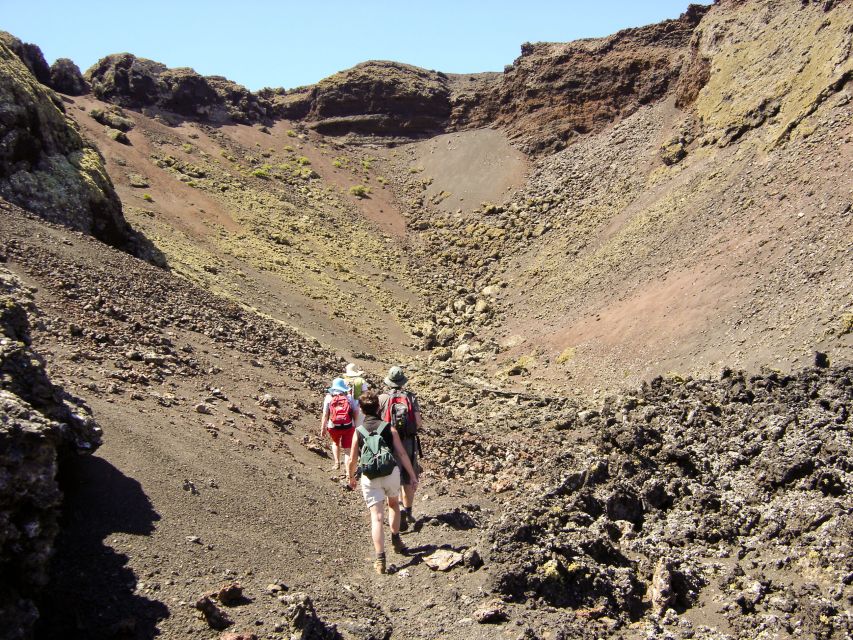
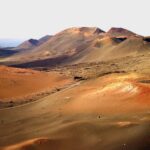
This isn’t a long day hike. It’s a focused 3-hour walk designed to hit the most readable volcanic features without dragging you across the island. The route is about 8 km, and you’re out in the heart of Volcanoes Natural Park, where you’ll see calderas, craters, and older lava landforms.
The big idea is conservation through harsh conditions. Lanzarote’s arid climate slows plant growth, which means the volcanic structures don’t get swallowed up. The result is that you can connect shapes in the rock to the processes that made them, step by step.
You can also read our reviews of more tours and experiences in Lanzarote.


Meeting at Camino Testeina near Montaña Testeina
Most mornings start the practical way: getting to the dirt-road meeting spot and being organized into groups. Your meeting point is Camino Testeina, near Montaña Testeina, on the side of the main road LZ 30. You enter a few meters off the main road, and there’s space to park.
If you opted for pickup, your collection window is generally between 9:00 and 9:40am, depending on where you’re staying. After booking, the exact pickup time and place are shared by the supplier, so I’d check your spam folder too, just so you don’t miss the message.
Once you arrive, the walk begins with the guide setting expectations. A couple of reviews mention group sorting by language on arrival, which helps keep the explanations clear once everyone is moving.
The 3-hour route: lava flows, cones, and craters you can study up close
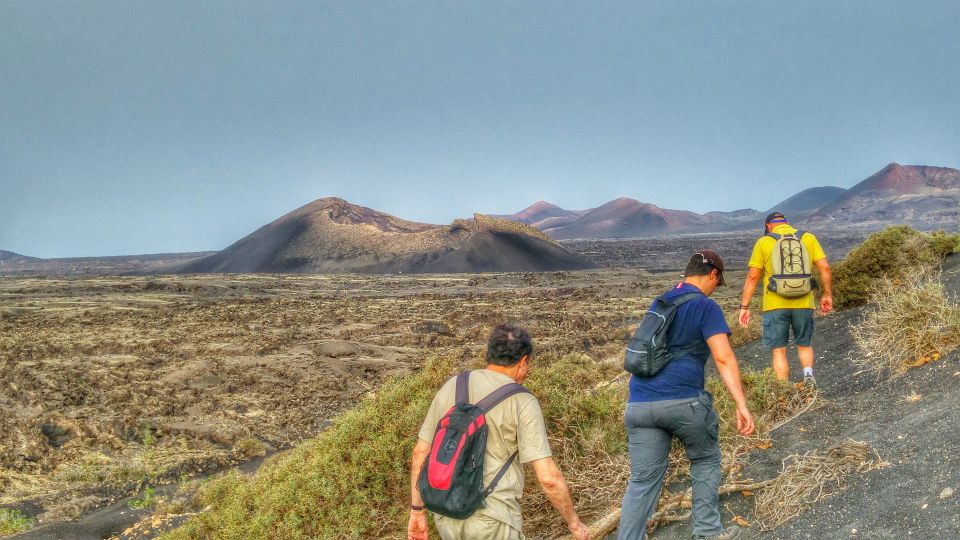
Expect an active route that mixes walking across lava fields with short uphill moments as you approach volcanic cones. Your guide’s job is to help you interpret what you’re seeing as you go, not just point and move on.
Here’s how the experience usually feels in motion:
Crossing lava fields
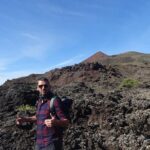
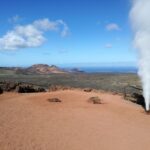
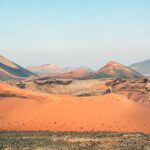
Lava fields are your “visual textbook.” You’ll walk over hardened flows where the guide can explain what different textures and shapes suggest. This is also where the practical side shows up: the surface can be loose in spots, so closed-toe shoes help you keep your footing.
Ascending toward volcanic cones
When you climb slightly toward cones, the view does two things at once. You get better photo angles, and you can better understand the structure of the volcano features. Several hikers mention that the crater moments were a real highlight, because they turn a distant headline into a place you stand inside.



Craters and the meaning behind the shapes
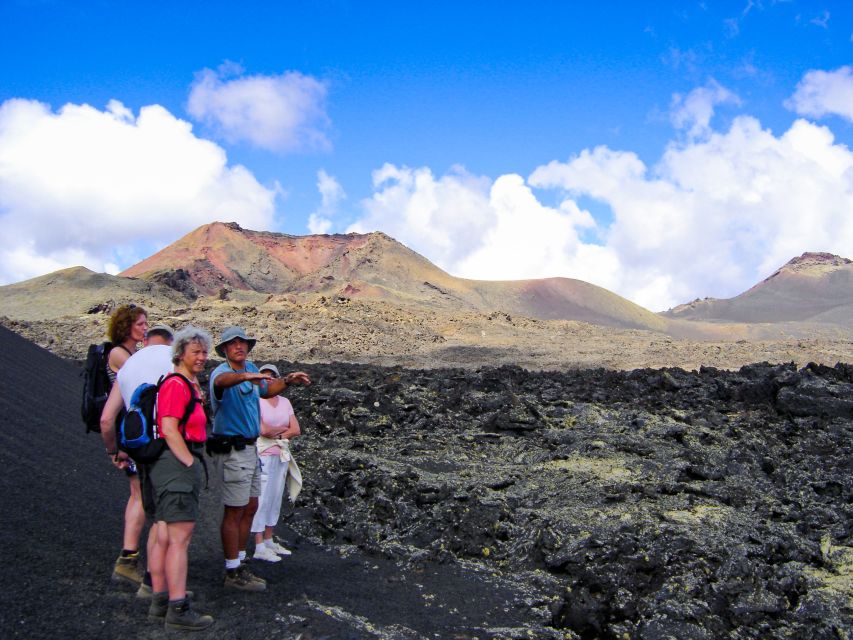
Crater access is one of the best reasons to do a guided hike here. Instead of just seeing a rim from afar, you get the chance to step closer and let the guide explain the formation story. Even if you’re not a geology person, the explanations tend to land because you’re matching words to a very visible shape.
Lava tunnels and lava lake clues
The park has features tied to lava movement, including remains of lava tunnels and areas described as lava lakes. You won’t be touring a heated cavern like in a theme park. Instead, the value is understanding how lava behavior shaped what endures today, and why those leftovers still matter.
Why the 1730–36 and 1824 eruptions change how you see Lanzarote
If you only treat this as a pretty walk, you’ll miss half the value. The guide’s explanation is built around Lanzarote’s recent volcanic history, especially the eruptions in 1730–36 and 1824. Those dates help you place what you’re seeing in time.
It also changes your photo strategy. With the right context, a crater stops being a circle and becomes a process. A lava field stops being “cool rocks” and becomes evidence of how molten material moved and cooled.
One useful mindset: you’re not just walking across old rock. You’re walking across the island’s evidence of how the planet works at its most intense scale. And then, because the area is protected and vegetation returns slowly, you can also notice the slower side of that story: how life comes back, piece by piece, over time.
Terrain, pace, and the small gear choices that prevent discomfort
You’re moving for about 3 hours on an approximately 8 km route. Some people describe it as leisurely; others note a robust pace. Either way, plan on real walking, not strolling.
The trail can include loose ground, and wind can be an issue. That’s why the recommended pack is smart:
- Comfortable closed-toe shoes
- A windbreaker (especially if the morning starts cool or breezy)
- Sun protection: sunglasses, sun hat, and sunscreen
- Water you can actually finish
- A camera if you like documenting craters and lava textures
If you’re the type who hikes in trainers, you might be fine, but expect to do more small foot adjustments. One review notes that shoes with decent grip help, especially when stones collect in the sole area.
The guide matters more than you think (and the reviews back that up)
This hike is built around interpretation, and the quality of that narration is a big part of why the experience scores so well. Multiple reviews point to guides who are local, friendly, and very good at explaining the route in a way that sticks.
You might meet Famara (a few reviews specifically call her out), or Marcelo. The style you’ll want is the practical kind: clear explanations tied to what’s directly in front of you. One person even described a guide with a mix of adventurous movie energy and real expertise, which sounds like exactly the tone you want for a walk through volcanic features.
Language is another plus. The tour runs in English, French, and Spanish, and you’ll likely be grouped by language at the start so your guide can keep the pace and explanations consistent.
How much is it really worth at about $48 per person?
At around $48 per person for a 3-hour guided hike, you’re paying for a live guide, a structured route through a protected volcanic area, and the practical setup that gets you there.
What makes it good value is that it’s not just access. You’re getting the interpretation that helps you understand why the terrain looks the way it does. In places like Lanzarote, that context can turn a “nice outing” into a “now I get it” moment.
Pickup and drop-off are optional. If you select it, transportation is included. That can matter, because timing and getting to a dirt-road meeting point is easier when you don’t have to solve logistics in a rental car first.
Also, there are small, human touches. Some reviews mention snack moments and a half-way break, which is exactly what you want on a dry, windy walk.
Who should book this Volcano Hike (and who should skip it)
This works best for adults or older kids who want a meaningful hike without committing to a full day of strenuous trekking. If you like geology in a hands-on way—seeing craters, walking lava fields, learning what caused the shapes—this is a strong match.
It’s not suitable for children under 7, and it isn’t designed for people with mobility impairments or wheelchair users. The route includes uneven volcanic ground, and the experience is built around walking across it.
If you’re visiting in cooler months, it can be chilly plus windy, so wind protection and sunscreen still matter.
Quick booking checklist (so you’re set on day one)
Bring:
- Closed-toe shoes
- Windbreaker
- Sunglasses and sun hat
- Sunscreen
- Water
- Camera
Think about timing:
- If you choose pickup, expect between 9:00 and 9:40am
- Check any messages in spam for the exact pickup details
Match the tour to your mood:
- If you want “views plus explanation,” this is the right kind of hike
- If you want a purely relaxed nature stroll, the uneven footing and guided pace might feel more active than you expect
FAQ
How long is the Volcano Hike in Lanzarote?
The hike lasts about 3 hours.
How far do you walk?
The guided route is approximately 8 km.
Where is the meeting point?
You meet at Camino Testeina, near Montaña Testeina (on the side of the main road LZ 30). The area is a dirt road next to the mountain, with a few meters of entry and space to park.
Is hotel pickup available?
Pickup is optional. If you select it, you’ll be picked up from your hotel, and the supplier shares the exact pickup time and place after booking. Pickup can fall between 9:00am and 9:40am depending on your location.
What languages are the guides?
The live guide offers English, French, and Spanish.
What should I bring, and is it suitable for kids?
Bring comfortable closed-toe shoes, a windbreaker, sunglasses, a sun hat, sunscreen, water, and a camera if you want photos. It’s not suitable for children under 7, and it isn’t suited for people with mobility impairments or wheelchair users.
Should you book this Volcano Hike in Lanzarote?
Yes, if you want a short hike with real context. This is one of those tours where the guide turns volcanic shapes into a clear story—craters, lava flows, and cone features explained while you’re standing in the right place to understand them.
Skip it if you need a fully flat, easy path, or if uneven volcanic ground would be a problem for you. If you’re comfortable walking about 8 km in windy, dry conditions and you pack the basics, you’ll likely come away with a much clearer picture of how Lanzarote’s volcano history shaped what you see today.