REVIEW · SANTORINI
Greek Cuisine Cooking Class in Santorini with Recipes and Wine
Book on Viator →Operated by Santorini Cooking Classes · Bookable on Viator
Greek cooking becomes real fast when you make it yourself. In Santorini, this small-group class in Megalochori pairs a local restaurant setting with the energy of chef Christos, plus a full lunch (or dinner) you actually helped prepare.
I especially like two things: you get hands-on practice with classic dishes (not just one bowl or one cut), and you leave with full recipes in a PDF so you can recreate the meal at home. You also sit down together and eat what you made with a glass of Greek wine, which turns the class into a proper meal, not a snack.
One possible drawback: the class can run more like take-turns cooking than a nonstop, every-minute hands-on scramble. If your goal is to be cooking at full intensity the whole time, plan for some watching and assisting while others work on other dishes.
In This Review
- Key things to know before you cook in Santorini
- A class in Megalochori beats the usual tourist setup
- Meeting chef Christos: utensils, introductions, and a cooking rhythm
- The menu you’ll actually make: tzatziki, salad, tomato fritters, and pasticio
- Tzatziki: the cool, creamy start
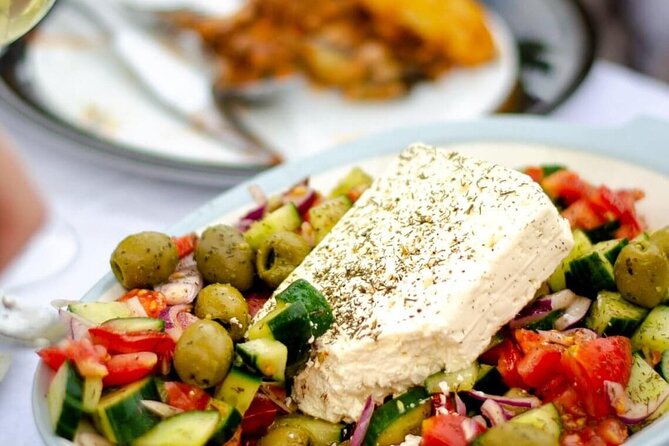
- Greek Salad: fresh, not fussy
- Tomato Fritters: the dish people brag about
- Pasticio: the filling main that anchors the meal
- The table part: lunch or dinner with Greek wine
- Recipes in PDF: how you use them when you get home
- Price and value: what $145.12 buys you in Santorini
- Who this class suits best (and who should adjust expectations)
- How to avoid a disappointing day in the kitchen
- Should you book this Greek cooking class in Santorini?
- FAQ
- What time does the Greek cooking class in Santorini start?
- How long is the class?
- Where do I meet for the activity?
- Is lunch included?
- Is wine included?
- What dishes will we cook?
- Are there gluten-free or vegetarian options?
- How big is the group?
- Is an air-conditioned vehicle included?
Key things to know before you cook in Santorini
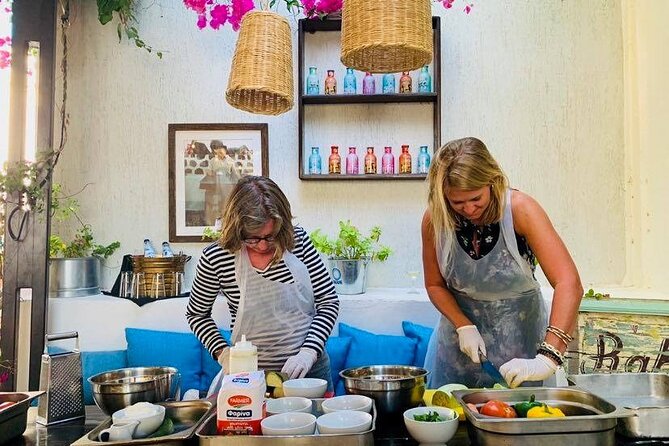
- Chef Christos keeps it lively while still teaching technique clearly in English.
- You cook multiple classic dishes, including tzatziki and pasticio (plus a vegetarian option).
- Wine and a full meal are included, so this is value-heavy compared with stand-alone food tours.
- Recipes come as a PDF, letting you recreate your favorites after the trip.
- Small group size (max 15) helps you actually participate and ask questions.
- No air-conditioned vehicle is included, so you’ll want to be comfortable walking to the restaurant area.
A class in Megalochori beats the usual tourist setup
This experience starts at 11:00 am and runs about 3 hours 30 minutes, ending back where you meet. The meeting point is at Feggera, Megalochori 847 00, Greece, in a village setting away from the main cruise-ship bustle. That matters because you’re trading port-area convenience for a more local-feeling meal.
You’ll get a mobile ticket, and the meeting area is near public transportation, which is helpful if you’re moving around Santorini without a private car. Also note the practical bit: an air-conditioned vehicle is not included, so plan for warm weather on the walk and timing, especially if you’re visiting during hot summer hours.
Group size stays small: up to 15 people. That keeps things from feeling like a factory line. In the feedback, people repeatedly mention that chef Christos pulls everyone into the process, including non-expert cooks.
If you’re doing this as part of a longer day, I’d treat it like a main event. You’ll be working, eating, and then you’ll likely be pleasantly full.
You can also read our reviews of more tours and experiences in Santorini.


Meeting chef Christos: utensils, introductions, and a cooking rhythm
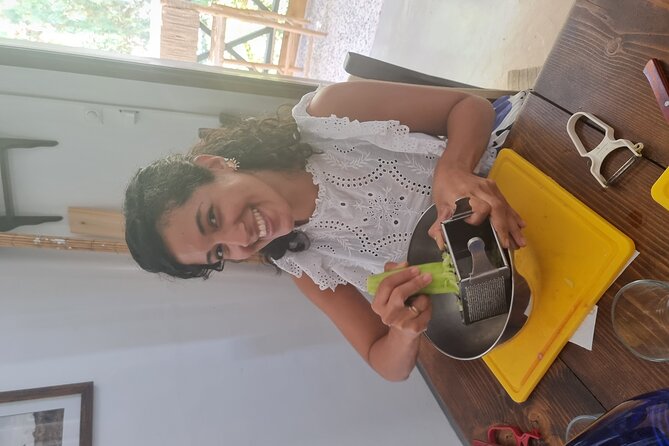
You make your own way to the Santorini village of Megalochori and meet your host with your small group in a centrally located restaurant. Once everyone’s introduced, you grab utensils and get moving right away. This is not a slow museum-style lecture. It’s kitchen energy with a clear rhythm.
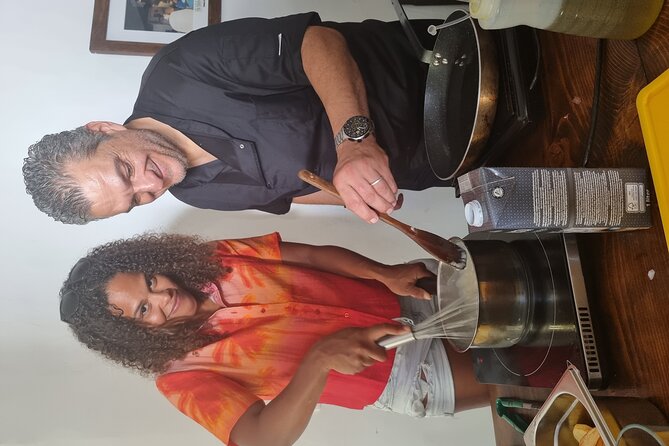
Chef Christos (often described as funny, entertaining, and very organized) tends to explain what’s happening as the class goes. The teaching style shows up in two ways:
- You’ll hear the technique behind each step, not just the step itself.
- You’re placed in the action. One person might handle a component while someone else works on another dish, then you switch as the menu builds.
Some people love classes like this because it feels relaxed. Others come in expecting a “stand at a station and cook everything” vibe. The truth is somewhere in the middle: you participate meaningfully, but you won’t control every single pot for the full session.
Also, you’re in English, which makes it easy to follow along even if your Greek cooking experience is basically zero.
The menu you’ll actually make: tzatziki, salad, tomato fritters, and pasticio
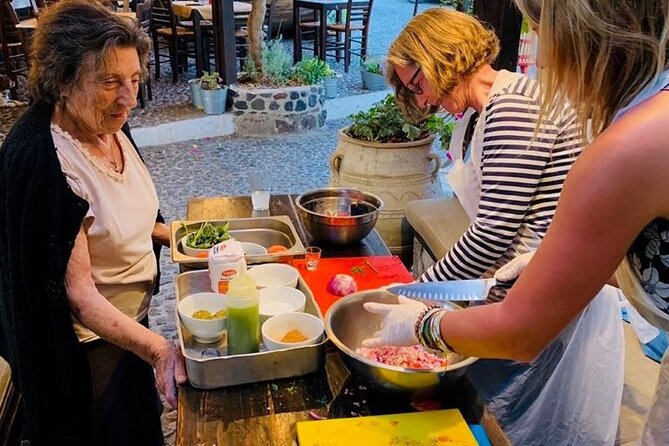
This is the heart of the experience. As the host explains technique, each person takes turns preparing the dishes that end up on the table. The sample menu includes:
- Starter: Tzatziki
- Starter: Greek Salad
- Starter: Tomato Fritters
- Main: Pasticio (with a vegetarian version available)
Tzatziki: the cool, creamy start
Tzatziki is one of those dishes that seems simple until you realize small choices change everything. Expect to learn how to balance ingredients and texture so it tastes fresh instead of flat. In feedback from past participants, tzatziki is part of what makes this class feel like true Greek cooking, not just a generic meal.
Greek Salad: fresh, not fussy
Greek salad is easy to recognize, but it’s also a lesson in good basics: how you cut, how you season, and how you build flavor as a team dish. You’ll likely get the hands-on work that matters, even if it’s not the “most dramatic” cooking.






Tomato Fritters: the dish people brag about
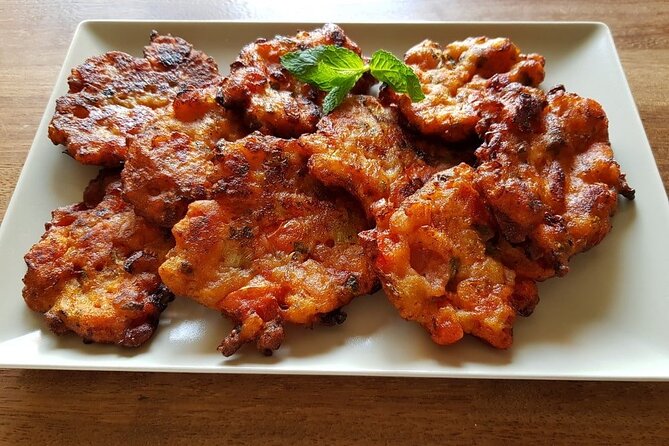
Tomato fritters show up again and again as a favorite. People often mention them as a standout, which makes sense: frying or crisping creates that satisfying crunch and turns simple ingredients into something you’ll want to recreate.
If you’re the kind of cook who loves learning one or two transferable techniques, this is where you’ll feel the payoff. Several people say they picked up new ways of cooking, and fritters are a great place for technique.
Pasticio: the filling main that anchors the meal
For many, pasticio is the dish that makes the meal feel like Greece. It’s baked, it’s substantial, and it’s the kind of comfort food that turns a cooking class into a real celebration. There’s also a vegetarian version, so you aren’t forced to eat a totally different meal if you choose that option.
One useful thing to know: pasticio is a “bigger finish” dish. If you go in hungry, you’ll be happy you did.
The table part: lunch or dinner with Greek wine
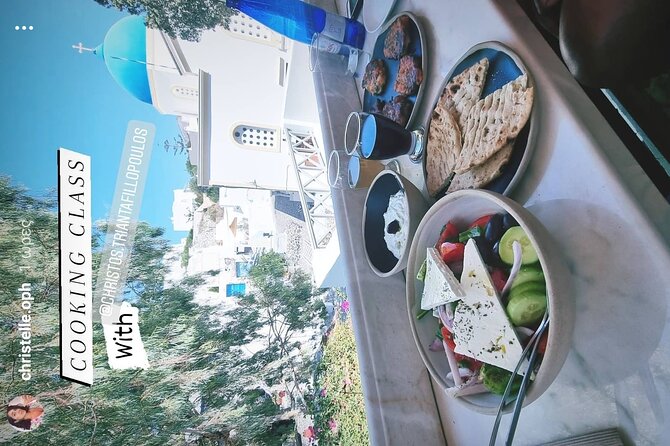
Once everyone has cooked, you all sit down together and eat. Your meal includes the dishes you made and a glass of Greek wine, plus bottled water. The wine is part of the value here because it turns the session into a full food experience, not a tasting where you leave still hungry.
Expect the pacing to move from hands-on prep to shared eating. That’s also when the class becomes social. People describe chef Christos as engaging, and the group aspect helps. If you’re traveling with family or a mix of ages, this timing works well: younger folks can participate in some of the prep, and everyone shares the result at the same table.
Big picture: plan to treat this as one of your main meals that day. Several comments point out the food is filling, and they’re right. You’ll likely want to skip a heavy late-night snack.
Recipes in PDF: how you use them when you get home
You get full recipes in PDF. That’s one of the strongest reasons this class holds value over time. A lot of cooking classes give you vague guidance; here, you’re meant to take home a usable document.
When you’re cooking again later, the real advantage is memory plus structure. You can flip the PDF and rebuild the menu step by step. If you loved a particular dish, you can focus your next attempt there instead of guessing.
One caution, based on what’s been reported by a small number of unhappy participants: make sure you get the PDF. If it’s delivered by link or email, double-check you received it before you leave your device behind. Most people likely get it smoothly, but I’d rather you be on the safe side.
Price and value: what $145.12 buys you in Santorini
At about $145.12 per person, this isn’t a bargain snack workshop. But it also isn’t overpriced when you break down what’s included:
- Lunch (or dinner) made from multiple dishes
- Wine plus bottled water
- Hands-on instruction led by an expert chef instructor (chef Christos)
- Recipe PDF you can use later
- Dietary options: gluten-free and vegetarian versions available
You’re paying for time, teaching, ingredients, and the sit-down meal. With food-and-wine experiences in Santorini, those pieces add up fast if you buy them separately.
The best value comes if you’ll actually cook at home afterward. If you just want a quick taste and photos, the price may feel steep. If you want a take-home skill (even a few techniques), it starts to make sense quickly.
Also factor in group size. A max of 15 helps keep it personal, which is part of why people rate it so highly.
Who this class suits best (and who should adjust expectations)
This class is described as suitable for beginner or experienced guests, and that fits the menu. You’re not dealing with rare ingredients or advanced pastry work. You’re learning core Greek cooking that you can repeat.
It’s a good fit if:
- You want a fun, food-focused activity that ends with a real meal
- You like learning from a chef who talks through what matters
- You enjoy Mediterranean comfort food and want to improve your home cooking
It may be less ideal if:
- You want maximum hands-on cooking in every minute (this tends to be turn-taking across dishes)
- You dislike kitchens that feel more like practical cooking stations than a polished restaurant set
- You need an air-conditioned ride (none is included)
One more practical note: Santorini is spread out. If you’re considering this from a cruise day, take timing seriously. The class meets in the village of Megalochori, not at a port doorstep, so building in enough buffer time matters.
How to avoid a disappointing day in the kitchen
A great class can still feel wrong if your expectations are off. Here’s how I’d set yourself up for success:
- Decide what you want most: skill-building or constant action. If it’s constant action, look closely at your comfort with participating in sections.
- Come hungry. The menu is filling, and you don’t just snack your way through it.
- Ask questions when you’re doing prep. With a small group, you have chances to clarify technique while you’re at your station.
- Watch the time when moving around Santorini. The meeting point is in Megalochori, and an air-conditioned vehicle isn’t part of the deal.
- If you have dietary needs, pick them up front. Gluten-free and vegetarian options are available, including a vegetarian version of pasticio.
The chef-led entertainment is part of the charm. In feedback, people consistently mention chef Christos being funny, engaging, and careful about technique. The best results usually happen when you lean into the shared table and the turn-taking structure.
Should you book this Greek cooking class in Santorini?
I think you should book it if you want an authentic-feeling Greek meal that comes with real technique and a recipe PDF you can use later. With multiple dishes like tzatziki, Greek salad, tomato fritters, and pasticio, plus wine and a sit-down lunch, it’s a strong value for a 3.5-hour day in Santorini.
I’d hesitate only if you want an ultra-intensive, every-minute hands-on experience. This class is hands-on, just not necessarily hands-on in the nonstop way some people expect. If you like learning by doing in parts, then switching tasks as the menu comes together, you’ll probably have a great time.
FAQ
What time does the Greek cooking class in Santorini start?
It starts at 11:00 am.
How long is the class?
The duration is about 3 hours 30 minutes.
Where do I meet for the activity?
The meeting point is Feggera, Megalochori 847 00, Greece.
Is lunch included?
Yes. The experience includes lunch (or dinner, depending on the session).
Is wine included?
Yes. You get wine with the meal.
What dishes will we cook?
The menu includes tzatziki, Greek salad, tomato fritters, and pasticio (with a vegetarian version available).
Are there gluten-free or vegetarian options?
Yes. Gluten free and vegetarian options are available.
How big is the group?
The class has a maximum of 15 travelers.
Is an air-conditioned vehicle included?
No. An air-conditioned vehicle is not included.