REVIEW · MORRO JABLE
Fuerteventura south: enduro trips on motocycle/lic. B,A1&2,A
Book on GetYourGuide →Operated by MJM Fuerteventura · Bookable on GetYourGuide
Two wheels, volcanic grit, and coaching. This south Fuerteventura enduro experience turns unknown dirt into confidence, with Michal guiding you through real riding technique. I love how it pairs hands-on coaching with small-group freedom, so the route can match your ability without turning into a boring trail parade.
Two things I’d call out right away: you get serious training before you roll, not just a hand-wavy briefing, and you ride bikes matched to your licence category (so the tour feels doable, not random). That mix matters if you’re new to enduro, or if you’ve only ridden on roads.
One drawback to consider: enduro work is physical. Even when the guide adjusts difficulty, expect steep bits, loose sand, and plenty of concentration, not a casual sightseeing cruise.
In This Review
- Key Highlights You’ll Actually Feel
- Why Southern Fuerteventura Works So Well for Enduro
- The 3-Hour Flow: Gear Up, Learn First, Then Ride
- Before you set off: equipment and technique prep
- During the training: enduro steering is different
- Choosing the Right Bike: Licence Categories B, A1, A2, and A
- What You’ll Ride: Gravel Roads, Trails, Sand, and Rocks
- Easy-to-challenging route options
- The terrain breakdown you can feel in your riding
- Pickup and Group Size: Easy Start, Fast Coaching
- Pickup on the southern side of the island
- Small group means you don’t disappear
- Safety, Gear, and the Balaclava Requirement
- What’s not allowed
- Young driver considerations
- Price and Value: Why $240 Makes Sense Here
- Who Should Book This Enduro Trip (And Who Should Skip It)
- Should You Book? My Practical Take
- FAQ
- How long is the experience, and how much time is spent riding?
- What motorcycle licence categories are accepted?
- Do I get riding gear and helmet included?
- Is hotel pickup and drop-off included?
- Is a balaclava required?
- What should I bring to the tour?
- Is the tour cancelled in bad weather?
- Are large bags or luggage allowed?
Key Highlights You’ll Actually Feel
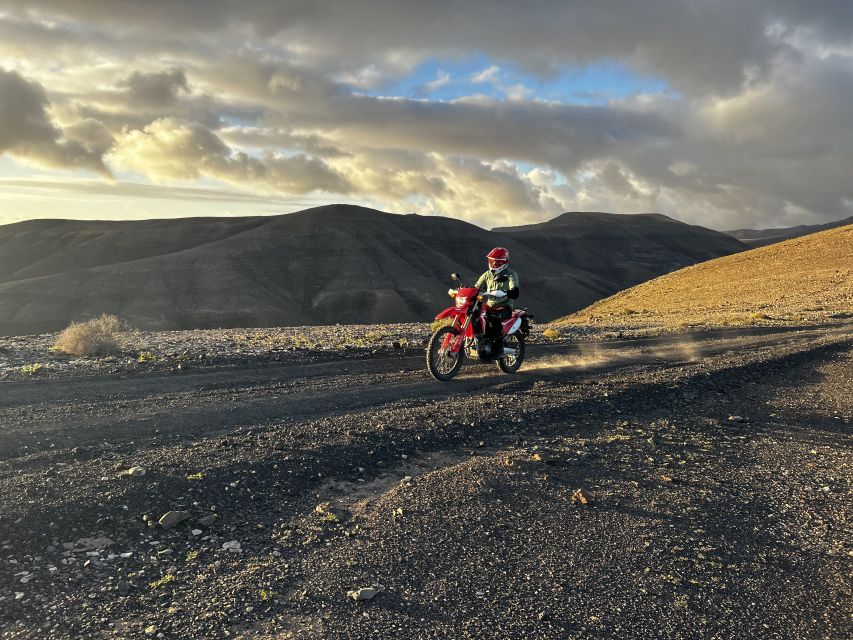
- 2 hours of riding time plus time for changing, prep, and technique talk
- Small group capped at 3 riders, so you get attention instead of waiting in line
- Licence-matched bikes: B, A1 (125cc), A2, A (250cc+)
- Coaching that starts in an enclosed practice area, then grows as you improve
- Terrain variety: gravel roads, country trails, sands, rocks, and steeper challenges when you’re ready
- Pickup and drop-off across southern Fuerteventura for a low-stress start
Why Southern Fuerteventura Works So Well for Enduro
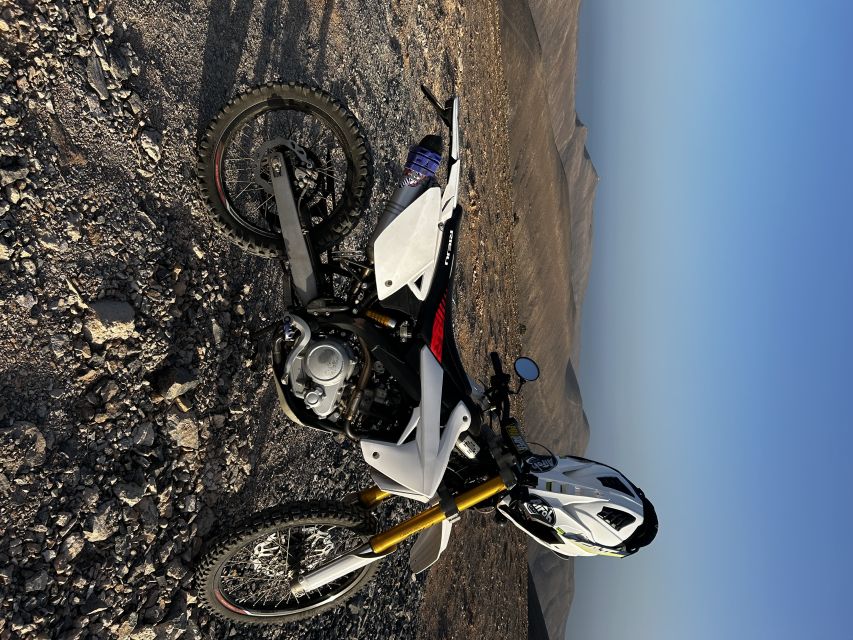
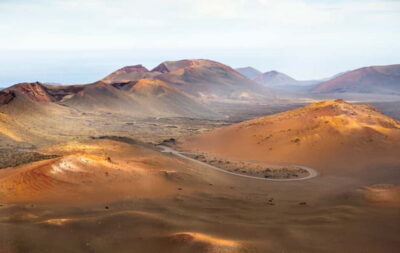
Southern Fuerteventura has the kind of terrain that enduro bikes were made for. You get gravel roads that open up fast, stretches of sand and rough ground that force smooth throttle and body position, and rockier sections that punish mistakes if you ride like it’s a normal street day.
That variety is the big value of the location. If you only ride one surface, you don’t build real skill. Here, you can practice the same core riding ideas—balance, looking ahead, using the bike’s weight, and staying calm—across different ground types. The views are also a bonus: you’ll be high enough and off the usual routes enough to see parts of the island that most people never reach.
The 3-Hour Flow: Gear Up, Learn First, Then Ride
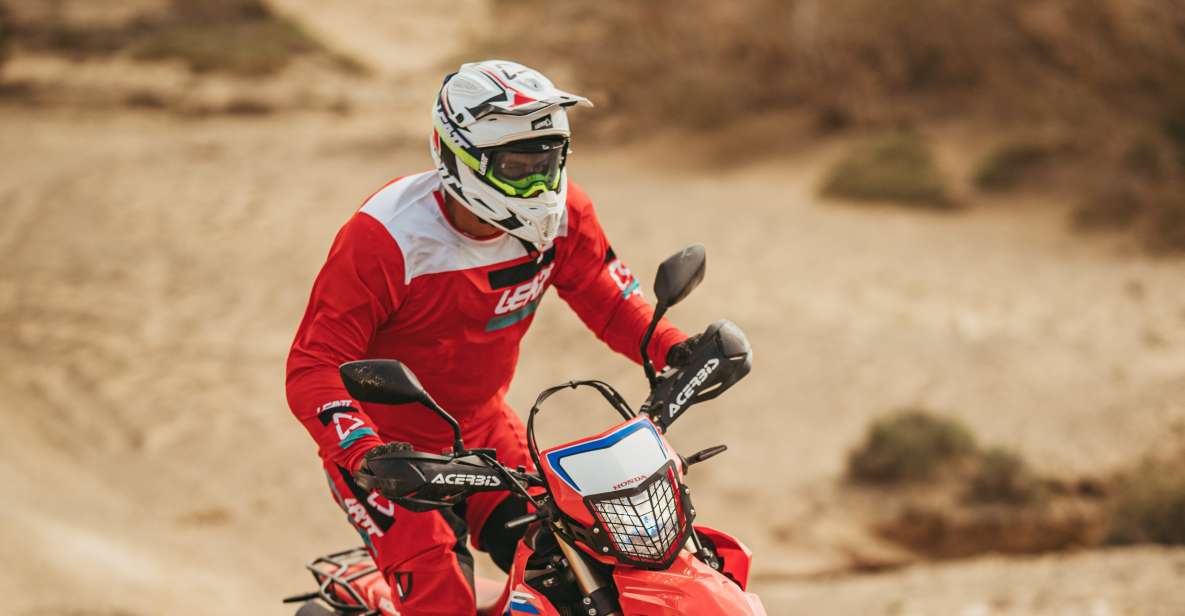
This is not a jump-on-and-go tour. The rhythm is: pick up your gear, get fitted, practice, then ride.
Before you set off: equipment and technique prep
You’ll swap into a full enduro outfit and protection kit. That’s helmet, goggles, boots, protective pants, a jersey, and more. Fuel is included, and the guide takes care of the ride planning. The key part is the training: before heading out into the rougher sections, you start with basic enduro technique and bike control.
The best part for beginners is the pacing. You’re not thrown into deep sand immediately. You build your confidence in a more controlled setup first, then you graduate into more demanding trails once you’ve got the basics down.
During the training: enduro steering is different
If you’ve ridden a road motorcycle, you’ll still learn something here. Enduro control changes how the bike feels when you turn, handle loose ground, and deal with uneven traction. Michal’s coaching is built around explaining what to do with your body and how to steer differently, so your hands aren’t fighting the bike.
Multiple riders also highlight the same theme: it’s patient teaching, not pressure. Michal keeps an eye on what you can handle and tweaks the challenge level as the day goes on.
Choosing the Right Bike: Licence Categories B, A1, A2, and A
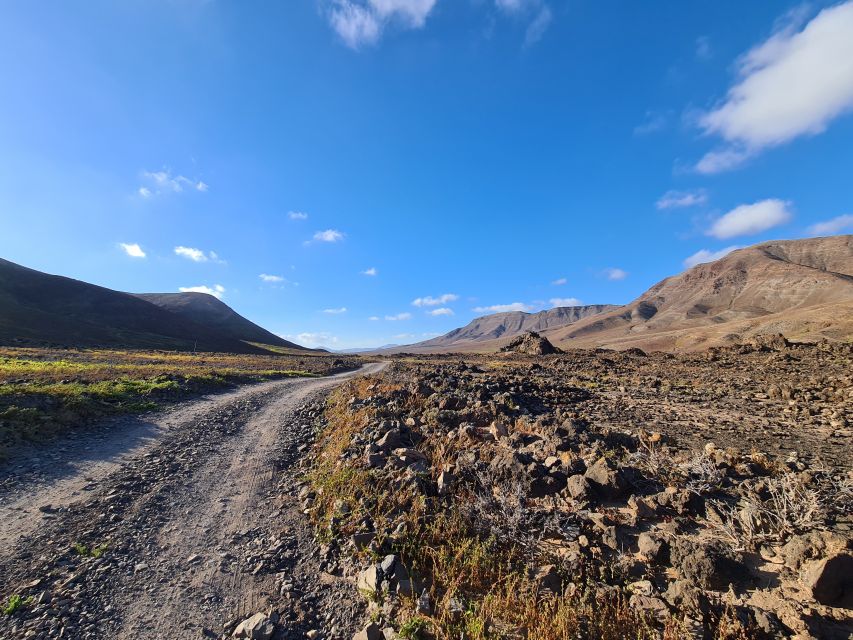
You don’t just pick a bike randomly. You match to a licence category, and that’s a huge practical detail.
- Licence B (car): you can ride a category B-eligible setup
- Licence A1 (motorcycle 125cc): you ride a 125cc enduro motorcycle
- Licence A2 and A: you ride a 250cc or more motorcycle setup
One rider per motorcycle is the rule. That matters for confidence and flow—nobody sits around waiting to swap bikes mid-ride.
Why this matters for your experience: the bike you ride shapes the whole day. A 125cc bike can be easier to manage and can help you focus on technique. A 250cc+ machine can feel more powerful and therefore more demanding, which is great if you’re comfortable staying smooth and in control.
What You’ll Ride: Gravel Roads, Trails, Sand, and Rocks
The ride portion is 2 hours. But it’s not one long straight line. You’ll hit different terrain types, which is where enduro skill actually gets built.
Easy-to-challenging route options
Expect the guide to adjust the route based on your level. For less experienced riders, the early sections focus on control and confidence. As you improve, you may continue onto more challenging ground—think steeper slopes, rougher traction, and parts that demand full focus.
Experienced riders still benefit because you can practice higher-speed line choice on gravel and refine how you handle loose surfaces. Several riders specifically describe this as fun even for people who already ride motorcycles, because enduro control is a different skill set from road riding.
The terrain breakdown you can feel in your riding
- Gravel roads: good for learning throttle smoothness and line planning
- Country trails: where you practice bike control over uneven surfaces
- Sands: where momentum and body position matter most
- Rocks: where balance and cautious technique save you from getting bounced around
One detail riders mention repeatedly is that steep sections are often the hardest part at first. That’s not surprising: steep + loose traction is where confidence goes to work. When you finally get it, it feels like a breakthrough, because you’re not just riding the trail—you’re learning a skill you can reuse.
Pickup and Group Size: Easy Start, Fast Coaching
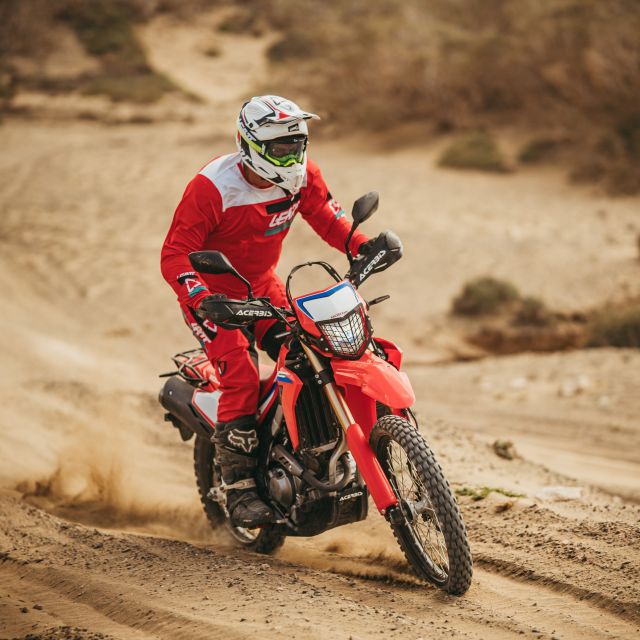
This tour is designed around convenience and attention.
Pickup on the southern side of the island
Pickup and drop-off are included for these areas:
- La Lajita
- Tarajalejo
- Las Playitas
- Costa Calma
- La Pared
They also list possible pickup/drop-off for:
- Morro Jable
- Esquinzo
- Caleta de Fuse
Why you’ll care: you avoid dealing with taxis or trying to find a meeting point before you’re in full gear. Starting relaxed helps your first minutes on the bike.
Small group means you don’t disappear
The group is limited to 3 participants. That size keeps the day personal. You’re more likely to get corrected immediately, and you won’t feel like you’re holding back a big group.
The tour runs rain or shine, so you should be ready for the day to be wet or dusty depending on conditions. Enduro riding is like that—traction changes, and you learn to adapt.
Safety, Gear, and the Balaclava Requirement
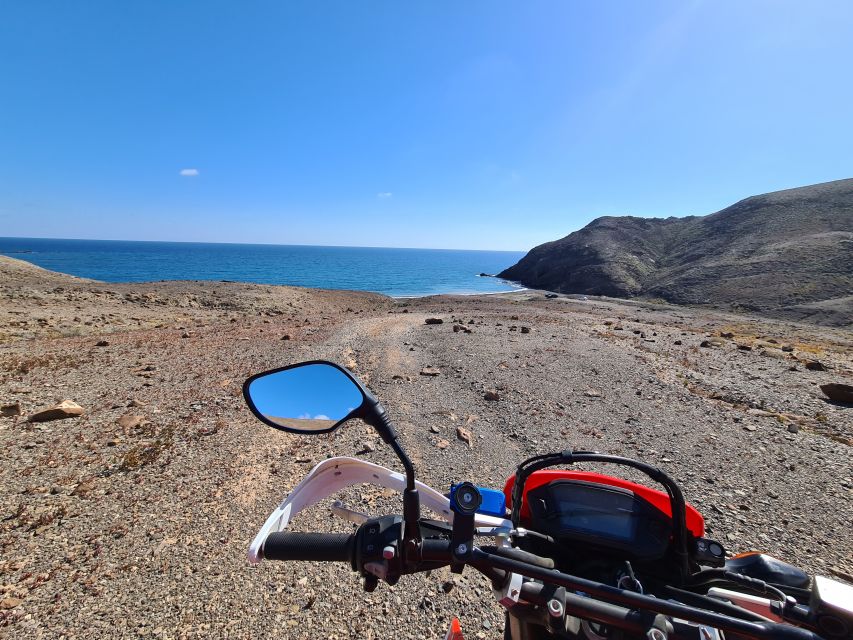
Safety here is practical, not scary.
You receive a set of protectors and proper riding kit: helmet, goggles, boots, pants, and jersey. That covers the basics you need for enduro comfort and protection.
There’s one item you must plan for: a balaclava is necessary. If you don’t have one, there’s a possibility to purchase it for 7 EUR. This is one of those small details that can ruin a good day if you forget. Your skin and face protection matter once you’re out on rough ground.
What’s not allowed
No luggage or large bags. That keeps the setup simple and safe around the bikes and gear area. Pack light.
Young driver considerations
If you’re in the 21–24 age range, there’s an insurance fee listed (25 EUR). If your driving licence is under 2 years, there’s also a 25 EUR fee. The rules state only one fee applies per age and length of licence possession.
That’s worth checking early because it can change the final total you pay on-site or at confirmation time.
Price and Value: Why $240 Makes Sense Here
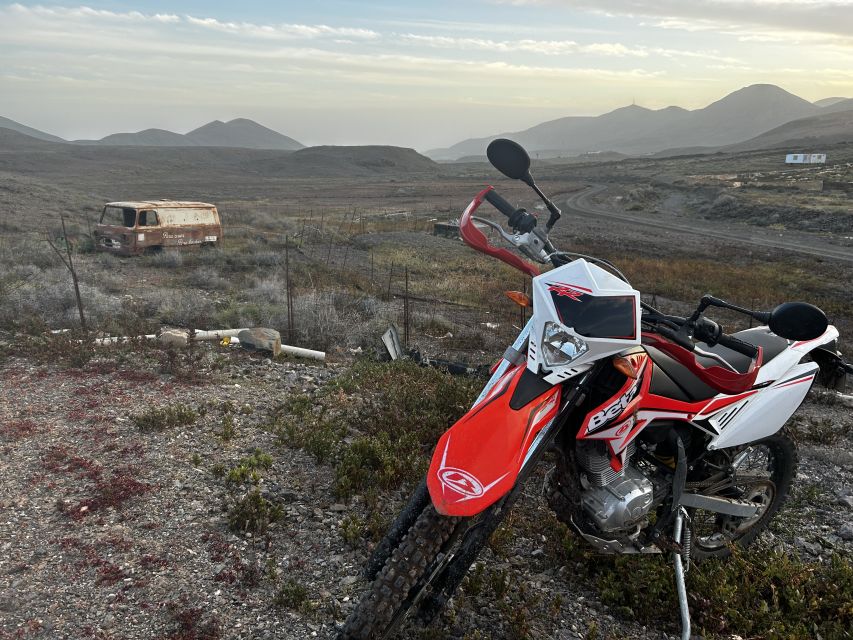
At $240 per person for 3 hours total, this tour is not trying to be the cheapest way to go off-road. The value comes from what’s included:
- Motorcycle provided
- Fuel included
- Training before the ride
- Guide care during the experience
- Full set of protectors plus helmet, goggles, boots, pants, and jersey
- Hotel pickup and drop-off in the southern area
The big reason that matters: you’re paying for technique coaching and time on the bike, not just access to terrain. The day is built around 2 hours of riding—not 20 minutes of thrills followed by a long wait.
Also, the small group size changes the economics. With only up to 3 riders, your guide’s attention isn’t diluted. That often makes the difference between leaving with a few photos and leaving with real confidence.
Who Should Book This Enduro Trip (And Who Should Skip It)
This is a good fit if you want a true enduro introduction or a skills refresh.
You’ll likely enjoy it if:
- you’re a beginner or novice rider and want structured technique training
- you already ride motorcycles but want to learn how enduro control feels in real conditions
- you’re comfortable putting in effort and paying attention for 2 hours on mixed ground
You should skip if:
- you’re under 21 years old
- you don’t have the listed certification situation they mark as not suitable (they specifically note: divers without certification)
- you can’t provide the required documents (a passport or ID card, plus your driver’s licence)
Also, remember the tour runs rain or shine and you’ll be riding off-road surfaces. If you hate mud, loose sand, or the idea of putting your body into the bike, you might find it stressful.
Should You Book? My Practical Take
If you’re in southern Fuerteventura and you want an off-road day that actually teaches you something, this is one of the better uses of your time. The biggest strengths are the training-first approach and the way the ride difficulty can match your level. With Michal’s patient coaching and a small group limit, you’re not just purchasing a route—you’re buying instruction and guided freedom.
I’d book it if you want to leave feeling more confident on loose surfaces, not just impressed by a few dirt roads. It’s especially worth it when you know you’ll be out in the hills and dirt tracks for real skill practice, not a quick scenic loop.
FAQ
How long is the experience, and how much time is spent riding?
The total duration is 3 hours. You get about 2 hours of riding time, with additional time for changing, technique training, and discussing riding tips.
What motorcycle licence categories are accepted?
The tour offers motorcycles aligned with licence categories B, A1 (125cc), and A2/A (250cc or more).
Do I get riding gear and helmet included?
Yes. Protectors, a helmet, goggles, boots, pants, and a jersey are provided as part of the tour.
Is hotel pickup and drop-off included?
Yes, pickup and drop-off are included for the southern part of the island, including La Lajita, Tarajalejo, Las Playitas, Costa Calma, and La Pared. Pickup/drop-off may also be available for Morro Jable, Esquinzo, and Caleta de Fuse.
Is a balaclava required?
Yes. A balaclava is necessary, and there is a possibility to purchase one for 7 EUR if you don’t have it.
What should I bring to the tour?
Bring your passport or ID card and your driver’s licence.
Is the tour cancelled in bad weather?
No. The tour takes place rain or shine.
Are large bags or luggage allowed?
No. Luggage or large bags are not allowed.