REVIEW · TENERIFE
Basic Diver course for beginners with 1 dive in the Ocean
Book on Viator →Operated by GooDiving · Bookable on Viator
First time underwater in Tenerife can feel like a big leap. This Basic Diver course turns it into a calm, coached progression from skills in the pool to a first go in the ocean. The setup is practical and beginner-friendly, with Golf del Sur transfers included and a small group capped at 4 people.
What I really like is that they don’t just toss you in. You get a theory run-through, then hands-on practice where you can build comfort and muscle memory before you head outside. I also like the small-group feel, plus the fact that you’ll have snacks during the experience—useful when you’re waiting around and you’re slightly nervous.
One possible drawback: you’re paying for a short, structured try-out rather than a long multi-session program. If you’re hoping for lots of repeated time in the ocean, this format is intentionally brief (about 4 hours total).
In This Review
- Key highlights worth your attention
- Tenerife’s Basic Diver course: why it fits beginners
- Getting to GooDiving without stress (and why transfers matter)
- The 4-hour flow: theory, pool practice, then one ocean session
- Pool practice: the part that makes or breaks confidence
- One ocean session: what you should expect as a first-timer
- Equipment and snacks: small things that improve the whole day
- Small-group size (max 4): how it changes the experience
- Price and value: is $234.29 a fair deal?
- Who should book this and who should skip it
- Practical planning: passport, health questionnaire, and day-of essentials
- Should you book the Basic Diver course in Tenerife?
- FAQ
- How long is the Basic Diver course?
- Does this course include equipment and snacks?
- Is it English-guided?
- What ages can participate?
- Do I need a passport?
- Do I need to fill out any health forms?
- Where do we meet, and where do we end?
- Can I cancel for free?
Key highlights worth your attention
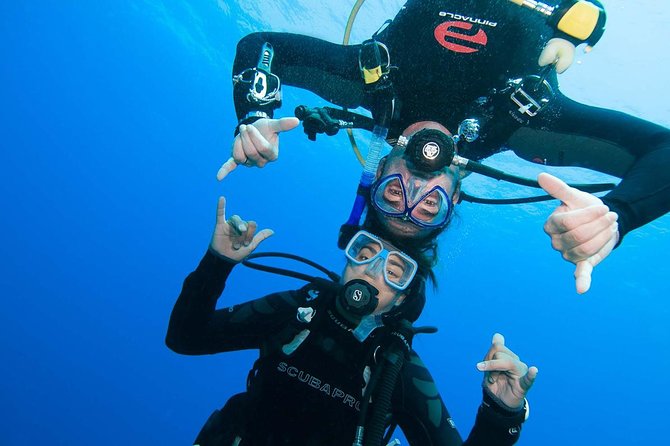
- Pool-to-ocean progression that keeps your first open-water time within reach
- Small group (max 4 travelers) for more time with your instructor
- Golf del Sur transfers included to keep logistics from eating your day
- Snacks provided so you can focus instead of getting hungry
- Scuba equipment included so you can travel light
- English-led course with a straightforward start-to-finish flow
Tenerife’s Basic Diver course: why it fits beginners
If you’re new to scuba, the hardest part is rarely the gear. It’s the nerves, the breathing rhythm, and knowing what you’re supposed to do when something feels new. This course is built for that exact situation: step-by-step skills first, then one ocean session once you’ve practiced in controlled conditions.
I like that the experience has a clear rhythm. You start with explanations, you practice the fundamentals where you can get comfortable, then you go to the ocean when you’re ready. That matters because beginners learn faster when they’re not guessing what comes next.
There’s also a confidence factor here. The course is rated highly, and you’ll see strong praise for the guidance—especially Roberta, who gets called out for being supportive and great at keeping things on track. Even if you’re not a confident swimmer, having an instructor who can read your stress level helps a lot.
You can also read our reviews of more tours and experiences in Tenerife.
Getting to GooDiving without stress (and why transfers matter)
This experience uses a convenient start point near public transportation: Av. J.M. Galván Bello, 11, 38639 Oasis del Sur, Santa Cruz de Tenerife, Spain. The activity ends back at the meeting point, so you’re not dealing with a last-minute scramble to find your way across town.
Transfers are part of the value too. The course includes Golf del Sur transfers, which is a big deal if you’re staying in that area and you don’t want to spend your morning figuring out timing, parking, or bus connections. In practical terms, it means you’ll arrive calmer, not rushed.
Also, you’ll likely have everything you need for check-in because you get a mobile ticket. That’s one less thing to worry about while you’re juggling swimwear, a towel, and any worries about whether you packed the right items.
The 4-hour flow: theory, pool practice, then one ocean session
Plan on about 4 hours total. The day is structured so you’re not waiting around for long stretches with no direction. Here’s the basic order of what you’ll experience.
You begin with a theoretical explanation. This is where you learn the key ideas you’ll use right away later—how to behave underwater, how equipment works at a beginner level, and what to focus on so you can stay safe and comfortable. I like that the theory comes first. When you understand the goal, the practice session feels more like skill-building and less like random rules.
Next comes the pool session. You’ll practice underwater skills in a setting that’s controlled and easier to manage. This part is where you learn how your breathing should feel, how to stay relaxed, and how to move with your gear. For most first-timers, this is the moment the whole thing stops feeling scary.
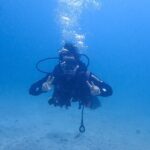
Then, when you’re ready, you head to the ocean for one open-water session. That’s the payoff: you see the real setting, with natural water conditions instead of a pool. Importantly, the course doesn’t force it early. The ocean time is tied to your pool comfort.
Pool practice: the part that makes or breaks confidence
The pool is the secret weapon in this course. In a controlled environment, you get reps. You can make adjustments without feeling like everything is happening at once.
During pool practice, you’ll work on the underwater basics so you can focus on simple, repeatable actions. Think of it as learning the system before you test it in real conditions. If you do well here, your ocean experience tends to feel smoother because you already know how to handle the basics.
This is also where instructors can spot what’s going well—and what might need extra explanation. In a class capped at 4 travelers, you typically get more attention than you would in a bigger group. That translates into faster feedback and fewer awkward moments where you’re waiting for someone to notice you’re unsure.
One practical tip: treat the pool time like the main event. If you rush through it because you’re waiting for ocean time, you may lose the chance to build the calm you’ll need outside.
One ocean session: what you should expect as a first-timer
The ocean part is what you came for, but it’s also the stage where nerves can spike. This course handles that by making the ocean session feel like the next step, not a totally new world.
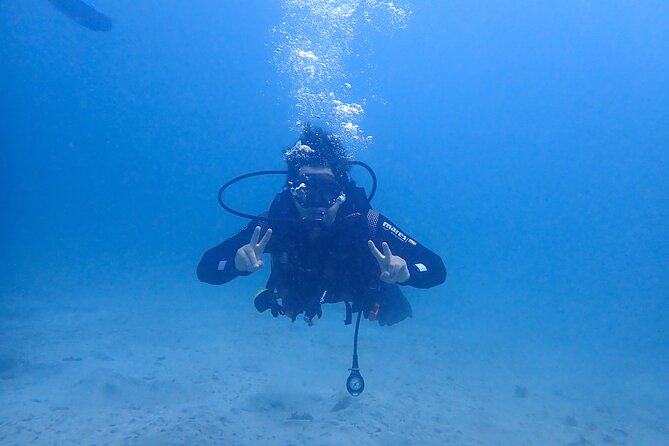
You’ll explore the ocean with a beginner approach. Since you’re only scheduled for one ocean outing, the aim is quality and comfort rather than long underwater time. You should expect a guided experience centered on applying what you practiced in the pool—using the gear correctly, breathing steadily, and staying focused on instructor cues.
The beauty here is that Tenerife gives you real open water right away. You’re not learning in a bubble. You’ll see how conditions change, how depth feels, and how it’s different from a pool. That’s the learning you want if your goal is to decide whether scuba is for you.
Keep your expectations realistic. This course is a first introduction with training elements. If you want lots of repeated ocean time, you’d look at longer programs. But for a beginner try-out that wants to feel safe and coached, this one-session structure is a solid match.

Equipment and snacks: small things that improve the whole day
This experience includes use of scuba equipment, which is a real value. Beginners often underestimate how much easier it is when you don’t have to source rental gear, worry about sizing, or wonder if you rented the wrong category.
Snacks are also included. That may sound minor, but it’s not. When you’re in a training course with theory, gear setup, and transition time, hunger can mess with your focus. Having snacks helps you stay steady, especially if you tend to get anxious when your stomach isn’t happy.
Also, you’re riding with English guidance. If English is your main working language, that reduces friction. You can understand instructions quickly and spend energy on learning, not translation.
Small-group size (max 4): how it changes the experience
A small group changes the experience more than most people think. With a maximum of 4 travelers, you’re less likely to get stuck waiting. You’ll likely get clearer feedback and quicker answers if you have questions about how something should feel or how you’re supposed to position yourself.
It also affects comfort. When you’re new, you don’t want a crowd scene. You want room to breathe—literally and figuratively. A group that stays small tends to feel more personal, and that lines up with the very high rating you’ll see for this course.
And yes, the instructor matters. The praise for Roberta is a good signal that the team handles beginners with patience and solid coaching, not just a checklist mentality.
Price and value: is $234.29 a fair deal?
At $234.29 per person for about 4 hours, you’re paying for a beginner course structure, coaching, and a complete equipment setup. The value isn’t only the ocean time. It’s the combination: theory, pool practice, guided open-water application, plus snacks and included scuba equipment.
What makes it feel like good value is that you’re not piecing together rentals and transport. The Golf del Sur transfers are included, and the course runs in a tight timeframe. For many visitors, reducing logistics is worth money, because it saves time and lowers stress.
Souvenir photos aren’t included, though. If you want photo keepsakes, plan on an extra purchase option. That’s the most straightforward “extra cost” to expect, besides any optional add-ons.
Who should book this and who should skip it
This course is built for beginners, and it fits anyone who wants a structured, coached introduction to scuba. The minimum age is 10 years, so it can work for older kids if they meet the health and fitness requirements.
You should have a moderate physical fitness level. That doesn’t mean you need to be an athlete, but you should be comfortable handling basic movements in water and following safety instructions.
There are clear health notes. It’s not recommended for people with heart complaints or other serious medical conditions. Everyone must complete a health questionnaire before diving, and some pre-existing conditions (including asthma and heart conditions) may prevent you from participating.
Also, diving within 24 hours of flying is not recommended. If you’re planning air travel right after, you may want to schedule this earlier in your trip or give yourself a buffer day.
Practical planning: passport, health questionnaire, and day-of essentials
A current valid passport is required on the day of travel. That’s unusual enough that I’d plan for it. Don’t assume you can show a different ID.
You’ll also complete a health questionnaire prior to the activity. Some conditions may block participation. I recommend being honest and checking your own situation early. It’s better to know in advance than to arrive and find out you can’t go in the water.
The course says it’s near public transportation. Still, transfers from Golf del Sur are included, so if you’re staying nearby, you can likely rely on that plan. If you’re far from the area, I’d double-check how you’ll connect, since the meeting point is fixed.
Should you book the Basic Diver course in Tenerife?
If you want a beginner setup that feels structured, not chaotic, I’d say book it—especially if you like the idea of pool practice first and a short, guided ocean session next. The price makes more sense when you factor in coaching, included equipment, snacks, and the Golf del Sur transfer help.
This is also a good choice if you value a small group and you want time with your instructor. And if Roberta’s name keeps showing up in praise, that’s a hint that the team focuses on keeping beginners calm and moving at the right pace.
Skip it if you know you have medical reasons that might rule you out, or if you’re looking for lots of repeat ocean time in one day. This is a first step, not a long training marathon.
FAQ
How long is the Basic Diver course?
The experience runs for about 4 hours.
Does this course include equipment and snacks?
Yes. Snacks are included, and you’ll have use of scuba equipment.
Is it English-guided?
Yes, the course is offered in English.
What ages can participate?
The minimum age is 10 years.
Do I need a passport?
Yes, a current valid passport is required on the day of travel.
Do I need to fill out any health forms?
Yes. All participants must complete a health questionnaire prior to diving, and some pre-existing medical conditions may prevent you from diving.
Where do we meet, and where do we end?
You meet at Av. J.M. Galván Bello, 11, 38639 Oasis del Sur, Santa Cruz de Tenerife, Spain. The activity ends back at the meeting point.
Can I cancel for free?
You can cancel for a full refund up to 24 hours in advance of the experience start time.